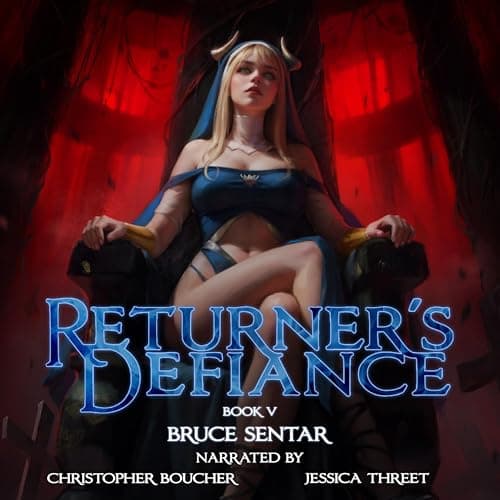

I was three days into a solo winter traverse of the Bob Marshall Wilderness when I started this one. No cell service, no human voices for seventy-two hours except Boucher and Threet coming through my earbuds while I melted snow for drinking water in a canvas wall tent. Book five of a series is a strange place to talk about beginnings, but that's exactly what Sentar does here - he resets the board by throwing Bran into the Trial of Kings before the man's even got his memories back, then makes him run it twice.
And honestly? The audacity of that premise kept me warm.
Running the Same Trail Twice Hits Different
The core tension here is something I understand on a gut level: repeating a path you've walked before, but the conditions have changed. Bran passed the Trial of Kings once. Now he's doing it again - shackled, stripped of memory, facing a version of Simone who doesn't know him. The second run is harder, stakes cranked up because he's pulling companions through with him. Sentar leans into the repetition deliberately, and it works because each pass through the trial reveals something the first one hid. It's not lazy recycling. It's the difference between hiking a ridge in July and hiking that same ridge in February whiteout conditions.
Where the book stumbles is pacing in the middle third. There's a stretch where the relationship dynamics - Bran winning Simone over again, navigating the Mul Branova politics inside the trial - slow the momentum to a crawl. I get that this is part of the series DNA (haremlit gonna haremlit), but when you're five books deep, some of these beats feel like trail switchbacks that could've been cut shorter. The land doesn't forgive wasted daylight. Neither does a ten-hour audiobook.
Boucher and Threet Earn Their Keep
Listeners who've been with this series since book one already know - Christopher Boucher and Jessica Threet are the voices of this world. What strikes me about their work in book five specifically is how they handle the memory-loss dynamic. Boucher plays Bran with this careful restraint, like a man walking on ice he can't see the thickness of. There's hesitation in his delivery that sells the amnesia without making Bran sound weak. Threet's Simone carries a different edge here than in previous entries - colder, more guarded, because this Simone hasn't been won over yet. The contrast between where we know the relationship ends up and where it starts in this trial version creates genuine tension.
I wouldn't say the dual narration does anything revolutionary with the format. No sound effects, no production tricks. But these two have logged enough hours in Sentar's universe that the character voices feel lived-in rather than performed. That matters when you're on book five and your brain needs to slot back into a dozen characters without a refresher.
Where This Sits in the Sentar Landscape
Fans of Sentar's work tend to split into two camps: Returner's Defiance loyalists and Ard's Oath devotees. Having listened to both, I'd say this installment narrows the gap. The trial structure gives book five a tighter framework than some earlier Returner's entries, which could sprawl. But it still doesn't quite match the worldbuilding density of Ard's Oath at its best. The trial setting, by design, is more constrained - you're locked in a progression challenge rather than exploring an open world. That's a trade-off, not a flaw.
Compared to something like Bonded Summoner or Dungeon Diving 101, Sentar writes relationships with more emotional weight and less pure wish fulfillment. Matt Dinniman talked about exactly this tension between wish fulfillment and earned character moments in Listen In: A Conversation with Matt Dinniman - worth a listen if you care about where LitRPG's relationship writing is actually headed. Bran earning Simone's trust again when she has zero reason to give it - that's actual character work. It's romanticized, sure, but it's not empty.
Who Should Listen (And Who Should Skip)
If you've been following Returner's Defiance through four books, this is the payoff book for Bran's competence. You already know if you're in or out. If you're new to Sentar, don't start here - the memory loss conceit only lands if you remember what Bran forgot. And if you need ecological accuracy or hard magic systems with airtight rules, keep walking. The worldbuilding serves the character progression and the harem dynamics, not the other way around.
Packing Out
I finished this one breaking camp on my last morning in the Bob, breath visible in the headlamp light, Boucher's voice steady in my ears while I cinched down my pack. Book five does what a good late-series entry should - it tests the protagonist by taking away everything that made him formidable and asks if the man underneath is still worth following. The answer is yes, even if the trail there meanders more than it needs to.