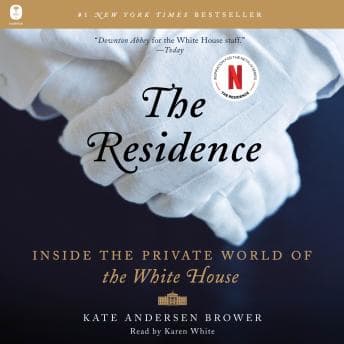

Couldn't sleep last night. Linda was out cold, Ranger was snoring at the foot of the bed, and my brain wouldn't shut off after a long day of reviewing site security plans for a client in Houston. So I figured I'd knock out the last couple hours of The Residence and finally form my verdict.
Let me cut to the chase: this book is genuinely fascinating material held back by uneven narration and some structural repetition that tested my patience. Worth your time? Here's the debrief.
The Staff Always Knows More Than the Generals
I spent 25 years in the Army, and I can tell you - the people who really know what's going on in any organization are never the ones with stars on their shoulders. It's the NCOs, the admin clerks, the people who keep the lights on. Kate Andersen Brower gets this completely. She tracked down the maids, butlers, florists, engineers, and doormen who actually run the White House, and the stories they tell are better than anything you'd get from a presidential memoir.
The LBJ material alone is worth the listen. Johnson's obsession with his shower - demanding water pressure that would basically sandblast the skin off a normal human, with multiple shower heads installed and reinstalled because he kept sending maintenance back - that's the kind of detail that makes a real person out of a historical figure. You can't make that stuff up.
And then there's Jackie Kennedy. The scene after the assassination, her private moment of grief with a staff member she trusted - look, I've been in rooms where people have lost someone they loved in sudden, violent ways. Brower captures that weird intimacy between the bereaved and the people around them who just do their jobs while everything falls apart. That hit me harder than I expected at 2 AM.
The Clinton impeachment section is interesting too, particularly Hillary's attempts to maintain some semblance of privacy while the entire staff - people who change your sheets and serve your breakfast - knew exactly what was happening in her marriage. Fire and Fury covers similar ground from a different angle - less staff, more chaos - and the contrast between how those two administrations handled internal exposure is something I kept turning over in my head. The staff's loyalty protocols during that period reveal just how professional these people are. They're essentially running a continuous operation with rotating principals every four to eight years.
Karen White and the Accent Problem
Here's where I have to be honest. Karen White's narration is... fine. Sometimes better than fine. But she has this tendency to attempt accents when voicing different staff members, and some of them land about as well as a helicopter with no tail rotor. The thing is, she doesn't need them. The material is strong enough that a straightforward, clean delivery would've served these stories better than trying to differentiate voices through accent work that pulls you out of the moment.
There's also a flatness to her pacing in certain sections - not robotic exactly, but close. When she's reading the more emotional anecdotes, she picks it up. When she's bridging between stories with historical context or describing the physical layout of the White House for the third time, she settles into a rhythm that's pretty monotone. I bumped to 1.25x (my standard) and that helped with the slower stretches, but it made the accent attempts even more jarring.
She's an Audie finalist and multiple Earphones Award winner, so she's clearly talented. This just might not have been the right match for her.
Where the Mission Gets Bogged Down
The book's biggest structural problem is repetition. Brower circles back to the same themes - staff loyalty, the contrast between public and private behavior, the emotional bonds between families and their household staff - and after a while you start feeling like you're sitting through the same briefing with slightly different slides. I get it. The staff loved the families. The families (mostly) loved the staff. The transitions between administrations were emotional. You don't need to tell me seven different ways.
At 10 hours and 17 minutes, this could've been a tighter, more impactful book at maybe seven or eight hours. Cut some of the redundant anecdotes, tighten the transitions, and you'd have something that maintains momentum instead of sagging in the middle chapters.
That said - the raw material here is gold. Brower clearly did her homework. These are first-person accounts from people who've never talked publicly before, and some of them are genuinely revelatory about what happens behind the most famous front door in America.
Who Should Strap In and Who Should Stand Down
If you're a history and politics junkie like me, or if you've ever been curious about the operational side of the White House - the logistics, the human machinery that makes it function - this is your book. If you've served in any capacity where you maintained an institution while leadership rotated above you, you'll recognize these people immediately.
If you need tight pacing and can't tolerate narration that occasionally feels flat or accent attempts that miss the mark, you might want to grab the print version instead. The stories are the same, and you control the pacing.
Ranger's Sleeping Through This One, But I'm Not Mad About It
Solid book with genuine insight into an institution most Americans never think about beyond the Oval Office. The narration keeps it from being a must-listen, and the repetition keeps it from being a must-read. But the best stories in here - the human ones, the grief and the loyalty and the LBJ shower saga - those stick with you. Brower found the right people to talk to. I just wish the audio production matched the quality of her reporting.







![Steve Jobs [unabridged audiobook] audiobook cover](/_next/image?url=https%3A%2F%2Fcovers.audiobooks.com%2Fimages%2Fcovers%2Ffull%2F9788499923406.jpg&w=1920&q=75)