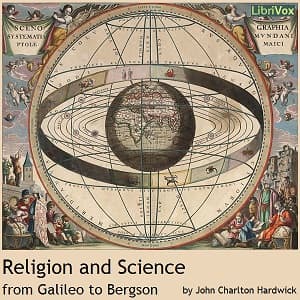

Can a 1920 philosophy text survive a modern commute? That's genuinely the question I was asking myself somewhere around Millbrae station, half a cup of coffee into my morning, watching the fog roll over the Bay while Laurie Anne Walden read me a dead man's thoughts on Galileo.
I pulled this one from the LibriVox archives on a whim - 4 hours 20 minutes, free, and I'd been in a weird headspace after a 2AM incident response where I spent three hours arguing with a distributed system about whether time is real. (It's not, by the way. Clocks lie. Ask any engineer who's dealt with NTP drift.) So: a book about how humans have historically tried to explain the universe felt weirdly on-brand.
A Bug Report on 400 Years of Epistemology
Hardwick's thesis - written in 1920, which matters - is basically that humans are "incurably religious" and will keep trying to interpret the universe spiritually no matter how hard science pushes back. He's not arguing for religion over science. He's doing something more interesting: tracing the negotiation between the two as natural philosophy evolved into what we now just call science.
The Galileo-to-Bergson arc is clever framing. You start with the moment the Church and empirical observation had their first major public breakup, and you end with Henri Bergson, who in 1920 was still alive and arguing that intuition and consciousness couldn't be fully captured by mechanistic science. It's basically a version history of Western thought - v1.0 (God explains everything), v2.0 (Newton's clockwork universe), v3.0 (Darwin breaks the clock), v4.0 (Bergson asks if the clock metaphor was ever right).
What I didn't expect: Hardwick is actually readable. For a 1920 academic text, he's not dense. He writes like someone who genuinely wants you to follow him, not like someone performing erudition. The argument is linear enough that I could zone out through a tunnel and pick it back up without losing the thread - which is my actual metric for commute-worthiness.
The science actually holds up, mostly. His physics is pre-quantum (obviously), and some of his takes on evolution feel dated in framing if not in substance. But the philosophical moves he's making - the tension between reductionism and something-more - are still live debates. We just have different vocabulary now. We say "emergence" and "consciousness studies" instead of whatever Bergson said.
Walden's Narration: Functional, Which Is Honestly Enough
Here's the honest take on Laurie Anne Walden: she reads clearly, paces appropriately for dense material, and doesn't do anything that made me want to rip my earbuds out. For a LibriVox recording of a 1920 philosophy text, that's genuinely the bar. The bar for free public domain recordings is low enough that I've started keeping a mental list of the ones that clear it — Common Sense (Version 2) is another one that surprised me with how listenable it actually is, given the source material. I've sat through volunteer narrations that sounded like someone reading into a tin can inside a wind tunnel.
Walden is not Ray Porter. (Nothing is Ray Porter.) She doesn't bring dramatic interpretation to Hardwick's prose - but Hardwick's prose doesn't really need it. This isn't a book that benefits from performance. It benefits from clarity. She delivers that.
I ran this at 1.25x, which is slower than my usual settings - the material earns the extra processing time. At 1.5x, some of the longer philosophical sentences started losing me. This is a "pay attention" listen, not a background listen.
One thing I noticed: the audio quality is consistent throughout, which isn't guaranteed with LibriVox. No jarring volume shifts, no weird room echo mid-chapter. For a free recording, that's worth calling out.
Who Actually Needs 4 Hours of 1920 Philosophy
If you're a software engineer who occasionally has a crisis about whether we're just building increasingly complicated clockwork - hi, same - this scratches an itch that most tech books don't. It's not self-help. It's not going to optimize your morning routine. It's going to give you historical context for arguments that are still happening, just with better equipment.
Skip it if you want narrative momentum. This is lecture, not story. There's no plot twist where Darwin wins or Bergson lands a knockout punch. It's a map, not a journey.
The ROI on this audiobook is genuinely high if you're already interested in philosophy of science - it's free, it's short, and it covers ground that most pop-science books assume you already know. If you're new to this territory, I'd start somewhere with more scaffolding.
I finished it in two commutes. Spent the second one staring out the window thinking about whether distributed systems are the new clockwork universe metaphor. Kevin texted asking if I wanted Thai food. I said yes but kept thinking about Bergson. This is my life.






![Steve Jobs [unabridged audiobook] audiobook cover](/_next/image?url=https%3A%2F%2Fcovers.audiobooks.com%2Fimages%2Fcovers%2Ffull%2F9788499923406.jpg&w=1920&q=75)