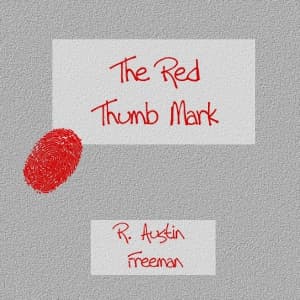

I picked up The Red Thumb Mark expecting a dusty relic—something I'd half-listen to while chopping onions for dal. What I got instead was a genuinely fascinating case study in how forensic science was born. And honestly? That's worth more than I expected from a free LibriVox recording.
The setup is classic: missing diamonds, a locked safe, bloody thumbprints. Dr. Thorndyke—Freeman's proto-forensic investigator—arrives to apply actual science to crime-solving. This was 1907, people. Fingerprinting was cutting-edge. The protagonist exhibits classic methodical reasoning that predates every CSI episode by about a century, and there's something almost charming about watching Freeman work through the logic like he's teaching a graduate seminar.
When the Forensics Actually Slap
Here's what surprised me: the courtroom scene. I was jogging through Cambridge, dodging tourists near Harvard Square, when Thorndyke's cross-examination kicked in. I literally stopped walking. The man dismantles the prosecution's fingerprint evidence with surgical precision—explaining how prints can be forged, how the science was being misapplied. For a psychology nerd like me, watching a character systematically expose cognitive biases in legal reasoning? That's the good stuff.
Freeman clearly understood something about human nature that modern thriller writers sometimes forget: the most compelling mysteries aren't about what happened, but about how we know what we think we know. The research actually shows that eyewitness testimony is notoriously unreliable, and here's Freeman in 1907 essentially making that argument through fiction. Wild.
But—and this is a big but—the pacing. Oof. There are stretches where the technical descriptions feel like reading a Victorian textbook. I found myself asking: why does Thorndyke need to explain every single step? The answer, I think, is that Freeman was a medical jurispractitioner writing for an audience who'd never heard of forensic science. Context matters. Still, if you're impatient, you'll struggle.
The Voice(s) in My Head
Here's the thing about LibriVox: you get what you pay for, which is nothing, and also everything. The volunteers are earnest. Their enunciation is clear. But multiple readers means the characters sound different depending on who's narrating that chapter. Dr. Thorndyke's voice shifts. The pacing varies. It's not bad, exactly—it's just inconsistent.
I couldn't find detailed info on the specific volunteers, but based on this recording, they're doing solid work for a passion project. The narration is straightforward, sometimes monotone. If you're used to dramatic performances with distinct character voices, this will feel flat. But honestly? For a methodical detective story where the appeal is the logic rather than the emotion, neutral narration kind of works. You're not here for vocal fireworks. You're here to watch Thorndyke think.
My therapist would have thoughts about this character, actually. The man is almost pathologically rational—no emotional outbursts, no dramatic reveals. Just calm, systematic analysis. It's either deeply admirable or slightly concerning. Maybe both.
Who This Works For (And Who Should Skip)
If you love Sherlock Holmes but wish he'd show his work more, this is your book. If you're interested in the history of forensic science—how we got from "the butler did it" to DNA evidence—Freeman is essential reading. The vintage entertainment value is real.
But if you need fast pacing or narration with distinct voices and dramatic tension? Skip it. The Circular Staircase has a bit more momentum if you're craving that vintage mystery vibe with better narrative energy. Or at least sample first. The LibriVox recording is free, so there's no risk in trying a chapter.
One annoying note: apparently some commercial versions repackage this free recording without crediting LibriVox. That's gross. Go to the source.
Over Chai at 6 AM
I finished this while making chai, and I kept thinking about how Freeman essentially invented the forensic mystery. The inverted detective story—where you know who did it and watch the detective prove it—that's his innovation. Psychologically, this doesn't track with how most thrillers work today, but that's what makes it interesting.
Is it slow? Yes. Is the narration inconsistent? Also yes. But Thorndyke represents a very specific worldview: that truth is discoverable through method. In an era of hot takes and gut reactions, there's something almost radical about that.
Pretty much exactly what I needed, actually. Even if I did zone out during the metallurgy explanations.