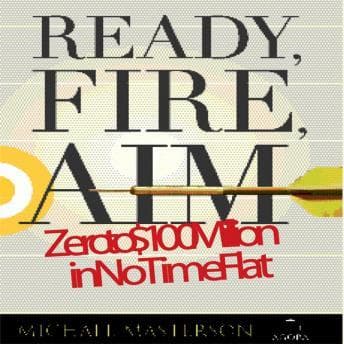

"Ready, fire, aim" - Masterson drops this in the first hour and I actually paused my walk to think about it. Not because it's revolutionary. Because my parents lived this philosophy for 30 years without ever reading a business book. They just called it "figure it out as you go because rent is due."
Here's the thing. This book is from 2008, and honestly? It holds up better than most business books I've listened to this year. Masterson's core argument is simple: perfectionism kills more businesses than bad ideas do. Launch fast, learn faster, fix as you go. That insight is worth the listen. The other 7 hours? Not so much.
The Four Stages Framework That Actually Works
Masterson breaks business growth into four stages - Infancy (0-$1M), Childhood ($1-10M), Adolescence ($10-50M), and Adulthood ($50-100M+). Each stage requires different skills, different priorities, different headaches. This is what my parents did instinctively. Now it has a TED talk.
What I appreciate is how specific he gets. Stage one is all about selling. Not systems, not hiring, not your logo - selling. I've watched founders burn through runway building perfect operations for products nobody wants. Masterson would've saved them a year of therapy.
The adolescence section hit different for me. I've consulted for three companies stuck in that $15-30M range, and Masterson nails why they plateau. The founder can't let go. They're still approving expense reports while their competitors are scaling. Now I have a framework to explain what I've watched fail three times over.
Sean Pratt Keeps It Clean
Couldn't find much about Sean Pratt's background online, but based on this performance - he's solid. Clear delivery, professional pacing, doesn't try to make business content dramatic. Which is exactly what you want. Nothing worse than someone trying to make profit margins sound like a thriller.
The 12-hour runtime is... a lot. I listened at 2.0x and still felt like some chapters could've been cut by half. Masterson loves his examples. Sometimes three when one would do. But Pratt keeps it moving without sounding rushed. Clean production, no weird audio issues.
Where It Drags (And Where to Skip)
Skip to chapter 5. Thank me later. The early chapters have too much "here's how I became successful" backstory that feels dated. The meat is in the operational frameworks - how to structure marketing, how to hire your first employees, how to know when YOU'RE the bottleneck.
The weakest sections are the internet marketing advice. Remember, 2008. Some of it is embarrassingly outdated - email tactics that would get you spam-flagged today. But the principles underneath? Still solid. Direct response marketing fundamentals don't change just because the platform does.
The "work part-time while making millions" angle in the description is oversold. Masterson himself admits he worked brutal hours in the early stages. The part-time thing comes later - much later. If you're buying this expecting passive income secrets, you'll be disappointed. (Jenny would say I'm being harsh. Jenny is right. But also, I'm right.)
The ROI Calculation
This is a B+ business audiobook that could've been an A- with tighter editing. The four-stage framework alone is worth your time if you're running or building something. Real tactical advice, not just motivational fluff. Masterson clearly built actual businesses, not just a speaking career.
Best at 1.5x or faster. Perfect for commutes - the chapters are structured well enough that you can pause between them without losing the thread. Not bedtime material unless accounting talk puts you to sleep. (No judgment. It does that for some people.)
Who should listen: Founders in the $0-10M range. Consultants who work with growth-stage companies. Anyone who's ever overthought a launch into paralysis.
Who should skip: If you're past $50M, this is probably review. If you want cutting-edge digital marketing tactics, look elsewhere. If you need hand-holding motivation, Masterson's blunt style might feel cold. For something that actually delivers on the self-discovery angle without the cold corporate edge, I Am: The Power of Discovering Who You Really Are takes a warmer approach to finding your direction.
A business book that respects your time - mostly. The framework is solid, the advice is practical, and unlike 80% of my Audible business library, I actually finished this one.