
Thirty-six minutes. That's barely enough time for me to get from downtown Austin to the Hill Country, assuming I don't hit the usual I-35 nightmare.
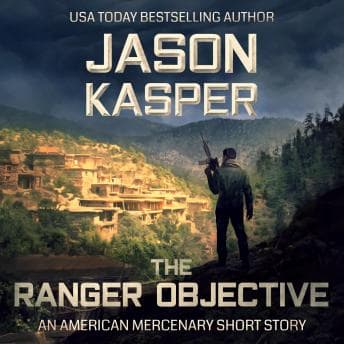
I fired this one up while I was cleaning my Sig Sauer after a range day. My German Shepherd, Ranger, actually perked up when he heard the title. (Okay, he probably just heard me say his name, but let me have this). I usually don't bother with anything under ten hours—I need long-haul distractions—but I saw Jason Kasper's name on the cover. The guy is former Special Forces. That usually means I won't have to scream at my dashboard because someone called a magazine a "clip" or had a character rack a slide on a Glock that's already hot.
Let me cut to the chase: This is a gut-check, not a novel.
The "Real Deal" Factor
Kasper drops us into the Shigal Valley in Afghanistan. I've never been to Shigal specifically, but I've been downrange enough to know the smell of the dust and that specific feeling in your stomach when the terrain forces you into a fatal funnel.
Most military thrillers read like Michael Bay movies. Loud, dumb, and physically impossible. I had a similar problem with Hidden: an absolutely gripping crime mystery—lots of noise, not enough substance. This didn't feel like that. It felt like a frantic SITREP. The protagonist, David Rivers, is a Ranger before he becomes the mercenary we see in the later books. He's green, but he's competent. The tactical decision-making—that split second between following orders and surviving—hit close to home. It's raw. It's messy. It's accurate.
(And honestly, it's nice to listen to a protagonist who isn't an unkillable superhero right out of the gate. The kid is scared. He should be.)
Radio Chatter and Sound Effects
Here's where it gets interesting technically. Usually, I hate sound effects in audiobooks. Hate them. They're usually distracting and cheesy.
But Adam Gold does something here that actually worked for me. They added radio distortion effects to the dialogue when characters are on comms. It sounds like actual radio traffic. Not the movie kind where everything is crystal clear, but that clipped, static-laced urgency.
Gold's narration is high-energy. He doesn't have that deep, gravelly "movie trailer" voice some thriller narrators force, but he has the pacing of a guy who knows rounds are coming downrange. He captures the chaos of an ambush without sounding like he's hyperventilating.
The "Short" Problem
Here's the only rub. It is short.
I was just settling in, getting invested in Rivers' situation, and then—boom—credits. It's basically a prologue or a deleted scene from a bigger movie. If you go into this expecting a full arc, you're going to be annoyed. It's a snapshot of combat, not a war memoir.
It's designed to hook you into the American Mercenary series. And dammit, it worked. I'm probably going to have to buy the first full novel now. (Linda is going to kill me if I add another series to the library, but that's a problem for future James).
Who Should Listen (And Who Should Skip)
If you want a quick adrenaline spike while you're doing a 5K or a quick commute, this is solid. It's authentic, punchy, and doesn't waste a single second. Skip it if you need a full-length story with a complete arc—you'll just be frustrated when the credits hit at minute thirty-six.