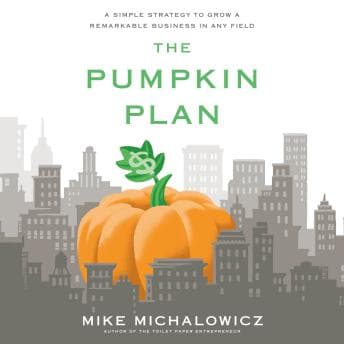

"Kill your worst clients." That's the line that hit me around the 45-minute mark, and I actually paused my dishwasher mid-cycle to rewind. Not because it was revolutionary - I've literally given this advice to founders while billing them $400 an hour - but because Michalowicz frames it with such disarming simplicity that it lands differently. Like hearing your dad explain compound interest using a jar of quarters.
The Pumpkin Farmer Your Parents Already Were
Here's the core thesis: grow your business the way competition pumpkin farmers grow giant pumpkins. Plant many seeds, identify your strongest one, kill everything else around it, and pour all your nutrients into that one monster. Applied to business: find your best customers, fire the rest, and build your entire operation around serving the winners.
This is what my parents did instinctively. Now it has a TED talk.
Seriously though - my mom and dad ran their dry cleaning shop in Koreatown for decades, and at some point in the early 2000s my dad just... stopped taking certain accounts. The hotel contract that paid late. The guy who complained about everything and tipped nothing. Dad didn't read a business book. He just got tired. But that's the Pumpkin Plan in action - remove the clients that drain your resources so the good ones get better service.
Michalowicz walks through his own version of this with his tech company, Olmec Systems, and it's genuinely useful. He describes the actual spreadsheet exercise - ranking clients by revenue, by how much you enjoy working with them, by referral potential - and then drawing the cut line. The ranking-and-cut logic reminded me of the diagnostic questioning framework in Spin Selling - both books are fundamentally about identifying which conversations are worth having and which ones are quietly bleeding you out. The "Assessment Chart" section around chapters 4-6 is where the real meat lives. Skip to chapter 5. Thank me later. The early chapters are origin story and motivation, which, fine, but if you're already bought in on the premise just get to the framework.
7 Hours That Could've Been 3 (But the Extra 4 Aren't Terrible)
At 7 hours and 8 minutes, this follows the classic business book bloat formula. The key takeaway is worth the listen. The other 7 hours? Not so much. But here's where I'll give Michalowicz credit - his padding is better than most. The entrepreneur case studies he sprinkles throughout (the hedge trimmer guy, the sweet potato pie lady) feel like actual conversations he had rather than carefully curated Harvard Business Review anecdotes. They're messy and specific, which makes them believable.
The author-narrated delivery helps. Michalowicz reads his own book and sounds like the guy at a networking event who's actually interesting - a little rambling, self-deprecating, with this off-the-cuff humor that keeps the pacing from going flat. When he talks about nearly going bankrupt, there's a crack in his voice that a professional narrator wouldn't've replicated. It's not polished. It's better than polished. The bonus interview at the end is surprisingly worth sticking around for - he goes off-script about mistakes he made implementing his own system, which is the kind of honesty I wish more business authors had.
At 2.0x he sounds like an excited uncle at Thanksgiving dinner. I dialed back to 1.5x, which is rare for me. His natural cadence has enough variation that speeding it up too much flattens the humor.
Where It Falls Short (And Where That's Okay)
The pumpkin metaphor gets stretched thin by hour five. We get it, Mike. Seeds. Vines. Nutrients. At a certain point I wanted him to just say "focus on your best customers and systemize your service delivery" without the agricultural detour. There's also a gap in the book for anyone past the $5-10M revenue stage - this is squarely aimed at solo founders and small teams grinding it out under $3M. I've seen companies try to apply this kind of radical client pruning at scale and it gets way more complicated than the book suggests.
But honestly? For a founder doing $500K who's drowning in 60-hour weeks serving clients they hate, this is a roadmap. Not a perfect one. But a clear one. And clarity is worth more than complexity when you're exhausted.
The assessment chart exercise alone - where you literally rank every client and identify the top 20% - is something I now assign to early-stage founders I consult with. Takes about two hours. Consistently the most uncomfortable and productive exercise they do all quarter.
The Engagement Letter
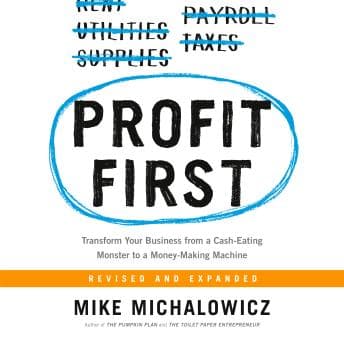
If you're running a small business and you feel like you're working harder every year for roughly the same result, this book will make you angry in a productive way. If you've already read Profit First (same author, same energy, different problem), you know exactly what you're getting. If you're a corporate strategy person or later-stage operator, you'll find the concepts familiar and the depth insufficient.
Jenny asked me what I was listening to and I said "a book about pumpkins" and she looked at me like I'd finally lost it. But then I explained the client-firing framework and she said, "So... common sense with better marketing?"
Yeah. Pretty much. But sometimes common sense packaged well and delivered by someone who clearly lived it is exactly what you need at 11 PM when you're wondering why you started this company in the first place.