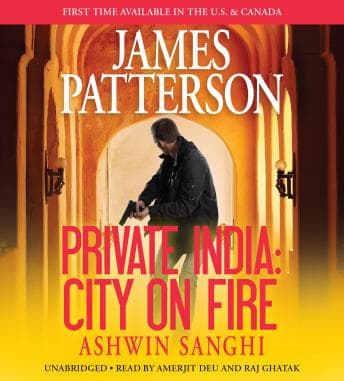

"Strange objects at their death scenes in a series of chilling rituals." That line from the description hooked me somewhere on I-35 heading to a client meeting in San Antonio. Eight hours later, I'm back in my driveway, Ranger asleep in the backseat, and I've got... mixed feelings.
Let me cut to the chase: Private India is a solid airport thriller that tries to do something ambitious — transplant the Patterson formula into Mumbai — and half-succeeds. The half that works is genuinely interesting. The half that doesn't left me wishing for a stronger editorial hand.
Mumbai Through a Crime Scene Lens
Here's what surprised me. I went in expecting Patterson-standard American thriller with an exotic coat of paint. What I actually got was something darker and more culturally layered than I anticipated. Ashwin Sanghi clearly drove this bus, and he brought the receipts on Mumbai's underbelly — begging syndicates, match-fixing, dance bars, the exploitation of kids. This isn't tourist Mumbai. The ritual murders with objects placed at each scene create a genuinely unsettling thread, and the killer's perspective sections — when the narration shifts to that voice — gave me a real chill. Sitting in traffic on Mopac with that in my ears was something.
Santosh Wagh as a protagonist is more interesting than most Patterson leads because he's broken in a specific way. He's not the typical square-jawed, quip-ready detective. He's haunted, he drinks too much, and his demons aren't decorative — they actually affect how he works cases. That said, the book tries to cover SO much ground in eight hours. Every social ill in India gets a subplot, and some of them feel like they're there for shock value rather than serving the central mystery. The internal threat to Private's Mumbai office never quite gels with the serial killer plot, and the pacing drags in the middle third when these threads are competing for oxygen.
The Accent Question (And Why It's Complicated)
Okay, this is where I need to be honest. Amerjit Deu and Raj Ghatak narrate, and they bring legitimate Indian voices to an Indian story. That matters. You don't want some guy from Connecticut doing this book. The authenticity is real and it grounds the whole production.
But — and I say this having spent time working with coalition forces from a dozen countries — there were stretches where I had to rewind because the accent combined with Mumbai-specific terminology created a comprehension gap. Not the narrators' fault, exactly. It's more that the production didn't account for a Western audience potentially needing a slightly slower pace through dense cultural passages. I was at 1.25x and actually knocked it down to 1x for maybe twenty percent of the book, which I almost never do.
Character differentiation between the two narrators isn't particularly sharp. When you've got a cast that includes Jack Morgan, Santosh, and a rotating gallery of suspects and victims, you need clearer vocal boundaries. I lost track of who was speaking in a few dialogue-heavy sections. Not a dealbreaker, but it pulled me out of the story at moments that should've been tight.
Where It Lost Me (And Where It Didn't)
The Patterson assembly-line feel shows up in the chapter structure — those signature two-to-three-page chapters that read like someone's contractually obligated to keep you turning pages. In audio, this actually works okay because you always feel like you're making progress. But the tradeoff is that nothing breathes. The ritual murders deserved more atmospheric buildup. Instead you get: body found, object described, team reacts, next chapter.
The content here is heavy. I'm not squeamish — three combat tours will cure you of that — but the exploitation of children subplot felt handled with a bluntness that bordered on careless. Like Patterson and Sanghi wanted to show the darkness without fully reckoning with it. Compare that to how something like "The Things They Carried" earns its brutal moments through careful, deliberate weight. This just... drops it and moves on. I got a similar gut-punch feeling from I'm Thinking of Ending Things — a book that also handles darkness carefully, making you feel the weight of every uncomfortable moment rather than rushing past it.
That said, the final act picks up considerably. The explosive ending the description promises does arrive, and there's a reveal connecting the victims that I genuinely didn't see coming until about forty minutes before it landed. Credit where it's due.
Who Should Saddle Up (And Who Should Pass)
If you're a Patterson completist working through the Private series, this is a necessary stop and you'll probably enjoy it more than I did. If you're looking for a thriller set outside the usual New York/London/DC corridors, Mumbai makes for a genuinely fresh backdrop. But if you need crisp audio clarity and tight plotting to stay engaged on a long drive, this one might test your patience.
Worth your time? Here's the debrief: it's a three-star listen that could've been a four with tighter editing and more polished audio production. Ranger slept through the middle section, which... tracks.