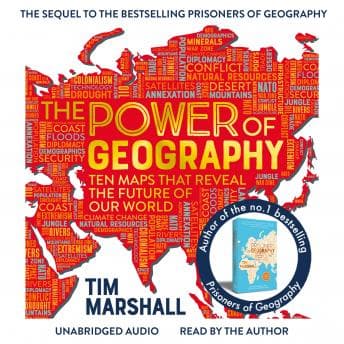

Finished this one during a long surveillance consult in San Antonio - four hours of watching a parking garage while Marshall walked me through why Ethiopia's access to the Red Sea matters more than most Americans realize. Good use of dead time.
Let me cut to the chase: if you read Prisoners of Geography, you know what you're getting here. Marshall picks ten regions and explains why the ground beneath your feet - and the water around it - dictates more about geopolitics than any ideology or leader ever could. The sequel delivers on that promise. Mostly.
The Intelligence Brief You Actually Need
Marshall's strength is making complex regional dynamics digestible without dumbing them down. His chapter on the Sahel region - that band of semi-arid land south of the Sahara - should be required listening for anyone wondering where the next major refugee crisis will originate. He connects the dots between climate change, failing states, and migration patterns in a way that feels less like academic lecture and more like a briefing from someone who's actually been on the ground. Which he has. Former war correspondent credentials show.
The eastern Mediterranean section hit close to home for me. Greece, Turkey, Cyprus - I spent time in that region during NATO exercises, and Marshall nails the tension between these supposed allies. The way he explains competing claims to underwater gas deposits and how they intersect with centuries-old territorial grievances - that's the kind of context CNN doesn't give you.
Space as a geographic battleground? I was skeptical, but Marshall makes a convincing case. When he explains orbital mechanics as the new "high ground" - a term any soldier understands instinctively - it clicked. Whoever controls low Earth orbit controls the future of warfare. Period.
Where the Mission Gets Complicated
Here's the problem: Marshall narrates his own book. I respect authors who do this - there's an authenticity to hearing the writer's own voice. But the man has some audio issues that the production team should have caught. Mouth noises. The kind of wet clicking sounds that make you want to hand him a glass of water through your headphones. Drove me crazy around hour three.
Some listeners wanted more maps, more pure geography. They've got a point. Marshall drifts into general history at times - interesting history, sure, but you occasionally wonder if you're still reading a geography book or a geopolitical primer. The PDF with maps helps, but that's not exactly useful when you're driving.
Pacing varies by chapter. The UK section felt like Marshall was settling personal scores with Brexit more than analyzing geographic constraints. The Iran chapter, by contrast, was tight as a drum - explaining why the Zagros Mountains have protected Persian civilization for millennia while simultaneously trapping it.
Who Should Deploy This Intel
If you work in any field touching international affairs - military, diplomatic, business - this is worth your time. If you're the person at dinner parties who wants to actually understand why Saudi Arabia and Iran hate each other beyond "Sunni versus Shia," Marshall delivers. If you're just looking for background noise while doing dishes? The content's too dense. You'll miss the connections that make it valuable.
Skip it if you need pristine audio quality or if you're expecting a geography textbook. This is analysis, not cartography.
Mission Debrief
Worth the credit? Yes, with caveats. The content is solid - Marshall clearly did his homework and brings a journalist's eye for the telling detail. That same attention to detail shows up in Spare, though Harry's working from memory rather than research notes. The narration issues are real but not mission-critical. I'd recommend 1.25x speed; Marshall's natural pace is measured, and bumping it up actually smooths out some of the audio quirks.
Ranger slept through most of it, but he perked up during the section on Australia's strategic vulnerability. Smart dog knows a chokepoint when he hears one.
For anyone who consumed Prisoners of Geography and wanted more, this delivers. Not quite as tight as the original - sequels rarely are - but Marshall remains one of the few writers who can make you care about why a particular mountain range or river basin will shape the next fifty years of human conflict. That's a rare skill. The mouth noises are just the price of admission.







![Steve Jobs [unabridged audiobook] audiobook cover](/_next/image?url=https%3A%2F%2Fcovers.audiobooks.com%2Fimages%2Fcovers%2Ffull%2F9788499923406.jpg&w=1920&q=75)