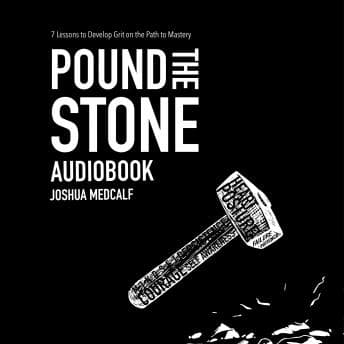

"The person who moves a mountain begins by carrying away small stones."
That Confucius quote isn't from the book, but it might as well be the entire thesis. I started Pound The Stone at 5:47 AM on a Tuesday after a brutal on-call shift where I'd been paged three times between midnight and 4 AM. I was too wired to sleep, too fried to read code, and this 4-hour-49-minute fable about grit seemed like exactly the right length to fill my round-trip commute. And honestly? It was.
The Parable Framework (a.k.a. Business Fable 101)
If you've read Medcalf's Chop Wood Carry Water, you know the formula: fictional character faces adversity, meets wise mentor figures, learns life principles through story rather than bullet points. Pound The Stone runs the same playbook. Jason gets kicked off his basketball team after a fight, has to sell books door-to-door over summer to earn his spot back, and along the way absorbs lessons about failure, vulnerability, courage, and what "mastery" actually means versus what Instagram thinks it means.
The door-to-door sales setup is actually clever - it's one of those universally humbling experiences (rejection every 30 seconds, weather doesn't care about your feelings, nobody wants to talk to you) that makes the grit lessons feel earned rather than preachy. There's a specific stretch where Jason tracks his rejection-to-sale ratio and starts treating it like a game, which - as someone who's stared at error rate dashboards at 3 AM - hit differently than I expected.
Author-Narrated: The Double-Edged Sword
Medcalf narrates his own book, and look, this is always a gamble. He's not Ray Porter (nobody is). But what you get is genuine conviction. The guy clearly believes every word he's saying, and that authenticity carries the motivational sections in a way a hired voice actor might not pull off. His pacing is deliberate, almost coaching-session-slow at times, like he's waiting for you to absorb the point before moving on.
The flip side? There's no vocal range for different characters. Jason, the mentors, the side characters - they all sound like Joshua Medcalf giving a keynote. If you're used to narrators who shift tone and cadence between dialogue and narration, this will feel flat. I bumped it to 1.75x (my standard business book speed) and it actually improved the experience - tightened up the pauses and gave it more energy.
Could've Been a Blog Post? Almost.
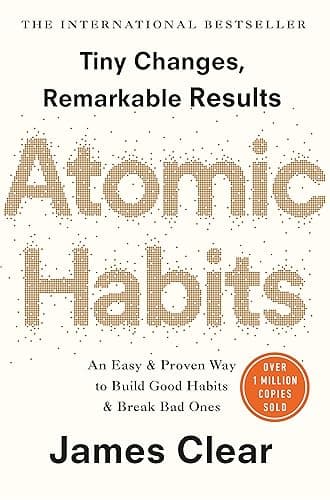
Here's where I have to be honest. The core lessons - consistency beats intensity, embrace failure as data, vulnerability isn't weakness, choose love over fear - are not new. If you've read Grit by Angela Duckworth, Atomic Habits, or literally any sports psychology book from the last decade, you've encountered these ideas before. The ROI on this audiobook is really about delivery method, not novel insight.
But - and this is a meaningful but - the fable format works for people who bounce off traditional self-help. My boyfriend Kevin, who will not touch a business book with a ten-foot pole, actually liked Chop Wood Carry Water because it felt like a story rather than a lecture. There's something to that delivery-over-content argument that Brand, Meet Story makes explicitly — the wrapper matters as much as the idea inside it. Pound The Stone operates the same way. The vulnerability chapter, where Jason has to confront shame about his fight and what led to it, goes deeper than I expected from a book with "grit" in the subtitle. It's not just "work harder." There's real emotional weight to the argument that courage requires letting people see you fail.
That said, at under 5 hours, it doesn't overstay its welcome. Some of these motivational fables pad themselves to 8+ hours with repetitive examples (looking at you, The Alchemist extended edition of life advice). Medcalf says his piece and gets out.
Who This Is Actually For
Perfect for: gym sessions, weekend errands, that Sunday evening anxiety spiral where you need someone to remind you that showing up matters more than being perfect. If you're early in your career or going through a rough patch - job search, team conflict, imposter syndrome season - this will hit harder.
Skip for: anyone who's already deep into performance psychology literature. You won't learn anything new. And if you need narrative complexity or rich world-building to stay engaged, the fable format will feel thin.
The Commit Message
This is basically a coaching session wrapped in a short story. It's not going to change your life if you've already internalized the "process over outcomes" philosophy. But if you need that message delivered in a way that doesn't feel like a PowerPoint deck with a pulse, and you've got one commute to fill? Worse ways to spend 5 hours. I finished it in 2 commutes at 1.75x and felt... grounded. Which, after a week of production incidents, was exactly what I needed.