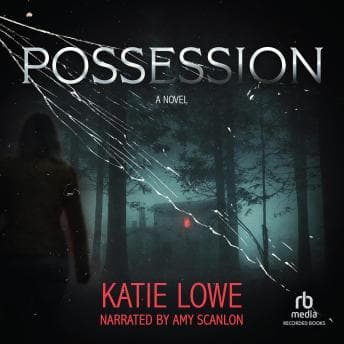

"I don't remember" is possibly the most psychologically loaded phrase a person can utter. It's simultaneously a shield and a confession, a plea for mercy and an admission of guilt. Hannah, our protagonist, wields it like armor for ten years—and honestly? I spent about half this audiobook trying to figure out if I believed her.
Look, I have a professional problem with unreliable narrators. Not because I dislike them (I love them, actually, they're my bread and butter) but because so many authors use the trope as a crutch. "She doesn't remember" becomes shorthand for "I don't want to do the work of showing you her psychology." Katie Lowe, thankfully, doesn't fall into that trap. Hannah's amnesia isn't convenient—it's claustrophobic. You feel her circling the same traumatic night, prodding at the edges of memory like a tongue finding a missing tooth.
The Podcast-as-Antagonist Device
Here's what I found genuinely fascinating from a narrative psychology standpoint: the true crime podcast isn't just a plot device, it's essentially a Greek chorus weaponized against the protagonist. Conviction (great name, by the way—the double meaning isn't subtle but it works) represents something we rarely examine in fiction: the way public narrative can colonize private memory. Hannah doesn't just have to remember what happened. She has to remember it correctly, in a way that satisfies strangers on the internet who've decided they know her better than she knows herself.
This is a real phenomenon, by the way. The research on memory contamination through external narratives is robust and terrifying. Lowe clearly did her homework.
But—and this is a significant but—the pacing drags in the middle third. I was on a long jog through Cambridge when I hit the section where Hannah's relationship with Darcy starts developing, and I genuinely considered switching to a podcast. (Ironic, given the subject matter.) The slow burn works for atmospheric tension, but there were stretches where I felt like I was waiting for Hannah to catch up to conclusions I'd already drawn.
Amy Scanlon Carried Me Through
Okay, so here's the thing about 13-hour audiobooks: the narrator can make or break your commitment. Amy Scanlon made it. Her Hannah voice has this quality—slightly detached, almost clinical—that perfectly captures someone who's spent a decade dissociating from her own life. When Hannah's composure cracks, Scanlon doesn't go for melodrama. The emotion bleeds through in small ways: a slight tremor, a pause that lasts a beat too long.
The character differentiation is genuinely impressive. Darcy sounds warm but with an edge you can't quite identify. The podcast hosts have that performative concern that anyone who's listened to true crime recognizes—sympathetic but hungry. I couldn't find much about Scanlon's background online, but based on this performance, she understands something crucial about psychological thrillers: restraint is scarier than hysteria.
Multiple listeners mentioned they finished the book specifically because of her narration, and I get it. During the slower sections, her voice was the thread keeping me tethered.
Hannah on the Couch
Hannah exhibits classic patterns of traumatic dissociation complicated by what appears to be pre-existing attachment issues. (My therapist would have thoughts about this character, believe me.) What makes her compelling isn't the mystery of what she did or didn't do—it's watching someone whose entire sense of self has been constructed around not-knowing suddenly forced to excavate the truth.
The familicidal grandmother detail? Psychologically, this tracks beautifully. Hannah isn't just afraid of what she might have done. She's afraid of what she might be, genetically, inevitably. The Gothic asylum backstory could have felt heavy-handed, but Lowe weaves it into Hannah's internal logic in a way that felt earned.
What didn't quite work for me: Darcy's motivations remain murky in a way that felt less like intentional ambiguity and more like the author running out of runway. I wanted deeper excavation of that relationship. It's set up as this crucial confidante dynamic, and then... it doesn't fully pay off. Maybe I'm too trained to expect clean psychological resolution. Real relationships are messy. But this is fiction, and I wanted more.
The Case File, Closed
Would I listen again? Probably not—but that's not a criticism, exactly. This is the kind of psychological thriller that works best when you don't know where it's going. The tension relies on uncertainty, and once that's resolved, you can't unfeel the resolution.
If you're someone who enjoys picking apart character psychology (hello, that's literally my job), there's enough here to chew on. Hannah is a case study in how trauma doesn't just distort memory—it distorts identity. And the true crime podcast angle raises genuinely interesting questions about who owns a victim's story.
Who should listen: Fans of psychological suspense who don't mind a slow burn and can tolerate some pacing issues in exchange for atmosphere and a narrator who absolutely nails the assignment. Who should skip: If you need propulsive plotting or find unreliable narrators more frustrating than fascinating, this isn't your book.
House of a Thousand Candles offers a similar atmospheric slow burn, though with a Gothic mansion instead of a podcast framing the mystery. Just maybe save Possession for a long road trip rather than a morning jog. You'll want to be somewhere you can't easily quit.