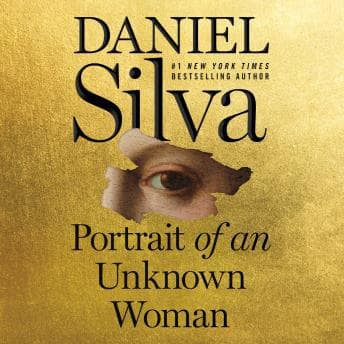

Everyone keeps telling me Gabriel Allon is the James Bond of the art world. High stakes, explosions, international espionage. But honestly? Listening to Portrait of an Unknown Woman felt less like an action movie and more like watching a master painter slowly—very slowly—layer glaze over a canvas. And you know what? I didn't hate it.
Usually, if there aren't ghosts or at least a looming sense of supernatural dread, I'm checking my watch. But there's a specific kind of horror in the idea of a perfect fake—a lie so beautiful it becomes truth. That's the vibe here.
Ballerini Behind the Mic
Let's just get this out of the way: Edoardo Ballerini is a god among narrators.
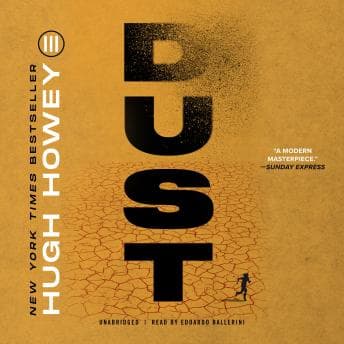
I listen to a lot of audiobooks (occupational hazard of being a librarian and an insomniac), and so many narrators treat "accents" like a vaudeville act. They go big, they go loud, and it pulls you right out of the immersion. Ballerini? He goes under. He slips into these characters like he's putting on a well-tailored suit. He also narrated Shift, where he brought that same understated precision to a completely different kind of story.
There's a smoothness to his delivery that actually makes the slower parts of Silva's writing palatable. And let's be real—there are slow parts. (Shirley, my cat, actually fell asleep on the speaker during Chapter 4, which is either the highest compliment she can give or a scathing critique. I'm choosing to believe it was the soothing baritone.)
He captures Allon's weariness perfectly. This isn't a young spy running across rooftops; this is a retired guy who just wants to hang out in Venice with his kids but keeps getting pulled back in. Ballerini nails that "I'm too old for this" energy without sounding bored. That's a hard line to walk.
Where the Paint Dries
Here's the contrast, though. The performance is A+, but the story? It tests your patience.
If you're coming here for a fast-paced thriller where people get thrown out of helicopters every twenty minutes, you're going to be disappointed. This is a procedural. It's about brushstrokes, provenance, and the dirty money moving through the art world. Intellectual suspense, not adrenaline suspense.
I dug the art forgery mechanics—it's fascinating stuff—but there were moments where I found myself zoning out while shelving books at the library. Silva has a tendency to get on a soapbox about politics. (We get it, the world is a mess. I read the news. I don't need my escapism to lecture me.) It felt heavy-handed, and frankly, it dragged the pacing down.
I had to rewind a few times because my brain just... wandered off. Not because it was bad, but because it was dense. If I want something that grabs me by the throat and doesn't let go, I'll reach for Six Creepy Stories by Edgar Allan Poe instead. This one requires focus. Not a "listen while you do high-intensity interval training" book. This is a "listen while you stare out the window at the rain and drink black coffee" book.
Who's This For (And Who Should Run)
Listen if: You love the craft of narration and want to hear Ballerini put on a clinic. Or if art world intrigue and slow-burn procedurals are your thing.
Skip if: You need constant stimulation, get easily annoyed by political asides in your fiction, or want your thrillers to actually thrill at a steady clip.
The Librarian's Verdict
So, is it worth the credit?
If you love the craft of narration, absolutely. Ballerini elevates the material. Even when the plot felt like it was wading through molasses, his voice kept me tethered.
For me? It was a nice break from the jump scares I usually subject myself to. It's classy, it's well-produced, and it sounds expensive. Sometimes that's enough.