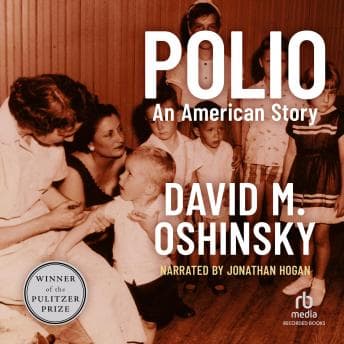

What happens when you combine a summer disease that terrified an entire nation with the kind of scientific ego battles that would make a reality TV producer weep with joy? You get this book. I picked this up expecting a dry medical history. What I got was something closer to a war story.
I'm not exaggerating. Spent three days on a consulting job in Houston, and this book ate up every minute of windshield time. That kind of total absorption is rare - last time a history book grabbed me like that was Greek Myths, though that's obviously a different kind of battlefield. Ranger got the highlights when I got home.
The Mission Brief
Oshinsky does something here that most historians can't pull off - he makes you understand the terror. We're talking about a disease that would sweep through towns every summer, parents keeping kids out of swimming pools, movie theaters shutting down. The uncertainty of it all. Ninety-nine people could carry this thing and never know it while one kid ends up in an iron lung. That's the kind of asymmetric threat that keeps you up at night.
The book covers the whole campaign - from FDR's diagnosis in 1921 through the vaccine trials and the rivalry between Salk and Sabin that, honestly, reads like something out of a thriller. These two brilliant men basically couldn't stand each other, and their competing approaches to the vaccine created political and scientific drama I had no idea existed. Salk's killed-virus vaccine versus Sabin's live-virus approach. Different philosophies, different risks, different egos.
And the March of Dimes? I always thought that was just some charity. Turns out it was a revolutionary fundraising machine that changed how America fights disease. Grassroots contributions from regular people - dimes from kids, donations from housewives - funding cutting-edge medical research. Pretty remarkable organizational achievement.
Hogan's Intel Delivery
Credit where it's due. Hogan's narration is exactly what this material needs. No dramatic flourishes, no trying to make it more exciting than it is. Just clear, steady delivery that lets the story do the work. His pacing matches the material - knows when to let a moment breathe, knows when to push through the technical sections.
The scientific content is dense in places. Vaccine development, virus behavior, immunology concepts. Hogan doesn't dumb it down, but he delivers it in a way that keeps you tracking. I listened at 1.25x (as usual) and never felt lost. That's a narrator who understands his material.
Some listeners have mentioned the book can bog down in details. They're not wrong - there are stretches where Oshinsky really gets into the weeds on fundraising politics or research methodology. But honestly? That's where the good stuff is. The details make this feel real instead of just another Wikipedia summary of medical history.
Why This Matters Now
I finished this book and immediately thought about everything we just lived through with COVID. The vaccine debates, the political interference in science, the public health messaging failures - all of it has precedent in this story. The Cutter Incident alone (where a batch of improperly inactivated vaccine actually gave kids polio) reads like a nightmare scenario that public health officials still study.
Oshinsky earned that Pulitzer. This isn't just medical history - it's a case study in how America mobilizes against a threat. The coordination between private philanthropy, government, and scientific institutions. The role of media in shaping public perception. The ethical questions around vaccine trials on children. All of it.
For anyone in security, public health, or crisis management, there's operational intelligence here. How do you fund a massive research effort? How do you manage competing scientific egos? How do you communicate risk to a terrified public? These problems don't change much.
Mission Debrief
Fourteen hours is a commitment. I get it. But this is the kind of history that actually teaches you something about how the world works. Ranger approved - he didn't even get up during the Salk vaccine trial chapters, which is saying something.
Worth your time if you want to understand how America fought and won against a disease that paralyzed presidents and children alike. Skip it if you need explosions and car chases - this is methodical history, not action. (Linda was right about my usual preferences, but this one earned its place on the shelf.)
Mission accomplished, Oshinsky. Mission accomplished.






![Steve Jobs [unabridged audiobook] audiobook cover](/_next/image?url=https%3A%2F%2Fcovers.audiobooks.com%2Fimages%2Fcovers%2Ffull%2F9788499923406.jpg&w=1920&q=75)