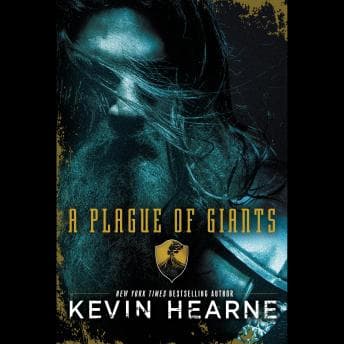

Kevin Hearne wrote a 22-hour fantasy novel structured like a bard telling stories within a story, and somehow two narrators made me care about every single thread.
Let me back up. I was walking the lakefront with Denise on a Saturday morning - one of those rare October days where Chicago pretends it's not about to betray you with winter - and the opening chapter hit me like a freight train. Tallynd, this soldier-widow-mother, is fighting off an invasion of giants, and the sheer physicality of that scene through the audio had me stopped dead on the path. Denise thought I was having a moment. I was. Just not the kind she worried about.
The Bard's Trick and Why It Works
Here's what Hearne is really doing with this book, and it took me a few hours to appreciate it fully. The frame narrative - Dervan the historian recording a bard's tales - isn't just a structural gimmick. It's doing the same thing Chaucer did with The Canterbury Tales and what Scheherazade does in One Thousand and One Nights: using the act of storytelling itself as both engine and theme. The bard, Fintan, literally shape-shifts into the characters he's narrating about. He becomes them. And there's something almost meta about that when you're listening to two narrators doing the same thing with their voices.
The multiple POV structure is ambitious. We're bouncing between Tallynd's desperate military campaign, Dervan's slow-burn espionage plot, Abhi's journey from reluctant hunter to something much stranger - and several more characters beyond those three. It's a lot. This is not a book you half-listen to while pretending to pay attention at a faculty meeting. (Trust me. I tried during Principal Martinez's facilities update. Had to rewind twenty minutes.) This one demands your full brain.
If you loved The Name of the Wind for its frame narrative structure but wished it had more POV diversity and less male wish-fulfillment, this is its spiritual successor. Hearne's built an entirely new magic system - the kennings - where different nations draw power from different elements, and the worldbuilding unfolds through the stories rather than through exposition dumps. The prose deserves to be savored. Not every line is poetry, but Hearne trusts his readers enough to let the world reveal itself at its own pace.
Two Narrators, One Surprisingly Good Marriage
Luke Daniels is a known quantity if you've listened to the Iron Druid books, and he's doing career-best work here. His range across the male characters is genuinely impressive - you can hear the class differences between nations, the age differences between characters. There's a moment where Fintan the bard is performing for a crowd and Daniels shifts between half a dozen voices in rapid succession, and it doesn't feel like showing off. It feels like theater.
Now. Xe Sands. Let's talk about this honestly because the listener community is split and I understand why. Her female character work is strong - Tallynd in particular carries real emotional weight, and I bought every moment of that opening battle. But there are stretches where her delivery gets a bit mumbly, words slightly swallowed, and in a book with this many characters, that creates moments of confusion. A couple of the secondary female characters blurred together vocally for me. By hour eight or nine I'd adjusted, and her work in the back half is much more distinct. But that adjustment period is real.
Here's the thing though - Luke Daniels singing off-key during the bard performance scenes? Genuinely charming. He commits to it with such enthusiasm that you forgive the pitch. The narrator understands that pause is punctuation, and both Daniels and Sands use silence well during the emotional beats. Tallynd processing grief while preparing for war. Abhi reckoning with a power he didn't ask for. Those quiet moments land.
I listened at 1.0x because the author chose those words and I choose to hear them properly, but I'll admit - around the midpoint, during some of the political exposition sections, I understood why some listeners bump it to 1.25x. The pacing sags in the middle third before the threads start converging.
Who Gets the Assignment and Who Gets Excused
This is for readers who genuinely enjoy epic fantasy worldbuilding and don't need a payoff every chapter. If you need tight, propulsive plotting, you'll get frustrated. The ending is abrupt - this is book one of a series and it doesn't pretend otherwise. My students would hate the pacing. I love it. But I also teach patience for a living, so take that for what it's worth.
Skip it if: you struggle with multiple POV stories, you want a standalone experience, or narration inconsistencies between two performers will drive you crazy. Though honestly, if narration inconsistencies are your sticking point, I'd send you toward something tighter first — I gave Verses for the Dead a four-star listen recently and the single-narrator delivery there is clean and controlled in a way that might reset your expectations before you tackle a dual-narrator epic.
Listen if: you've been hungry for epic fantasy that builds a genuinely new world instead of recycling Tolkien's furniture, and you have 22 hours to commit.
Worth Pausing the Faculty Meeting For
This is Hearne leveling up. The Iron Druid books were fun but felt like appetizers. A Plague of Giants is the meal - imperfect, occasionally overlong, but substantial and nourishing in a way that most modern fantasy forgets to be. The dual narration mostly works, Daniels is exceptional, Sands grows into it, and the story rewards your patience. Twenty-two hours is a commitment. This one earns most of them.