
"Nature is a principle of motion and change" — that's Aristotle, somewhere around the two-hour mark, and I had to stop walking and just stand there on the lakefront like a man who'd been personally insulted by a philosopher dead for 2,300 years. Because here's the thing: I've been teaching literature for two decades, and I've quoted Aristotle's Poetics a hundred times without ever actually sitting with his Physics. That felt like knowing Shakespeare from Bartlett's Quotations. So I finally did it. Nearly ten hours of Aristotle arguing with himself, with Parmenides, with Zeno, with the entire pre-Socratic tradition — and I came out the other side genuinely changed in how I think about time and causation.
Let me be honest upfront: this is not a book. Not in the way we use that word. It's a series of lecture notes, or maybe transcriptions of oral arguments, stitched together across eight books that were never meant to be consumed in a single sitting. Aristotle doesn't tell you a story. He builds an argument the way a bricklayer builds a wall — one careful definition at a time, each one load-bearing.
The Four Causes Walk Into a Faculty Meeting
The heart of Physics — the part that genuinely kept me awake past midnight when I should've been grading sophomore essays on The Great Gatsby — is Aristotle's theory of causation. Material cause, formal cause, efficient cause, final cause. You've probably heard these referenced somewhere, maybe a philosophy survey class you half-remember. But hearing them laid out in sequence, with Aristotle systematically dismantling objections from thinkers like Empedocles and Democritus, is a different experience entirely. He's not just proposing an idea. He's conducting a debate with ghosts, and winning.
What surprised me most is how much of his framework still structures the way we think without knowing it. When my students ask "why did Gatsby do that?" they're asking about final cause — purpose, intention. When they ask "what made him that way?" — efficient cause. Aristotle gave us the vocabulary for curiosity itself. My students would hate this. I love it.
Geoffrey Edwards and the Challenge of Making Arguments Audible
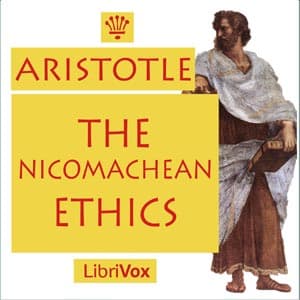
Here's where I have to be careful, because Edwards is working with material that would defeat most narrators. This is a LibriVox recording — volunteer-produced, public domain — and you need to know that going in. The production is clean enough, no distracting background noise or jarring edits, but it carries that slight flatness that comes with home recording setups. Edwards reads with steady clarity, maintaining an even academic tone that suits the material. He doesn't try to dramatize Aristotle, which is the right call — this isn't Hamlet, and treating it like performance would be absurd.
But. And this is a real "but." Nearly ten hours of sustained philosophical argument in a single narrator's measured cadence is genuinely demanding. Edwards doesn't vary his pacing much between Aristotle's denser passages on the infinite (Book III, which is punishing) and his more accessible arguments about motion and place. Everything arrives at the same speed, the same register. There were stretches — particularly the extended treatment of Zeno's paradoxes — where I needed to rewind because my attention had drifted not from boredom but from the monotony of delivery. The narrator understands that pause is punctuation, but I wanted more of those pauses, more breathing room between the heavy conceptual lifts.
This reminds me of what Hemingway said about prose being architecture — well, Aristotle's architecture is dense, and the narrator needs to be the tour guide who knows when to stop and point at the ceiling. Edwards guides you through, but he doesn't always stop.
Who Should Actually Press Play
Let me be direct. If you're looking for an audiobook that carries you along, this isn't it. Physics demands your active participation. You will rewind. You will pause and think. You will probably need a companion text or at least a good summary of each book's argument to track where Aristotle is going.
But if you've ever been curious about the foundations — not just of Western philosophy but of how we conceptualize nature, change, space, and time — this is the source. Not a popularization, not someone explaining Aristotle to you. Aristotle himself, working through the problems in real time. There's something raw about that. You can feel him thinking, testing an argument, circling back when it doesn't hold.
If you loved Plato's dialogues, this is their difficult, less charming cousin. Less dramatic, more rigorous. The spiritual successor to the Republic, but without the literary flourishes. Pure thought.
People who should listen: philosophy students, teachers who reference thinkers they haven't actually read (guilty), anyone who wants to understand why "cause" means four different things. People who should skip: anyone expecting narrative momentum, anyone who needs a dynamic performance to stay engaged, anyone who isn't willing to treat this like a ten-hour seminar.
Worth Pausing the Faculty Meeting For
I finished this at 1:00 AM on a Tuesday, papers still ungraded on the kitchen table, Denise already asleep. And I sat there thinking about how Aristotle's argument that time requires a soul to perceive it — that without a counting mind, there is no "before" and "after" — is essentially the same debate physicists are still having about consciousness and quantum measurement. Twenty-three centuries. Same question.
The prose deserves to be savored, even in translation, even through a volunteer narrator's steady voice. This is why we still read the classics — not because they have all the answers, but because they asked the questions first, and asked them better than we usually do.
Is this a premium audiobook experience? No. It's a free LibriVox recording of ancient lecture notes. Though I'll admit, the credits I've spent on lighter reads — like my review of Royally Screwed, which is about as far from Aristotle as you can get — have occasionally delivered their own unexpected rewards. But the ideas inside it are worth more than most books I've spent credits on this year. Just know what you're getting into.