
I wasn't expecting to spend five hours with Bertrand Russell parsing the difference between propositions and facts, but here we are. My wife was out of town, Ranger was snoring by the fireplace, and I figured—why not tackle something that'd make my brain hurt in a different way than threat assessments?
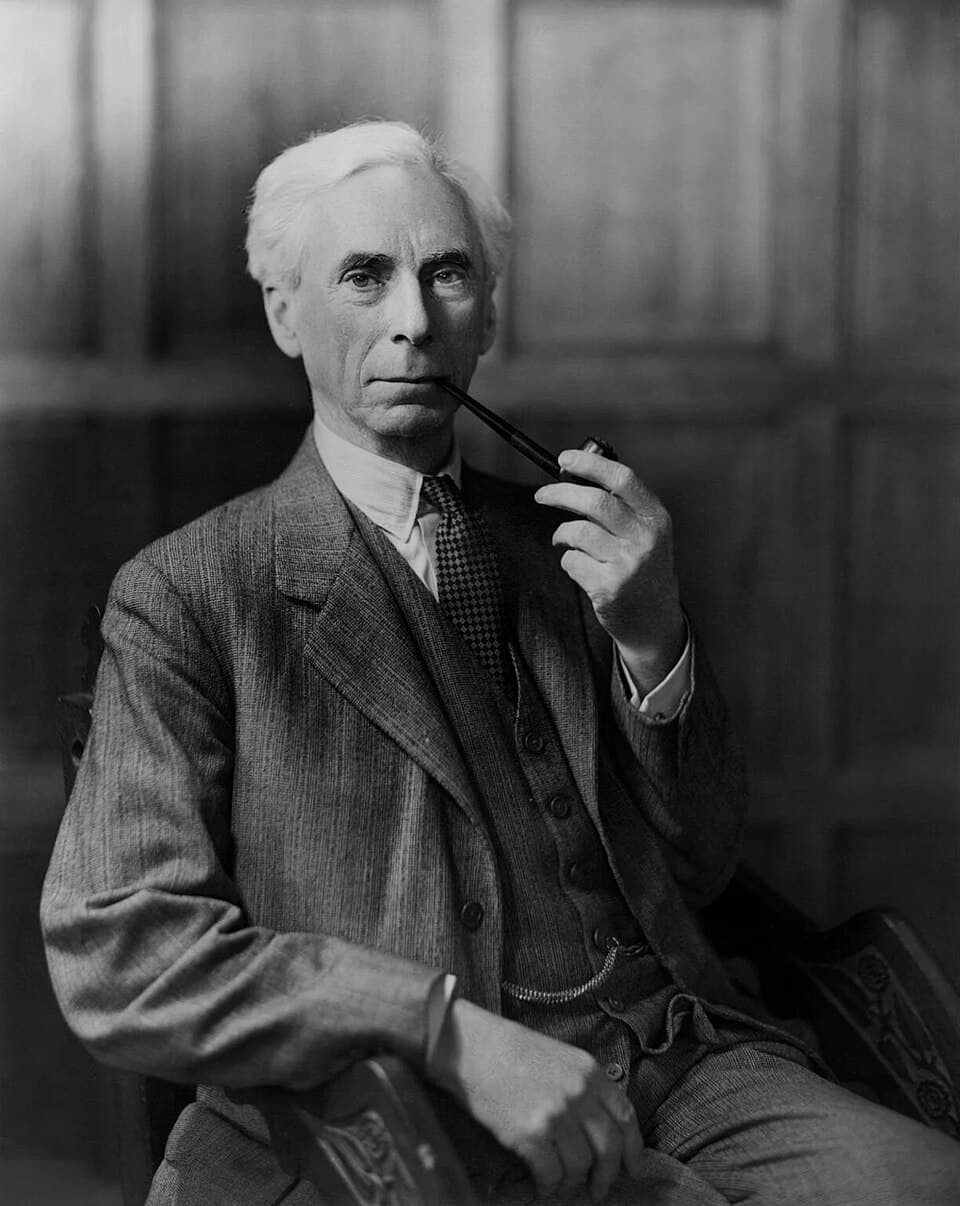
Turns out, Russell's 1918 lectures are basically an intellectual after-action report. He's breaking down reality into its smallest components, trying to figure out what language actually *does* when we use it. Military parallel? It's like strip-cleaning a weapon you've fired a thousand times—suddenly you're seeing parts you never really examined.
Russell Runs a Tight Briefing
Here's what surprised me. Russell doesn't waste time. For a philosopher, the man gets to the point with almost military efficiency. He lays out his mission early: figure out what kinds of facts exist, how words relate to things, and whether the universe is one big unified mess or a collection of independent atomic facts. Spoiler—he's betting on the atoms.
The lecture format works beautifully in audio. These were originally delivered to a live audience, so Russell's pacing has that natural rhythm of someone actually talking to people, not writing for the page. He uses examples. He anticipates objections. He occasionally admits when he's not entirely sure—which, coming from one of the sharpest minds of the 20th century, is oddly reassuring.
What grabbed me was his breakdown of "logical atoms"—these irreducible facts about reality that can't be broken down further. Russell argues that most of what we think we know is actually built from these basic building blocks. It's like understanding that every complex tactical situation is just a combination of fundamental elements: terrain, forces, timing, objectives. Same principle, different domain.
Elkind Knows His Russell
Landon Elkind isn't just reading this—the man is a Russell scholar. His dissertation is literally about logical atomism. That matters. When Russell gets dense (and he does, especially when distinguishing between "descriptions" and "names" in the third lecture), Elkind's delivery suggests he actually understands what he's saying. No stumbling over technical terms. No weird emphasis on the wrong syllables.
The pacing is measured. Almost too measured at times—I bumped it to 1.25x after the first hour, which felt about right. At normal speed, it's contemplative. At 1.25x, it's a solid briefing tempo.
One thing: this is a LibriVox recording, so don't expect studio-quality production. It's clean, perfectly listenable, but not polished in that Audible-exclusive way. For free? Can't complain.
Where It Lost Me (Briefly)
Around hour three, Russell goes deep into the weeds on molecular propositions and truth functions. I'll be honest—I rewound a section twice and still wasn't sure I fully tracked it. This isn't Russell's fault or Elkind's. Some philosophical arguments just don't translate perfectly to audio. You can't stare at the page and work through the logic step by step.
But here's the thing: even when I was slightly lost, I wasn't bored. Russell has this way of making you feel like you're almost getting it, like the insight is right there if you just concentrate a little harder. That's rare in philosophy.
Who Should Deploy This (And Who Shouldn't)
If you've never touched analytic philosophy, this might be a rough entry point. Russell assumes you're at least familiar with basic logical concepts. But if you've got some background—even just a college logic course or some exposure to Wittgenstein—this is essential listening.
History buffs, take note: this is Russell explaining ideas he credits to Wittgenstein, recorded in 1918 while Wittgenstein was a POW. There's something poignant about that—Russell trying to preserve and develop his former student's ideas, not knowing if Wittgenstein would survive the war. That same uncertainty about survival haunts Heart of Everything That Is, though Bob Drury and Tom Clavin are documenting a different kind of war entirely.
Skip this if you need action. Skip it if you need narrative. This is pure intellectual exercise—brain calisthenics.
Mission Debrief
Worth your time? If you're the type who likes understanding *why* we think the way we do about language and reality—absolutely. Russell was building the foundation for how analytic philosophy works today. Elkind's narration is competent and informed. The format suits audio better than most philosophy does.
Ranger slept through the whole thing, but I caught him tilting his head during Russell's bit about whether "the present King of France is bald" is true or false when there is no King of France. Even the dog knew that was a good puzzle.
Free on LibriVox. Five hours. A genuine intellectual challenge from one of the 20th century's sharpest minds. I've spent money on far worse.






![Steve Jobs [unabridged audiobook] audiobook cover](/_next/image?url=https%3A%2F%2Fcovers.audiobooks.com%2Fimages%2Fcovers%2Ffull%2F9788499923406.jpg&w=1920&q=75)