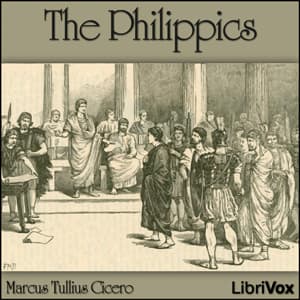

Cicero walked into the Roman Senate and essentially said, 'Mark Antony, you are a drunk, a coward, a thief, and a disgrace to the Republic - and I have fourteen speeches worth of evidence.' Then he got killed for it. That's the kind of political courage that makes you sit up straight in your chair.
I caught most of this during a late-night drive back from a client site in San Antonio - empty highway, Ranger asleep in the back, nothing but darkness and a dead Roman senator making the case of his life. Fitting, honestly. There's something about driving through the dark at 1 AM that makes a man who knew he was signing his own death warrant feel very present.
Let me cut to the chase: this is one of the most extraordinary political documents ever produced, and if you care at all about rhetoric, power, or the mechanics of how republics fall, you need to hear it.
When the Briefing Gets Uncomfortable
What hit me hardest wasn't the fire - it was the intelligence failure. Cicero saw Antony clearly. Documented his corruption, his drunkenness, his abuse of power, his looting of Caesar's estate. Speech after speech, building a prosecutorial case that would hold up in any court. The man did his reconnaissance.
But he missed Octavian entirely. Actively promoted him, handed him legitimacy, helped arm a nineteen-year-old's private army because he thought he could use the kid against Antony. I've seen this scenario play out in real life - not in Rome, obviously, but in the way commanders sometimes fixate so hard on the known threat that they miss the developing one. Ordinary Men does something similar - shows you exactly how intelligent, capable people construct frameworks that blind them to what's happening right in front of them. Cicero was so locked onto Antony that Octavian walked right through his perimeter.
That irony is baked into every speech here. You're listening to a brilliant man construct his own execution warrant, and he doesn't know it. By the time the Second Philippic lands - the one he never actually delivered in person, just circulated as a pamphlet - you understand you're reading the work of someone operating at the absolute edge of what's survivable. He knew it too. The correspondence makes clear he understood the risk. He did it anyway.
That part, I respect enormously.
The Author Clearly Did His Homework - 2,067 Years Ago
This is a LibriVox recording, which means the narrator 'ontheroad' is a volunteer, not a professional. I went in with adjusted expectations. What I got was... serviceable. The pacing is deliberate - maybe a touch slow for my taste, which is why I bumped to 1.5x for the longer speeches. The narration doesn't have the kind of controlled intensity that material like this deserves. When Cicero is cataloguing Antony's vices in the Second Philippic - the gambling, the drinking, the public disgrace - it should feel like a prosecutor landing blows. It comes across more like someone reading a history lecture.
No audio disasters, no technical issues. Clean production, standard LibriVox quality. But the gap between what the text is doing and what the narration delivers is real. This is material that needs someone who understands that Cicero was performing these speeches, that Roman oratory was physical and rhythmic and designed to be heard in a marble room full of men who wanted him dead. A flat read misses that.
Still - the words survive the delivery. That's how good the source material is.
Nine Hours with a Man Who Chose Death Over Silence
At nine hours and forty-seven minutes, this isn't a casual listen. But it's not padding either. Fourteen speeches across nearly two years, each one escalating, each one narrowing Cicero's options while expanding his moral clarity. The later Philippics - when he's openly calling for war against Antony, when he's essentially betting the Republic on a military solution - have a different energy than the early ones. You can feel the desperation underneath the rhetoric.
Ranger woke up somewhere around the Fourteenth Philippic and put his head on the center console. Good instincts. That one hits different - it's essentially Cicero's last major public statement before the proscriptions came down. He knew what was coming.
If you call a magazine a clip, I'm already annoyed. If you write political speeches without understanding that words have consequences, I'm equally annoyed. Cicero understood both the power and the cost of what he was doing. That's not common. That's not common now, and it wasn't common then.
Stream this one. The source material earns five stars; the narration earns three. Split the difference, use a subscription, and listen at 1.5x. Worth every minute of your time.






![Steve Jobs [unabridged audiobook] audiobook cover](/_next/image?url=https%3A%2F%2Fcovers.audiobooks.com%2Fimages%2Fcovers%2Ffull%2F9788499923406.jpg&w=1920&q=75)