
I'm going to start with a confession that might get my English teacher card revoked: I almost gave up on this audiobook in the first hour.
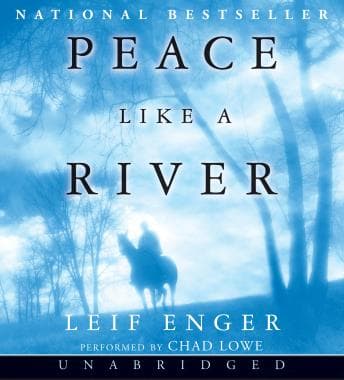
I know. I KNOW. Peace Like a River is basically required reading for anyone who claims to love American literary fiction. It won awards. Time Magazine loved it. My book club has been pestering me about it for years. And there I was, walking the lakefront with Denise, thinking "this narration is too... quiet."
I was wrong. Spectacularly, embarrassingly wrong.
The Slow Burn That Earns Its Keep
Chad Lowe's narration is deliberate in a way that feels almost defiant in our speed-everything-up culture. No vocal pyrotechnics. No distinct character voices that scream "ACTING!" Just this warm, meditative presence that—and I'm realizing this as I write—perfectly mirrors Reuben Land's perspective as our narrator within the story.
Here's the thing about Enger's prose: it's lyrical without being precious. It reads like someone who grew up on Twain and Stevenson but never forgot that stories are supposed to MOVE. The 1960s Midwest setting feels both specific and mythic, and Lowe's delivery gives it room to breathe. By hour three, I'd stopped noticing the narration at all. It had become invisible. That's exactly what great narration should do with material this strong.
(My students would probably call the pacing "mid" and ask when something happens. Something does happen. Davy shoots two men who break into their home. The question of whether it was justice or murder haunts the entire book.)
When Faith Feels Earned
I teach a lot of books that deal with faith—Flannery O'Connor, Marilynne Robinson, the usual suspects. I've seen similar eye-rolling when I try to teach Alice's Adventures in Wonderland—another book where the impossible happens without explanation. But Enger does something I rarely see: he makes the miraculous feel natural without making it feel cheap.
Jeremiah Land is touched by something. The book doesn't lecture you about what that something is. You just watch him command his newborn son to breathe, and the boy breathes. You watch small impossibilities accumulate. And because Reuben—our narrator—is both a believer and a skeptic, you're never quite sure if you're reading magic realism or just a child's memory of an extraordinary father.
Lowe's delivery here is crucial. He doesn't oversell the miracles. Doesn't add reverent pauses or trembling emotion. He treats them the way Reuben treats them: as facts that happened, strange as they were.
The Family Drama at the Core
Strip away the literary allusions and the questions about divine intervention, and you've got a family road story. That same focus on family tension underneath bigger themes is what made Little Fires Everywhere work so well for me. A father and his two remaining children chasing their brother/son across the Badlands in an Airstream trailer. It's Huck Finn meets a Western meets a meditation on what we owe the people we love.
The supporting characters—especially Swede, Reuben's poetry-writing little sister—are vivid enough that I wished for distinct voices. This is where some listeners bounce off Lowe's narration. He keeps everyone in the same register, differentiated by subtle shifts rather than full characterization. It's a choice. I grew to appreciate it because it keeps you inside Reuben's consciousness, but I understand the frustration.
(I listened to the last two hours during a faculty meeting about standardized testing. Principal Martinez, if you're reading this—sorry. But also, I regret nothing.)
Who Should Press Play (And Who Should Skip)
If you loved Gilead or anything by Kent Haruf, this is your next listen. If you're the kind of person who thinks "slow" is an insult rather than a description, sample first. The pacing is intentional, but it IS slow. Eleven and a half hours of meditative prose requires a certain mood.
I'd also say this: if you've only read Peace Like a River in print, the audiobook adds something. Enger's sentences have a rhythm that wants to be heard. Lowe understands that rhythm. He doesn't rush the beauty, and he doesn't oversell the tragedy.
The Ending That Got Through
I won't spoil it—but it hit me harder than I expected. I was standing in my kitchen, papers half-graded, just... standing there. That doesn't happen often anymore. Twenty years of teaching has given me a pretty thick skin for literary gut-punches.
This one got through.