
What if the most effective anxiety treatment you'll ever encounter was recorded decades ago by a woman who sounds like she's about to offer you tea and biscuits?
I came across Dr. Claire Weekes while researching the history of panic disorder treatment for a paper I'm probably never going to finish. And look, as someone who studies why people do what they do, I'm inherently skeptical of self-help. Most of it is repackaged common sense dressed up in modern jargon. But Weekes? She's the real thing. I wish more self-help authors would skip the jargon entirely—QBQ! The Question Behind the Question does this well, cutting straight to actionable frameworks without the fluff. A pioneer who figured out the mechanics of panic before we had the neuroimaging to prove her right.
The Voice That Understands Your Nervous System
Here's what's fascinating from a psychological perspective: Weekes narrating her own work isn't just a nice touch—it's therapeutically significant. Research shows that parasympathetic activation (that's your body's calm-down system) responds to vocal tone. And her voice? It's like auditory Valium. Warm, unhurried, with this grandmotherly quality that somehow doesn't feel condescending.
I listened to this during a particularly anxious week—deadline stress, the usual academic chaos—and found myself genuinely calmer. Not in a woo-woo way. In a "my heart rate actually slowed down" way. She has this intimate delivery, like she's sitting across from you, explaining exactly what's happening in your body and why it won't kill you.
Now, some listeners find her tone old-fashioned. And okay, yes, there's a mid-century quality to it. One reviewer compared it to WWII propaganda films, which made me laugh because I can kind of hear it. But here's the thing: that authoritative, no-nonsense tone is part of what makes it work. She's not hedging. She's not saying "you might try" or "some people find." She's telling you what to do with the confidence of someone who's seen it work thousands of times. That kind of authoritative certainty reminds me of Robert Greene's approach in Art of Seduction—he presents psychological frameworks with zero hedging, like he's revealing universal laws rather than suggestions.
Four Words That Predate Modern Therapy
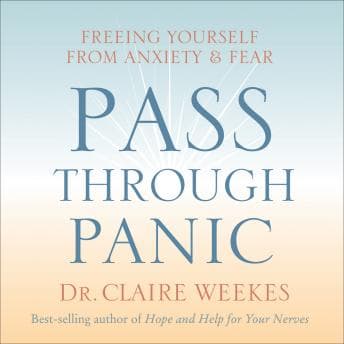
What makes this a fascinating case study in effective therapeutic communication is how simple her framework is. Face, accept, float, let time pass. That's it. Four concepts. And yet she spends two hours unpacking them with such specificity that you actually understand what "floating" through panic means.
My therapist would have thoughts about this—specifically, she'd probably recognize that Weekes was doing exposure therapy and acceptance-based work before those became the gold standards they are today. The woman was ahead of her time by decades. Queen Elizabeth II recognized her contributions to medicine, and honestly? Deserved.
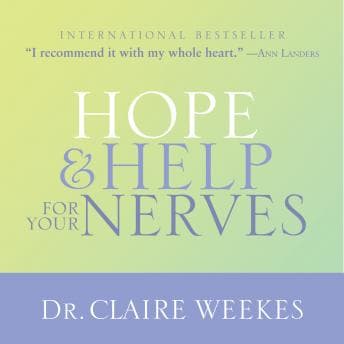
The content does overlap with her other works, particularly Hope and Help for Your Nerves. If you've read that, you're getting similar material here. But the audio format hits different. There's something about hearing her explain that your racing heart won't actually harm you—in that calm, steady voice—that reading it on a page can't replicate.
Who Should Queue This Up (And Who Should Skip)
If you're in the middle of an anxiety spiral and need something to ground you, this is genuinely useful. Several listeners reported playing it during panic episodes and finding real relief. The short length (under two hours) means you can get through it in a single afternoon or break it into chunks.
But if you're expecting modern production values—music, sound effects, a narrator with vocal range—you'll be disappointed. This is straightforward, clean audio of an older woman talking. That's it. And if you're impatient with repetition, she does circle back to core concepts multiple times. (I'd argue that's pedagogically sound, but I get why it might frustrate some people.) The old-fashioned tone will be a dealbreaker for some. I found it charming. My research assistant found it "kind of pompous." Your mileage may vary.
The Psychologist's Recommendation
As someone who spends her days analyzing why fictional characters make terrible decisions, I appreciate when someone understands human nature—including the parts we'd rather not examine. Weekes understood panic not as a character flaw but as a nervous system doing exactly what nervous systems do. That reframe alone is worth the listen.
It's not going to replace therapy. It's not a magic fix. But as a companion piece to actual treatment, or as a resource for those moments when your brain is convinced you're dying and you need someone calm to remind you that you're not? It's remarkably effective.
I keep it downloaded for emergencies. My therapist approves.