
When did parenting become a war metaphor?
I was chopping onions for a dal that was going to take way too long for a Wednesday night when Maurice England's warm, Southern-tinged voice started telling me that my hypothetical child was essentially running a psychological operation on me. And I found myself asking: why does Leman frame family life as a battlefield where someone has to win?
That question nagged me for most of the seven hours.
The Psychologist in Me Had Questions
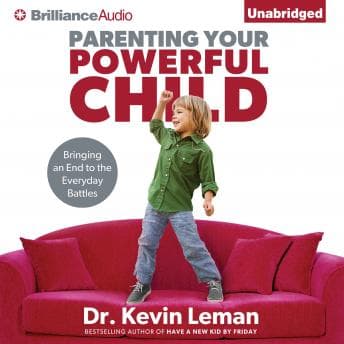
Dr. Kevin Leman clearly knows families. He's written over forty books, and you can feel the thousands of therapy-room hours baked into his observations. The taxonomy of "powerful children" — loud and temperamental, quiet and sensitive, stubborn and manipulative — is actually useful shorthand. The research actually shows that children do develop strategic behavior patterns early, and Leman's identification of these archetypes gives overwhelmed parents a framework to work with. That part? Solid.
But here's where it gets complicated. Leman's central thesis is that powerful kids are "created" by parents, and their behavior is essentially an agenda they're "workin' ya" with. This is a fascinating case study in how framing shapes advice. Because the practical techniques he offers — disengaging from power struggles, adjusting your own reactions, letting natural consequences do their work — are genuinely good, evidence-adjacent strategies. They echo authoritative parenting research. But they're wrapped in language that positions your six-year-old as a tiny adversary running a con.
I kept pausing while stirring my dal to argue with my phone. A child refusing to put on shoes is not the same thing as a hostile negotiation. Psychologically, there's a meaningful difference between a kid testing boundaries (developmentally normal, well-documented) and a kid deliberately manipulating you. Leman sometimes acknowledges this distinction, but the adversarial framing keeps creeping back in, and it undercuts the broader wisdom he's actually offering.
Maurice England Is Doing His Best With a Tricky Brief
England's narration is a faithful, easy-to-hear rendering — warm and folksy in a way that takes the edge off Leman's more combative passages. His Southern lilt gives the material a kitchen-table-advice quality, like a friendly uncle who happens to have a psychology degree. There's a consistent expression of compassion for both parents and children in his delivery, which honestly serves the book better than the text sometimes serves itself.
No dramatic character voices here, which makes sense — this is straight self-help, not a novel. England reads the anecdotes (and there are many — Leman loves his case examples) with enough warmth that they don't feel like clinical transcripts. At seven hours, the pacing is comfortable. I listened mostly at 1x while cooking and found his cadence easy to follow without losing my place when the timer went off.
The production is clean and straightforward. No music, no sound effects, just England and the material. For a parenting book you're likely listening to while multitasking, that's exactly right.
The Useful Stuff Is Buried Under the Battle Cry
Here's what frustrated me, and what I think would frustrate anyone who works in psychology: Leman's actionable advice is actually pretty good. The emphasis on changing your own behavior rather than trying to control your child's — that tracks with decades of family systems research. His point that kids escalate because escalation has worked before? Accurate. His strategy of disengaging from the power struggle rather than winning it? That's genuinely helpful.
But you have to wade through the "your kid has an agenda" rhetoric to get there. And for parents who are already stressed, already feeling adversarial toward their children (which, let's be honest, most exhausted parents feel sometimes), reinforcing that framework could actually make things worse before it makes them better.
My therapist would have thoughts about this framing. Many thoughts. The mechanics of how framing shapes the way we see young people — and how easily that framing tips into something reductive — is something I kept thinking about while reading 57 Bus, which does a genuinely remarkable job of refusing to flatten two teenagers into the roles the narrative could so easily have assigned them.
The book works best when Leman drops the battle metaphors and speaks directly about family dynamics — birth order effects, the way parents unconsciously reward powerful behavior, the specific scripts for disengaging from arguments. Those sections are practical, clear, and genuinely useful. I just wish there were more of them and less of the "your cherub-faced child is working you" schtick.
Who Should Press Play (And Who Should Keep Scrolling)
If you're a parent in the trenches — daily battles over homework, bedtime, screen time, all of it — and you need someone to validate that this is hard and give you concrete next steps, Leman delivers on that. The advice itself is sound even when the packaging is questionable. If you're the kind of reader who can extract the useful techniques and ignore the adversarial tone, this is a solid seven-hour investment.
But if you're already anxious about your relationship with your kid, if you're worried you're failing as a parent, the "they're manipulating you" angle might send you spiraling rather than helping. I'd point those parents toward something with a more collaborative framework first.
My Clinical Notes
Useful strategies, frustrating framing. England's warm delivery does real work softening the book's sharper edges, and at seven hours it doesn't overstay its welcome. The protagonist exhibits classic self-help contradictions — tells you to stop fighting, then hands you a battle plan. Worth a listen if you can separate the practical gold from the adversarial packaging. Just maybe don't start it on a night when your kid already pushed every button you have.