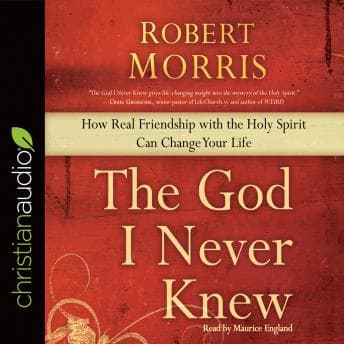

So here's the thing. I came into this audiobook expecting either a dry theological lecture or one of those overly emotional charismatic rallying cries that make my research brain twitch. Robert Morris's The God I Never Knew is neither, and that genuinely surprised me.
I was making chana masala on a Sunday afternoon - the kind of elaborate, slow-simmered version my mother taught me that takes hours and fills the apartment with cumin and coriander - when I started this. And something about the domestic quiet of that kitchen, the rhythmic chopping, made this particular listen land differently than it might have during a jog or in traffic.
The Psychology of Why We Avoid What We Need Most
What fascinated me about Morris's approach is that he's essentially doing exposure therapy for people who are spiritually avoidant. He identifies - correctly, from a psychological standpoint - that most people's discomfort with the Holy Spirit isn't theological. It's relational. They've had bad experiences with charismatic excess, or they grew up in traditions that treated the Spirit like the weird uncle nobody talks about at family dinners.
Morris shares his own background growing up in a denomination that basically pretended the Holy Spirit didn't exist, and then his later encounters with charismatic experiences that confused him. This autobiographical threading is where the book works best. The research actually shows that self-disclosure from authority figures dramatically increases trust and openness in the listener - and Morris does this well. He's not preaching down. He's saying "I was confused too, and here's what I figured out."
The structure moves from "who is the Holy Spirit" to "what does the Holy Spirit do" to "how do you actually build this relationship," which - psychologically speaking - mirrors how healthy attachment develops. You identify the person, understand their role, then build trust through repeated interaction. Whether Morris intended that parallel or not, it works.
Maurice England and That Southern Warmth You Didn't Know You Needed
Maurice England narrates with this authentically warm, folksy Southern cadence that fits Morris's pastoral tone like a glove. It's not performative. He sounds like the kind of guy who'd explain something complicated to you on a porch with sweet tea, and you'd actually understand it. For a book that's trying to make an intimidating theological concept feel approachable, the casting choice is smart.
That said - and I want to be honest here - the narration is steady. Maybe too steady. At just under six hours, there are moments in the middle chapters where England's even tone doesn't shift enough between Morris's personal anecdotes and his expositional teaching sections. I found myself zoning out somewhere around the discussion of spiritual gifts, not because the content was weak but because the vocal texture didn't signal "pay attention, this part matters more." A slight dynamic shift would've helped.
Where the Character Study Gets Interesting (And Where It Doesn't Track)
I found myself asking: why does Morris frame the Holy Spirit exclusively through the lens of friendship? It's a deliberate rhetorical choice, and it's effective for his audience - people who are intimidated or have been burned by extreme portrayals. But psychologically, this doesn't fully track for me. Friendship implies equality, mutuality, the ability to walk away. The relationship Morris actually describes has elements of mentorship, parenting, even therapeutic alliance. Calling it all "friendship" flattens something more complex. Timothy Keller does something more precise with relational framing in Prayer: Experiencing Awe and Intimacy with God - he leans into the asymmetry rather than smoothing it over, which my psychology brain found considerably more satisfying.
This is where my researcher brain gets itchy. Morris does a good job balancing biblical exposition with personal experience - multiple listeners have noted the "well balanced" approach, and I agree. He doesn't veer into the hyper-emotional territory that makes skeptics uncomfortable, and he doesn't stay so intellectual that the content feels lifeless. But he occasionally oversimplifies. The chapter on being "baptized in the Spirit" raises a genuinely controversial topic within Christianity and then... kind of moves past the controversy without fully sitting in the tension. I wanted him to stay there longer. The discomfort is where growth happens. My therapist would have thoughts about that avoidance.
Still - and this matters - I think Morris knows his audience. He's not writing for academics or theologians. He's writing for the person sitting in church feeling like everyone else got a memo they missed. And for that person? This is a fascinating case study in making the abstract feel personal.
Who This Is For (And Who Should Probably Keep Scrolling)
If you grew up in a tradition that either ignored or overdramatized the Holy Spirit, and you want a calm, accessible re-introduction - this is your book. If you're looking for deep theological rigor or academic treatment, you'll find this too surface-level. If you're not a person of faith at all, this obviously isn't aimed at you, though from a narrative psychology perspective, Morris's storytelling techniques are genuinely worth studying.
My Clinical Notes
Robert Morris understands something fundamental about how people change: they don't change through information alone. They change through relationship. That's the thesis here, and whether you share his faith or not, he's not wrong about the psychology. The audiobook is a solid Sunday afternoon listen - warm, steady, occasionally too comfortable for its own good, but honest in a way that earns your attention. I finished the chana masala. I finished the book. Both were good. Neither was life-altering. But sometimes "good and nourishing" is exactly enough.