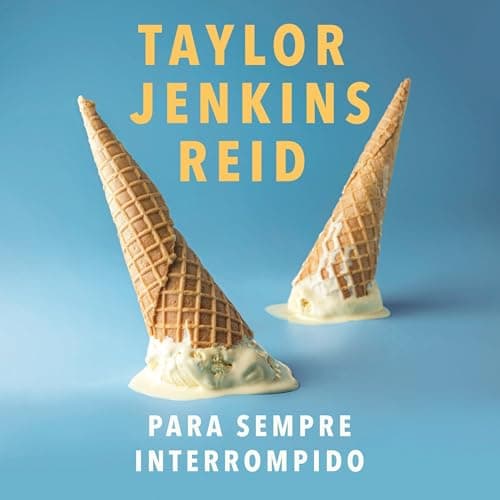

Everybody told me Taylor Jenkins Reid was this romantic literary darling — the queen of love stories dressed up as something deeper. I'll be honest, I went in skeptical. I'm a guy who reads body counts and blueprints, not love letters. But my sister-in-law recommended the Portuguese audiobook version while I was helping her remodel her kitchen, and I figured ten and a half hours between drywall patches and tile work wouldn't kill me.
It almost did. But not because it was bad.
When the Supernova Metaphor Actually Lands
So Reid uses this supernova comparison — stars that burn brighter than anything else in the sky and then just... go dark. I've heard authors use space metaphors before and it usually feels forced, like they Googled "poetic science things" and picked the first result. But here, with Elsie and Ben's whole six-month whirlwind romance ending in a fatal accident barely a week after the wedding? The metaphor earns its place. These two went from strangers to married to widow in what feels like the time it takes me to frame a house. That's the pace of this thing — not rushed exactly, but compressed in a way that makes the loss hit harder.
Reid structures the book by alternating between past and present, showing you the falling-in-love chapters intercut with Elsie navigating her grief. It's a construction technique I actually respect — like building two walls simultaneously and trusting they'll meet at the corner. When it works, you get these gut-punch transitions where one chapter ends with Elsie laughing in Ben's arms and the next opens with her staring at insurance paperwork. That contrast does more emotional work than any monologue could. Let Me Love You pulls a similar structural move — past and present trading off — though it leans harder into the romantic rebuild than the wreckage.
Sofia Maruci Carries the Weight
I listened to this in Portuguese — Alexandre Boide's translation — narrated by Sofia Maruci. I don't have a ton of comparison points for Portuguese-language audiobook narrators, so I'm working with limited context here. What I can tell you is this: one listener called it an "amazing narrator, amazing experience," and I get why. Ten and a half hours is a serious commitment for what's essentially a grief story, and I never once felt like switching back to my true crime queue. That says something.
The emotional register stays consistent without tipping into melodrama, which is critical for a book like this. You're already dealing with a dead husband, a shattered future, and a young woman trying to piece together who she even is now. If the narrator oversells the sadness, it becomes a soap opera. If she undersells it — well, then you're just listening to someone read a sad Wikipedia entry. Maruci finds that middle ground. I can't speak to specific character differentiation since research came up thin on that front, but the emotional throughline held me for the full runtime.
This Is How Real Families Survive
Here's what got me, and I didn't expect it: the family stuff. Elsie doesn't just lose Ben — she loses the family she was about to inherit. His people. And she has to decide whether to hold onto them or let them go with the grief. As a single dad who knows what it means to build family from broken pieces, that part cut deep. Reid gets something right here that a lot of contemporary fiction misses — grief isn't just about the person you lost. It's about every future moment that got erased. Every Thanksgiving, every inside joke, every Tuesday night on the couch.
My daughter walked into the garage while I was listening during a late-night drywall session, asked me why I looked sad. I told her Daddy was listening to a grown-up story. She said, "Another scary one?" Not scary, mija. Just honest. That kind of honesty without spectacle is rare — I ran into it once before in Too Late, though that one gets a lot darker before it earns its quiet moments.
Who Gets the Key, Who Gets the Lockout
If you love Reid's other work — Evelyn Hugo, Daisy Jones — this is a smaller, quieter swing. Less glamour, more kitchen-table grief. If you're comfortable with Portuguese-language audiobooks and want something that respects your time without wasting it on filler, this delivers. Skip it if you need action, plot twists, or anything resembling momentum beyond emotional reckoning — you're going to white-knuckle through the middle chapters wondering when something "happens." Something does happen. It just happens inside Elsie's chest, not in a car chase.
Framing Inspection
From the truck between job sites — this one surprised me. Reid builds a clean emotional structure, Maruci holds the load, and the Portuguese translation didn't feel like a downgrade from the original English. Measure twice, cut once applies to grief stories too: Reid measured. The cuts land. I'm not going to pretend this replaced my true crime rotation, but at 1.4x it kept me company through three job sites and one late-night garage session, and I didn't skip a single chapter. Construction foreman approved — for the heart, not the hardhat.










![Evidências de uma traição [Evidence of the Affair] audiobook cover](/_next/image?url=https%3A%2F%2Fm.media-amazon.com%2Fimages%2FI%2F417yJ8QJTFL._SL1200_.jpg&w=1920&q=75)