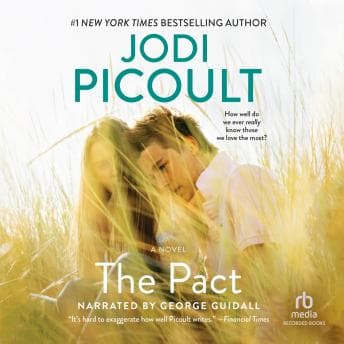

I was sitting at my kitchen table, grading a stack of sophomore essays on The Great Gatsby—which, let's be honest, mostly consisted of ChatGPT summaries—when I started listening to Pact. Bad idea. I needed something to numb the pain of grading, not something that would make me stare out the window at the Chicago skyline wondering if I'm missing the signs with my own students.
When the Narrator is Overqualified
Let's talk about the elephant in the recording booth. George Guidall. The man is a legend. I've listened to him read Crime and Punishment, and frankly, he could read the ingredients on a cereal box and make it sound like an epic tragedy. He brings that same gravitas to Daughter of the Morning Star, where it actually works perfectly. But here? It's... complicated.
Guidall has a voice like worn leather—warm, gravelly, authoritative. He sounds like a grandfather telling you a war story by the fire. (My students would say he sounds "ancient," and for once, I wouldn't correct them.) So when he's voicing seventeen-year-old Chris and Emily navigating first love, hormones, and high school drama, the cognitive dissonance is real.
There's a specific kind of awkwardness hearing a distinguished older gentleman narrate a teenage sex scene while you're trying to buy milk at the grocery store. I literally stopped the cart in the dairy aisle. If you're used to Guidall reading heavy literary fiction or spy thrillers, hearing him do "teen angst" takes a solid hour to get used to.
Romeo and Juliet with Lawyers
Here's the thing—and this is why I didn't hit stop—Picoult is doing something specific here. This isn't just melodrama; it's a structural successor to the tragedies I teach every fall. It's Romeo and Juliet, but instead of the Friar, we get a defense attorney. Instead of a crypt, we get a carousel.
The story splits between the "Before" and the "Now," and honestly, the courtroom scenes are where Guidall actually shines. When he's reading the legal maneuvering, the parental grief, the heavy, adult weight of the tragedy? He nails it. That's the Guidall I know from Blowback—commanding, serious, treating every word like it matters. He elevates the prose. He treats Picoult's writing with the same gravity he gives Dostoevsky, and in a way, that validates the genre. He's saying, "This pain is serious."
The Parent Trap
As a teacher, the scariest part isn't the suicide pact. It's the parents. The Golds and the Hartes are so close they're basically one organism, and they think they know their kids. They don't. (Spoiler: Parents never really know. I see it every parent-teacher conference.)
Picoult peels back the layers of this "perfect" suburban friendship until it's raw. It reminds me of Ordinary People—that sense that if we just keep the lawn mowed and the grades up, the darkness won't get in. Terrifying. And yes, I might have teared up while walking the dog. Don't tell my wife.
Who's This For?
Parents, teachers, anyone who works with teenagers and lies awake wondering what they're missing—this one's for you. Skip it if you need your narrators age-matched to characters, or if you're not in the headspace for heavy subject matter. The intimate scenes in public spaces? Proceed with caution.
Class Dismissed
If you can get past the "Grandpa reading a teen diary" vibe in the flashbacks, this is a gut-punch of a book. The voice casting is a head-scratcher, but the emotional payoff is there.