
What if someone took a historical romance series and published a full campaign sourcebook for it - Gaelic pronunciation guides, floor plans, character cross-references, the works - and it was actually... good?
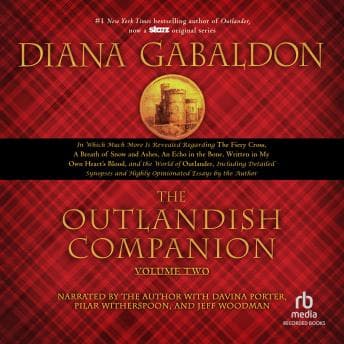
Look, I know what you're thinking. Tom, you're the Sanderson magic systems guy. The LitRPG defender. What are you doing reviewing a companion guide to the Outlander series? Fair question. But here's the thing: I've been reading RPG sourcebooks and world-building appendices for fun since I was twelve, hunched over the Monster Manual in the back of a public library in rural Georgia. The Outlandish Companion Volume Two is basically a 21-hour sourcebook for Diana Gabaldon's 18th-century time-travel saga. And I will not apologize for being into that.
Basically a Monster Manual, But for Highlanders
I picked this up during a long solo drive home for Thanksgiving - five hours of Georgia interstate, nothing but pine trees and Davina Porter's voice keeping me company. And I'll say this: Gabaldon approaches her historical world-building with the same obsessive thoroughness that I wish more fantasy authors brought to their appendices. The Gaelic glossary and pronunciation guide? That's real appendix energy. She breaks down the food, clothing, and music of the 18th century like she's writing flavor text for a campaign setting, and honestly, my D&D group would love half of this material for period-accurate game sessions.
The synopses of the four covered novels - Fiery Cross through Written in My Own Heart's Blood - are surprisingly engaging when narrated rather than read flat off a page. Gabaldon's commentary weaves through them, and you get the sense she genuinely enjoys dissecting her own work. It's like listening to a DM explain why they designed a particular dungeon the way they did, complete with "oh, and here's where I almost killed off that character but didn't."
But - and this is important - there's content here that simply does not work as audio. Floor plans. Detailed maps. An annotated bibliography. When Porter is describing spatial layouts you can't see, your brain just glazes over. I caught myself mentally drafting thesis notes during the bibliography sections, which is either a damning indictment of the format or proof that this book can inspire academic productivity. (Dr. Patel, if you're reading this: see, I'm working.)
Two Narrators Walk Into a Recording Booth
The dual-narrator setup is interesting. Davina Porter handles the bulk - synopses, character guides, reference material - and Diana Gabaldon reads her own essays and personal commentary. Porter has won Audies for the main Outlander series narration, and you can hear why. Her performance on Mists of Avalon had that same command over the material—she's just that good. Her British delivery with those Scottish accent shifts for character references has this quality where you immediately know which character she's discussing before she even names them. There's an authority to her reading that makes even plot summaries feel dramatic.
Gabaldon reading her own essays is a completely different beast. Less polished, more conversational - like she's sitting across from you at a con panel with a glass of wine. Her sections on the controversies around sex and violence in the series are surprisingly sharp and funny. She doesn't apologize for her creative choices and she's witty about defending them. As someone who defends stat blocks in fiction with my dying breath, I deeply respect that energy.
The pacing complaint I've seen from other listeners - that Porter reads too fast - I didn't really notice, but I'm also someone who regularly listens at 1.25x. If you're a slower processor or you're actually trying to absorb the reference material, knocking it down to normal speed is probably smart. There's a lot of information density packed into this thing.
If You Haven't Read Book Five, Turn Back Now
Let me be direct. If you haven't listened to at least through A Breath of Snow and Ashes, this will spoil everything and mean nothing to you. This is deep-lore supplemental material. It's the Silmarillion of historical romance - the thing you reach for when you've consumed every novel, every Lord John side story, and you're still hungry for more. If you're somehow reading this without having started the series, Outlander is the natural entry point—but this companion is strictly for the diehards.
The character cross-reference section is genuinely useful if you're the type who forgets which minor character appeared in which book. Across 9000+ pages of series, you will forget. Trust me, I lose track of Sanderson's cosmere characters and that's my whole personality.
If you're a world-building nerd who appreciates the craft of constructing a fictional universe regardless of genre - and you can get past the romance-heavy source material - there's interesting stuff here about Gabaldon's writing process and her approach to historical accuracy.
But if you want the reference material to actually reference? Get the physical book. Maps and floor plans don't have ears.
Roll for Initiative on Your Library App
I read this instead of writing my thesis, and while I don't regret the essay sections or the writing-process deep dives, the bibliography portions had me opening my thesis document out of guilt - which might be the most productive thing an Outlander companion book has ever done for computer science. For dedicated fans who want Gabaldon's literal voice on her own work, this is worth streaming. But 21 hours and a full credit for a companion guide? That's a tough ask unless you're deep enough in this fandom to know Jamie Fraser's birthday off the top of your head.