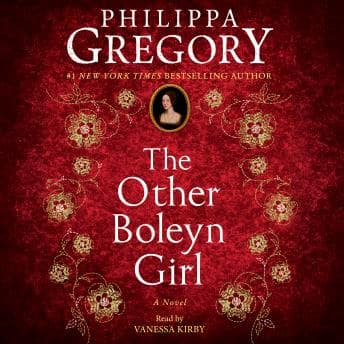

Everyone acts like this book is some kind of guilty pleasure, like you should be slightly embarrassed to love it. I am here to tell you: no. Absolutely not. I listened to 22 hours of Tudor court drama across two weeks of school drop-offs, one very successful nap time (Sophie, you hero), and three separate garage car sessions, and I have zero regrets.
Okay, maybe one. I ugly-cried at school pickup on a Tuesday. Lucas asked me why I was sad and I had to explain that a lady named Anne Boleyn made some very bad choices five hundred years ago. So. That happened.
Mary Boleyn, You Deserved Better (And I Will Die On This Hill)
Here's what I didn't expect: I came in thinking Anne was the interesting one. She's the one with the TV shows, the drama, the whole losing-her-head thing. But Mary? Mary is the one who gets under your skin. She starts out so genuinely sweet and naive - fourteen years old, dazzled by Henry, totally unprepared for what her family is about to do to her - and watching her slowly figure out that she's just a chess piece the Boleyns are moving around the board is... a lot. That specific kind of powerlessness — a woman being moved around by the men in her life like she has no say in her own story — is something H. Rider Haggard also digs into in Black Heart and White Heart, though in a completely different setting and with considerably less court intrigue. There's this moment when she realizes her own father is essentially negotiating her body like a trade deal, and the way Vanessa Kirby delivers that scene - Mary's voice going quiet in this particular way, all the warmth draining out - I had to sit in the school parking lot an extra four minutes to collect myself.
And Anne. Anne is terrifying in the best way. She's brilliant and calculating and she loves Mary and uses Mary in the same breath. Kirby plays her with this sharp, almost brittle quality - where Mary sounds like someone trying to stay warm, Anne sounds like someone who decided warmth was a liability. The contrast between the two sisters is doing a LOT of heavy lifting in this book, and it works because Kirby commits to making them sound like genuinely different people, not just the same voice with slightly different inflections.
22 Hours Is a Commitment. Was It Worth It?
I'm going to be honest with you the way I'd be honest with my smartest friend: this is not a pause-friendly book. I said I survived 47 pauses and still made sense - that's true, but it took effort. The Tudor court has approximately nine thousand characters named Thomas and the political maneuvering requires you to actually remember who wants what from whom. There were two separate Tuesdays where I had to rewind five minutes because I'd spaced out thinking about whether I'd defrosted the chicken.
But - and this is important - the emotional throughline with Mary is so clear that even when I lost the political plot, I never lost HER. I always knew where she stood, what she wanted, what she was losing. That's good writing. The book earns its length because Gregory is genuinely building something, not just padding.
The one thing I'll flag: if you're coming to this expecting a light comfort listen, recalibrate. This is not cozy. There's violence, there's sexual content, there's a family that treats its daughters like company assets. It's not gratuitous, but it's not soft either. I'd call it... emotionally demanding historical fiction. Which is a thing I apparently needed, because here we are.
Who This Is Actually For
If you liked Bridgerton but sometimes wish it had more political backstabbing and fewer people being charmed by a rake - this is your book. If you've watched The Crown and thought 'I wish this had more ambition and fewer corgi scenes' - same. If you have a complicated relationship with a sister, buckle up, because Gregory is going to make you feel things about sisterhood that you didn't ask to feel.
If you need something you can fully zone out to while folding laundry - skip it, or save it for when you can actually pay attention. This one needs you present.
Vanessa Kirby is genuinely excellent here. Her regal, very English delivery fits the Tudor setting so perfectly that by hour three I'd basically accepted her voice as just... what the past sounded like. Car time approved, with the caveat that you should maybe not listen to the last two hours in the school pickup line unless you're okay with explaining sixteenth-century royal executions to a seven-year-old.