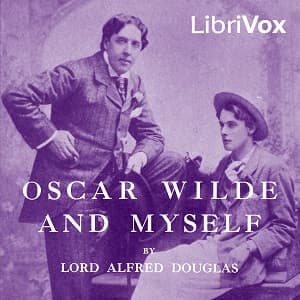

"The man is simply a poseur, and his work will be forgotten within twenty years."
I actually stopped walking when I heard that. Just stood there on the lakefront path like an idiot while joggers swerved around me. Bosie Douglas - the man Oscar Wilde destroyed his life for - predicting that Wilde would be forgotten. In 1914. The dramatic irony is so thick you could choke on it.
Look, I teach literature. I've spent two decades explaining to teenagers why Wilde matters, why "The Importance of Being Earnest" is still funny, why "De Profundis" is one of the most devastating prison letters ever written. And here's Douglas, the beautiful young man at the center of that hurricane, essentially saying: Yeah, he was overrated anyway.
This is why we still read the classics. Not because they're comfortable. Because they're not.
The Voice of a Man Convinced He's the Victim
Rob Marland does something really smart with this narration. He doesn't try to make Douglas sympathetic - which would be impossible - but he also doesn't turn him into a cartoon villain. What he gives us instead is something more unsettling: a man who genuinely believes every word he's saying.
The pacing is measured, almost lawyerly at times, which makes sense when you remember this book was written after Douglas lost a libel case. He's building arguments. He's citing evidence. He's cross-examining the dead. Marland captures that prosecutorial tone without making it tedious, and honestly, that's a tightrope walk. Seven hours of defensive self-justification could be unbearable. It's not.
There are moments - and I wish I'd noted the timestamps, but I was too busy being appalled - where Douglas's bitterness toward Robert Ross becomes almost operatic. Marland leans into those passages with just enough theatrical edge that you can hear the wounded aristocrat underneath all that wounded pride. My students would hate this. I love it.
What Douglas Gets Wrong (And What He Accidentally Gets Right)
Here's the thing about unreliable narrators: they're often most revealing when they think they're being most persuasive.
Douglas spends considerable energy refuting Wilde's account in "De Profundis" - that devastating letter Wilde wrote from Reading Gaol, the one that basically says: You ruined me, and you never even noticed. Douglas's defense is essentially: I was young, I was in love, and anyway Oscar was just as bad. It's the Victorian equivalent of "we were both toxic."
And yet. Buried in all this self-justification are genuine insights about Wilde the man versus Wilde the legend. Douglas knew him. Loved him. Watched him work. When he talks about Wilde's conversational genius versus his written work, there's something there. That insider-versus-legend tension reminds me of Kitchen Confidential, where Bourdain pulls back the curtain on a world everyone thinks they understand. When he describes the social dynamics of their circle - who was using whom, who was performing for whom - you're getting a perspective no biographer could fabricate.
Is it trustworthy? Absolutely not. Is it valuable? Absolutely yes.
This reminds me of what Hemingway said about all stories being true if you read them right. My Confession works the same way—Tolstoy wrestling with his own contradictions, revealing more than he intends. Douglas is telling us the truth - just not the truth he thinks he's telling.
The Prose Deserves Attention (Even When It's Infuriating)
I listened at 1.0x because Douglas, for all his moral failings, could write. The man was a poet, and his prose has that Edwardian precision that we've completely lost. Marland honors that. He doesn't rush through the elaborate sentences or flatten the rhetorical flourishes. The production is clean - no weird audio artifacts, no jarring transitions.
But I'll be honest: there are stretches where Douglas's grievances become repetitive. The attacks on Ross, the swipes at various biographers, the endless score-settling. Around hour four, I was grading papers and half-listening, which is probably not what Douglas intended for his appeal to posterity. (Sorry, Bosie.)
The audio quality itself is solid throughout. Nothing fancy, no bonus content, just a straightforward reading. Which is appropriate. This book doesn't need embellishment - it's already plenty dramatic on its own.
Who Should Listen (And Who Should Skip)
If you've read "De Profundis" and wondered what the other side of that story looked like - this is it. If you're interested in how historical figures construct their own narratives, how memory and ego twist together, how someone can be both genuinely wronged and genuinely wrong - this is fascinating.
Skip this if you want a balanced biography of Wilde. Richard Ellmann's biography is the standard for good reason. This isn't history. This is testimony from a hostile witness.
I finished it on a Tuesday night, grading essays about "The Great Gatsby" while Denise watched something on her phone. When it ended, I just sat there for a minute. Douglas died in 1945. Wilde is still performed on every continent. Posterity made its judgment.
But I'm glad I heard Douglas make his case. Even failed arguments teach us something. Worth pausing the faculty meeting for.






![Steve Jobs [unabridged audiobook] audiobook cover](/_next/image?url=https%3A%2F%2Fcovers.audiobooks.com%2Fimages%2Fcovers%2Ffull%2F9788499923406.jpg&w=1920&q=75)