
The Anti-MBA
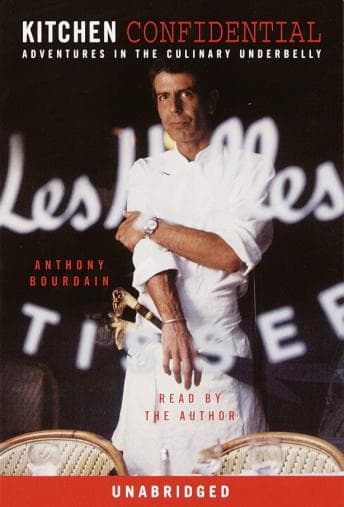
I started this on a red-eye to San Francisco. I was surrounded by tech bros in Patagonia vests reading Zero to One for the fifth time, trying to figure out how to disrupt the juice industry or whatever. I put my headphones on, hit play on Kitchen Confidential, and immediately realized something: this is the management book they should be reading.
(And yes, I know it's a memoir. But stay with me.)
Most business books I review are sterile. They talk about "synergy" and "pivoting." Bourdain talks about the relentless, grinding, blood-and-sweat reality of actually making a product under extreme pressure. Listening to this felt like a cold shower after a week of polite boardroom meetings.
The Voice of God (If God Smoked Two Packs a Day)
First off—do not read the physical book. Seriously. Put it down. If you aren't listening to Bourdain narrate this himself, you're getting 50% of the value.
The man had a voice that sounded like it had been marinated in whiskey and cynicism. It's perfect. He doesn't just read the text; he inhabits it. There's this specific "arched eyebrow" tone he uses when he talks about customers who order fish on Mondays (spoiler: don't do it) or the "vegetarians" who eat chicken stock.
Usually, I listen at 2.0x speed because most authors read like they're trying to put a toddler to sleep. With Bourdain? I actually slowed down to 1.25x. (Jenny would call this a miracle; I call it respect.) The pacing is conversational, energetic, and feels like you're sitting at a dive bar at 2 AM while he spills the industry secrets he's definitely not supposed to tell you.
Operations Management with Knives
Here's the thing that hit me hard—this book is basically a crash course in logistics and team dynamics.
Bourdain describes the kitchen brigade system, and honestly? It's more efficient than any Agile scrum team I've ever consulted for. He talks about mise-en-place—the setup, the preparation—as a religion. If you mess with a cook's station, you die. That kind of ruthless focus is what Essentialism tries to teach, but Bourdain just lives it without the framework.
My parents ran a dry cleaning business in K-Town for thirty years. They didn't have "SOPs" or "OKRs." They had survival instincts and a system that didn't tolerate waste. Bourdain captures that same frantic, beautiful hustle. He talks about the "pirate ship" crew of a kitchen—misfits, ex-cons, immigrants—coming together to execute perfectly during the dinner rush.
It's raw leadership. No HR department, no sensitivity training. Just: Can you do the job when the tickets are piling up?
(I may have sent a clip of him describing the dinner rush to a CEO client who complains about "stress." Perspective, right?)
Where It Drags (Just a Little)
Okay, so it's not flawless. Around the middle—maybe hour 5 or 6—it wanders a bit. There are some stories about Tokyo and the mob that feel a little like filler. It gets slightly repetitive with the "look how bad we were" drug stories. We get it, Tony. You guys were wild.
And look, if you're easily offended, just walk away now. The language is rough. The stories are gross. He talks about food and sex and bodily fluids in the same breath. It's not for the faint of heart. But that's the point. It's the "culinary underbelly," not the Food Network.
Who Should Listen (And Who Should Skip)
If you want a behind-the-scenes look at high-pressure operations, or you're tired of sanitized business advice, this delivers. Skip it if crude language and graphic stories aren't your thing—Bourdain doesn't hold back.
Bottom Line
This book is a legend for a reason. It's funny, it's gross, and it's weirdly inspiring.
It made me miss the days when work was physical and the results were immediate. You cook the steak, the customer eats the steak. Done. In my world, we make a slide deck and wait six months to see if the stock price moves.
Listen to it for the stories. Listen to it to hear a storyteller who left us way too soon. Just maybe don't listen to it while you're eating oysters.