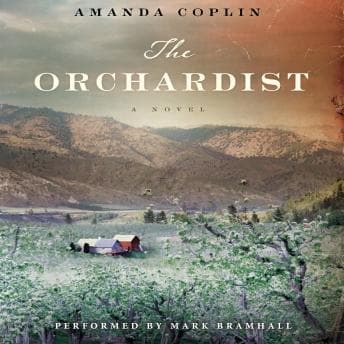

Around hour three, Talmadge is describing the particular way apple blossoms smell in early morning fog, and I realized I'd stopped grading entirely. The stack of sophomore essays on The Great Gatsby sat untouched. Denise found me at midnight, red pen still in hand, completely absorbed in turn-of-the-century Washington orchards.
This is why we still read the classics. Except this isn't a classic—it's a 2012 debut that reads like it was excavated from the same literary earth as Faulkner and Marilynne Robinson.
What Hemingway Would've Called "True Sentences"
Amanda Coplin writes with the kind of restraint that takes tremendous discipline. Every sentence earns its place. Talmadge, our orchardist, is a man of few words, and Coplin honors that by never forcing him to be more articulate than his character would allow. When two pregnant teenage girls—Della and Jane—appear in his orchard, fleeing something terrible, he doesn't ask questions. He just makes space for them.
The prose deserves to be savored. Coplin grew up in Wenatchee, Washington, surrounded by the very orchards she writes about, and you feel that authenticity in every description of grafting techniques, of soil, of the way light moves through apple trees. This isn't research; this is memory.
But here's what the book is really asking: How do we care for people who've been so damaged they can't receive care? Talmadge offers protection, stability, even love—and watches as Della, in particular, cannot accept any of it. The violence that shaped her keeps pulling her back. It's heartbreaking in the truest sense. Not manipulative. Just honest about how trauma works.
Bramhall's Weathered Voice and One Frustrating Choice
Mark Bramhall narrates with a voice like weathered wood—rough, steady, exactly right for a man who's spent decades alone with his trees. His pacing matches Coplin's prose: deliberate, contemplative, trusting the listener to stay present. When Talmadge's quiet compassion surfaces, Bramhall doesn't oversell it. He lets the silence do the work.
And then there's Angeline.
Bramhall's choice to voice the female characters—particularly Angeline, the baby who grows into a young woman—with a high, breathless quality doesn't quite land. It's not terrible, but it made Angeline seem less intelligent than she is on the page. A minor frustration in an otherwise excellent performance, but worth noting if you're sensitive to that sort of thing.
The pacing will challenge some listeners. This is not a book for the gym or for half-attention during grocery shopping. It's a book that requires you to settle in, the way you'd settle into a long evening on a porch watching weather move across a valley. My students would hate this. I love it.
The Spiritual Successor to Gilead
If you loved Marilynne Robinson's Gilead, this is its spiritual successor—though darker, with more violence lurking at the edges. Both books are about men trying to be good in a world that doesn't reward goodness. That same quiet moral weight runs through The Light We Lost, though it trades orchards for New York City. Both trust the reader to find meaning in quiet moments rather than dramatic ones.
The comparisons to Faulkner are earned, too, though Coplin is more accessible. She's working with similar themes—the weight of the past, the impossibility of escape, the land as character—but without the syntactical maze. (I say this as someone who genuinely loves Faulkner. My podcast episode on As I Lay Dying is one of my favorites, even if my mom slept through it.)
At fourteen and a half hours, this is a commitment. But it's the kind of commitment that rewards patience. The story spans decades, following Talmadge from middle age through old age, watching him tend his trees and tend the wounded people who drift into his life. The ending—which I won't spoil—is quiet and devastating in equal measure.
Who This Is (and Isn't) For
If you need plot momentum or can't stand literary pacing, skip this one. But if you're the type who lingers over sentences, who finds Robinson or Kent Haruf nourishing rather than slow—this belongs in your queue.
The Kind of Book Worth Missing Sleep For
I finished this on a Sunday walk along the lakefront with Denise. She asked why I'd stopped talking, and I couldn't explain without crying. (She's used to this. She married an English teacher.)
The Orchardist isn't flashy. It won't grab you with a hook in the first ten minutes. But if you let it, it will settle into you like good soil—and something will grow there that you didn't expect.
Content warning: there's violence here, and abuse, and the kind of psychological trauma that doesn't resolve neatly. Coplin doesn't exploit it, but she doesn't look away either. Worth knowing before you begin.