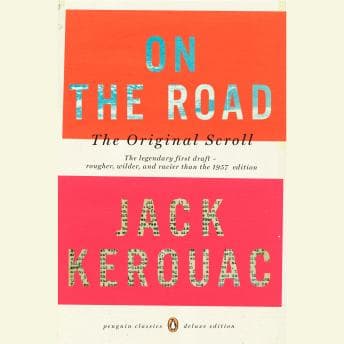

Look, I have a bone to pick with Jack Kerouac. Twenty years of teaching English, and every September some bright-eyed junior quotes "the only people for me are the mad ones" in their college essay draft, and I have to gently explain that romanticizing self-destruction isn't a thesis statement. I've been fighting this book in its edited form for two decades. So when I finally sat down with the Original Scroll version — the raw, uncut, real-names-intact manuscript that Kerouac hammered out on a 120-foot roll of tracing paper in three weeks — I expected to find more ammunition for my classroom lectures about the difference between spontaneous prose and undisciplined prose.
Instead, Denise and I took a long Saturday walk along the lakefront, and somewhere around hour three, I shut up about the book entirely and just... listened. Which is the highest compliment I can pay anything.
The Scroll Breathes Differently Than the Novel
Here's what surprised me: this version is genuinely better in audio than the 1957 published edition ever was on the page. And I say that as someone who's taught the published version and always found it a little too polished for what it claimed to be. The Original Scroll keeps the real names — Neal Cassady instead of Dean Moriarty, Allen Ginsberg instead of Carlo Marx, William Burroughs instead of Old Bull Lee — and that single change rewires the whole experience. You're not reading a novel anymore. You're eavesdropping on a man's actual memory, and the effect in your ears is startling. When Ventimiglia says "Neal" instead of "Dean," the fiction drops away and you're riding in that car with actual people who lived and burned and broke apart.
The prose is rougher here, yes. More sexually explicit, less organized, occasionally repetitive in ways that Viking Press was smart to trim. But here's the thing — Kerouac wrote this as one continuous paragraph, one breath, one long exhalation of America. And in audio, that structure finally makes sense. You don't see paragraph breaks that aren't there. You just hear the rhythm, and the rhythm is jazz. It's a tenor sax solo that goes on too long in spots but hits notes the cleaned-up version never dared.
Ventimiglia Gets the Double-O's Right
John Ventimiglia — and I didn't know this going in — apparently studied Kerouac's own recordings before narrating this. You can hear it. There's a particular way Kerouac pronounced his double-o words — doom, gloom, moon, room — stretching them out like he was tasting something dark and sweet. Ventimiglia catches that. It's subtle enough that you might not notice consciously, but it gives the whole narration this slightly off-center, slightly intoxicated quality that fits the material perfectly.
His character differentiation is understated. He's not doing voices, exactly — more like shifting his posture. When he's reading Neal Cassady's dialogue, there's an accelerating, manic energy. When he drops into Burroughs territory, everything slows down and gets dry. It's performance through cadence rather than accent, which is exactly right for this book. You don't want a voice actor turning the Beat Generation into a cartoon.
Now — is it slow? Some listeners think so, and I get it. At 12 hours and 37 minutes, this is a commitment, and Ventimiglia doesn't rush. There are stretches in the middle where Kerouac is cataloguing every bar, every girl, every jazz club in Denver or San Francisco, and the narration matches that wandering pace. I'd argue that's intentional. The narrator understands that pause is punctuation. But I also understand why someone listening at 1.0x (like me, because the author chose those words) might feel the sag around hours six through eight.
Who This Is Actually For
If you've only ever read the 1957 published version, this is its wilder, less housebroken sibling — and honestly, it's the version that should exist in audio. The scroll was always meant to be heard, not read. Kerouac was chasing the spontaneity of jazz improvisation, and print couldn't hold that. Audio can.
If you hated On the Road in high school or college, this probably won't convert you. The self-indulgence is still there. The women are still props. I ran into a similar frustration reading Jill the Reckless — a book I genuinely enjoyed while also wincing at how casually it treats its female lead as a plot device rather than a person. The privilege of being able to wander America broke and white and male in the 1940s is still unexamined. My students would hate this. I love it. But I love it with my eyes open.
If you're a Kerouac devotee, this is essential. Hearing "Neal Cassady" instead of "Dean Moriarty" changes the book the way hearing a demo recording changes a song you thought you knew.
Worth Pausing the Faculty Meeting For
This is why we still read the classics — not because they're perfect, but because they're alive. The Original Scroll is messier, longer, and more honest than the version that made Kerouac famous, and Ventimiglia narrates it like a man reading a letter from a dead friend. Not performing. Remembering. I finished it on a Tuesday night while grading sophomore essays about The Great Gatsby, and for a moment I resented Fitzgerald for being so careful with his prose. That feeling passed. But the fact that Kerouac's raw scroll could make me feel it at all — after twenty years of teaching his more famous work — that's something.