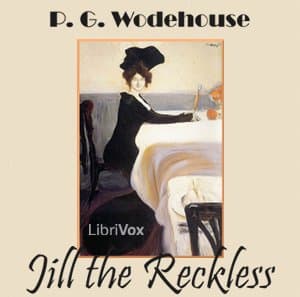

I was supposed to be grading sophomore essays on The Great Gatsby. It was 11:47 PM, the red pen had run dry, and I'd just read the phrase "Gatsby was a really cool guy who liked parties" for the third time. So I put in my earbuds and escaped to 1921 with Jill Mariner instead.
Best decision I've made during a grading session since I discovered that coffee and bourbon aren't mutually exclusive.
Why We Still Read Wodehouse (And Why Your Students Should Too)
Here's what I tell my AP Lit kids when they complain that old books are boring: Wodehouse wrote sentences that make you laugh out loud a hundred years later. That's not luck. That's craft. And Jill the Reckless is a perfect example of why his work endures.
The setup is deceptively simple—Jill Mariner loses her fortune, loses her fiancé, and ends up working as a chorus girl in New York. But Wodehouse isn't interested in tragedy. He's interested in the comedy of manners, the absurdity of class pretension, and the way decent people muddle through when the universe conspires against them. Lady Underhill, Derek's mother, is such a magnificent snob that I found myself highlighting passages. (Yes, I take notes during audiobooks. My students think I'm ancient. They're not wrong.)
The prose deserves to be savored. Wodehouse has this thing he does—he'll set up a perfectly normal sentence and then land it with a twist that catches you off guard. It's the literary equivalent of a jazz musician hitting an unexpected note that somehow works perfectly. You can't speed through this. You shouldn't want to.
Don W. Jenkins Gets the Assignment
This is a LibriVox recording, which means it's free and volunteer-narrated. And look, I've listened to some LibriVox productions that made me appreciate why professional narrators exist. But Jenkins? He understands something crucial about Wodehouse: the humor lives in the rhythm.
He doesn't oversell the jokes. He doesn't do wacky voices for every character. Instead, he reads with this infectious enthusiasm that feels like a friend telling you about a book he loves. The musical comedy tone—because this is essentially a theatrical world Jill enters—comes through without Jenkins turning it into a performance piece. He's serving the text, not competing with it.
I don't have detailed notes on how he differentiates Freddie Rooke from Wally Mason or the various Drones Club members. What I can tell you is that I never got confused about who was speaking, and that's the baseline a narrator needs to clear. Jenkins clears it comfortably.
The Jill Question
Here's what I kept thinking about: Jill is reckless in the same way Elizabeth Bennet is prejudiced—it's the title's accusation, but the book spends its time showing you why that recklessness might actually be courage in disguise. She refuses to be bitter. She refuses to grovel to her unpleasant relatives Elmer and Julia. That same stubborn refusal to compromise shows up in Lost Girl, though the stakes are darker there. She takes a chorus girl job when a "proper" lady would have... what? Married someone dull for money? Faded into genteel poverty?
Wodehouse was writing in 1921, and he gave us a heroine who'd rather work than compromise. My students would probably call her a "girlboss" and mean it ironically, but there's something genuinely radical about Jill's refusal to play the victim.
And Wally Mason—the childhood friend who writes plays and clearly loves her—he's patient without being passive. When he says "Let 'em" on what the description charmingly notes is "page 313," you've earned that moment. The whole book has been building to Jill choosing someone who sees her clearly over someone who wanted her to be smaller.
Who Should Queue This Up (And Who Should Skip)
If you loved Jeeves and Wooster, you'll find familiar pleasures here, though Jill is more grounded than Bertie ever was. If you're looking for something to listen to at 1.0x speed—because the author chose those words—this rewards that patience.
But if you need plot urgency, if you want chapters that end on cliffhangers, if Edwardian social comedy sounds like homework? Skip this one. No shame in it. Wodehouse isn't for everyone.
At ten and a half hours, it's a commitment. I spread it over two weeks of grading sessions and lakefront walks with Denise. She asked why I kept chuckling. I tried to explain Freddie Rooke's "hectic night" and realized some things you just have to experience.
Class Dismissed
This is a free audiobook of a public domain classic, performed by someone who clearly loves the material. It's not a professional studio production—don't expect sound effects or a full cast. But Jenkins brings exactly the right energy, and Wodehouse's prose does the heavy lifting.
Is it essential listening? For Wodehouse fans, absolutely. For anyone who wants to understand why comic fiction from a century ago still works? Put it in your queue. For the rest of you—there are worse ways to survive grading season.
Principal Martinez, if you're reading this, I was definitely paying attention in that budget meeting last Tuesday. (I wasn't. I was listening to Jill navigate the New York theater scene. No regrets.)