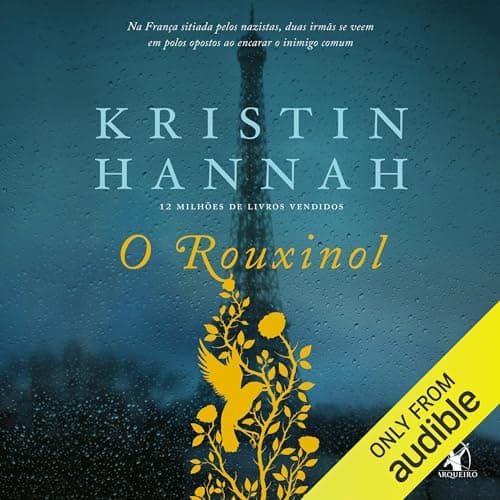

Everyone told me this was the WWII book that would wreck me. 'Elena, you'll cry so hard.' And I kept putting it off because honestly? I've read enough wartime fiction to know the formula — the suffering, the sacrifice, the bittersweet ending that lands like a slow punch. I thought I knew what I was getting into.
I was so, so wrong.
Two Sisters, Two Wars, One Gutted Heart
I started this on a Tuesday morning, designing a logo for a mezcal brand — something earthy, warm tones, agave motifs. By hour three I had to stop working because my hands were shaking. Not from the logo. From the scene where Vianne stands in her doorway watching a Nazi officer walk through her home, touching her things, sitting in her husband's chair, and she has to just... stand there. Smile. Serve him dinner. The quiet violence of that — of a woman swallowing her rage to keep her daughter safe — hit me somewhere I wasn't expecting.
And then there's Isabelle. Wild, furious, twenty-year-old Isabelle who basically tells the entire patriarchy and the Third Reich to go to hell simultaneously. She joins the Resistance, guides downed Allied pilots over the Pyrenees in winter — the PYRENEES, in SNOW — and becomes the legendary Nightingale. The contrast between these two sisters is what makes this book breathe. Vianne's war is fought in whispers and hidden children and impossible moral choices at her own kitchen table. Isabelle's war is boots on frozen mountain passes and forged papers and looking Gestapo officers in the eye without flinching.
Neither one is braver than the other. That's what Kristin Hannah does here that I didn't expect — she refuses to rank their courage. And that wrecked me more than any single death scene.
Isabel Guéron Carrying Sixteen Hours on Her Back
So here's the thing — I listened to this in Portuguese, narrated by Isabel Guéron, and I went in with zero expectations because I couldn't find much about her performance beforehand. The audiobook is over sixteen hours, which is a serious commitment for a single narrator carrying two distinct female perspectives plus an elderly framing narrative.
Guéron is steady. She doesn't do the dramatic vocal gymnastics that some narrators lean on for wartime fiction — no trembling whispers every five minutes, no overwrought sobbing. She plays it straighter than I expected, which actually works for Vianne's sections because Vianne IS that restrained energy, that woman holding herself together with both hands. For Isabelle's fiery scenes, I wanted maybe ten percent more heat? There were moments where Isabelle is screaming at her father or confronting soldiers where Guéron stays a bit too composed. But this is minor — by the second half, I'd stopped noticing because the story had its teeth in me so deep.
Listening in Portuguese added this layer I hadn't anticipated. The Romance language softened certain wartime terms in a way that made them feel closer to the French setting. It's hard to explain, but hearing "les enfants" concepts filtered through Portuguese rather than English made the French countryside feel less like a history book and more like someone's actual memory.
The Spreadsheet Update (Yes, I Cried)
Four times. FOUR. Matching my Beach Read record, which is honestly absurd because those are completely different books and completely different kinds of tears.
First cry: when Vianne hides Rachel's son and has to look Rachel in the eye knowing what's coming. Second: the Pyrenees crossing scene where Isabelle is so exhausted she's hallucinating and still refuses to stop. Third: the reveal near the end about what Vianne has actually been doing — quietly, without recognition, without anyone calling her brave. And the fourth — the framing device at the very end. I won't spoil it. Just know that I was sitting on my kitchen floor at 11 PM with Diego in my lap and Frida staring at me from the counter like I'd lost my mind.
Abuela would have loved this one. She lived through her own version of women-holding-everything-together-while-the-world-burns. She wouldn't have cried, though. She would have just gotten very quiet and then said something like "Así es" and gone to make coffee. God, I miss her.
Who Gets This Book (And Who Should Skip It)
If you want a war novel that centers women's invisible courage — not battlefield heroics but the terrifying bravery of hiding a child under your floorboards — this is yours. Saving Ceecee Honeycutt lives in that same territory — women holding impossible things quietly, the domestic space as the actual battlefield — and it wrecked me in a softer, slower way that I wasn't expecting either. If you need fast pacing and action beats every chapter, you might struggle with Vianne's slower domestic sections in the first third. And if you can't handle stories about children in danger during wartime, please take care of yourself — this book does not pull those punches.
The sixteen-hour length earns itself. By the end I felt like I'd lived through the occupation myself, and I sat in silence for a full ten minutes before I could even think about queuing up another book.
My Heart in a Suitcase Crossing the Pyrenees
This book felt like finding a photograph of a woman you never met but somehow recognize. The kind of story that makes you want to call your mother, your sister, your grandmother — whoever held the world together for you when everything was falling apart. It's not a perfect audiobook — Guéron's restraint occasionally flattens moments that need more fire — but the story itself is so achingly human that it doesn't matter. My heart. MY HEART.










![Tudo que deixamos inacabado [Everything We Left Unfinished] audiobook cover](/_next/image?url=https%3A%2F%2Fm.media-amazon.com%2Fimages%2FI%2F51IB-9t-eHL._SL1200_.jpg&w=1920&q=75)