
What's the real-estate equivalent of a legacy codebase that nobody wants to refactor but everyone's still deploying to production?
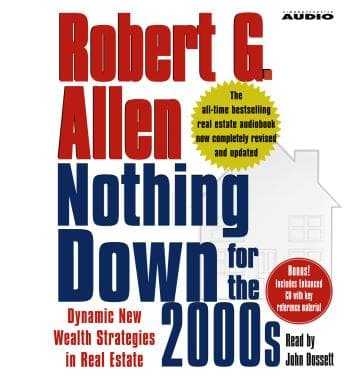
I'll tell you: it's a book originally written in the 1980s, updated for the '90s, then "updated" again for the 2000s, and now being sold in the 2020s with mortgage advice that predates the 2008 financial crisis. I picked this up because Kevin and I have been half-seriously talking about buying a rental property, and at 4 hours 23 minutes, the ROI on this audiobook seemed reasonable. Spoiler: the time investment was fine. The content? Let's talk.
The "Nothing Down" Pitch Is Basically Leveraged Debt But for Houses
TL;DR: Robert Allen's core thesis is that you can buy real estate with little or no money down by getting creative with financing - seller carrybacks, assuming existing mortgages, option contracts, lease options, blanket mortgages, and about a dozen other techniques for structuring deals where you're not fronting cash. In the abstract, some of these strategies are legit. Seller financing is real. Lease-to-own agreements exist. Finding motivated sellers who'll negotiate flexible terms? Sure, that happens.
But here's where my engineer brain starts throwing exceptions: Allen presents these techniques with almost zero discussion of downside risk. He talks about leveraging yourself across multiple properties with minimal capital like it's a feature, not a potential catastrophic failure mode. You know what else involved creative mortgage structures with minimal money down? 2007. I'm not saying every no-money-down deal is subprime, but the book's cheerful lack of risk analysis feels like reading documentation that skips the error handling section entirely.
The foreclosure chapter is particularly dated - he talks about finding deals before they're publicly listed like it's 1999 and Zillow doesn't exist. The mortgage qualification section references "new mortgage packages" that are now literally two decades old. Some have been regulated out of existence post-Dodd-Frank.
4 Hours of Content That Could've Been a Blog Post (Maybe Two)
At 4 hours 23 minutes, this is mercifully short, which is the nicest thing I can say about the pacing. I bumped it to 1.75x - my standard rate for business books that are padding their runtime - and finished it in about two and a half commutes. Even at that speed, there's repetition. Allen loves restating his core premise (you don't need money to buy real estate!) like he's afraid you forgot it from the previous chapter.
John Dossett narrates with a steady, professional tone that's... fine? He reads it like a textbook, which is appropriate because that's basically what it is. No personality quirks, no moments where the narration elevated the material. It's clean audio, competently delivered, entirely forgettable. I couldn't pick his voice out of a lineup, and I just listened to this yesterday.
The structure is pretty logical - Allen walks through finding properties, negotiating, financing techniques, and managing rentals. If you're brand new to the concept of real estate investing and have never read a BiggerPockets forum post, there's a basic framework here. The negotiation tactics chapter had a few concrete scripts for approaching sellers that I actually found useful, like the specific phrasing he suggests for bringing up seller financing without scaring people off. That's the kind of practical detail I wanted more of.
Who Should (and Really Shouldn't) Listen
Perfect for: absolute beginners who want a high-level overview of creative real estate financing concepts and have never touched this topic before. Skip for: anyone who's spent more than an hour on real estate investing forums, anyone who remembers what happened in 2008, anyone looking for strategies that account for the current market.
Here's my real issue: this book is selling confidence more than competence. Allen's writing style is relentlessly optimistic in a way that pattern-matches to every "get rich with this one weird trick" pitch I've ever heard. He name-drops his own seminars. He talks about creating "millionaires" through his methods. The information isn't all wrong - some of these financing structures are genuinely used by real estate investors - but the packaging feels like an infomercial that got a book deal.
If you want to actually learn about real estate investing for audio, I'd point you toward Brandon Turner's stuff on BiggerPockets, which at least acknowledges that markets crash and deals go sideways. Real Book of Real Estate is another one I worked through on commute that at least brings in multiple practitioners with actual war stories rather than one guy's infomercial energy.
Commit Message: "Deprecated but Still in the Registry"
I can't in good conscience recommend spending a credit on this. It's a 20-year-old update of a 40-year-old book being sold at full price with advice that ranges from "obvious" to "potentially dangerous if followed without heavy caveats." The 4-hour runtime means you're not losing much if you're curious, but you'd get more value from a weekend of free YouTube content on the same topic. Kevin and I are still going to look at rental properties. We're just not going to pretend we can do it with nothing down in the Bay Area. (Lol. Nothing down in San Francisco. That's the real fiction.)