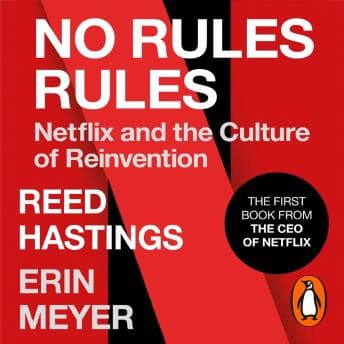

Everyone at my old McKinsey office passed around the Netflix culture deck like it was scripture. Slide 127: 'Adequate performance gets a generous severance.' People either nodded vigorously or quietly updated their LinkedIn. I was in the nodding camp. So when Hastings finally wrote the full book, I had opinions going in. Strong ones.
I finished most of this during a Saturday where Jenny had commandeered the living room for a virtual book club, which meant I spent four hours on the back porch with coffee going cold and AirPods in. Fitting, actually. Netflix built a company around trusting adults to manage themselves. I was managing myself on a porch because my wife's book club has a no-husbands policy. Same energy.
The Part That Actually Holds Up Under Pressure
Here's what separates this from 90% of culture books: Hastings doesn't just describe the utopia. He and Meyer - and this co-authorship structure is genuinely smart - spend real time on the sequence. Talent density first, then transparency, then freedom. Skip the sequence and you get chaos. I've seen this fail at three different companies that tried to copy 'unlimited vacation' without first building the talent base that makes it work. Their unlimited vacation became unlimited anxiety about whether taking vacation meant you weren't committed enough. The hustle-culture counterargument — that passion alone can substitute for structural trust — gets a very different treatment in Crush It!, and honestly, reading Hastings right after Vaynerchuk is a useful exercise in spotting where individual bravado ends and actual organizational design begins.
The 'Keeper Test' section hit differently than I expected. Hastings asks managers: 'If this person told you they were leaving, how hard would you fight to keep them?' If the answer is 'not very hard,' you should let them go now and pay them well on the way out. My parents ran their dry cleaning shop with two employees for fifteen years. They would've fought like hell to keep both of them - and did, multiple times. The Keeper Test is what they did instinctively. Now it has a TED talk.
Meyer's contributions on the cross-cultural implementation chapters are where the book earns its runtime. She's the author of The Culture Map, so when Netflix tried to export radical candor to their Amsterdam office and it went sideways, she explains why with actual cultural mechanics - not just 'different places are different.' The Dutch directness vs. the American version of directness distinction is specific enough to be useful. That's rare.
Where the 9 Hours Gets Slippery
Bottom line: this is a 5-hour book in a 9-hour container. The middle section on the 'freedom and responsibility' culture repeats the same core argument in four different framings. I get it. Context matters. But by the third anecdote about a Netflix manager approving a $3 million decision without running it up the chain, I was doing mental math on my Audible queue.
The narration is functional - Allyson Ryan handles Meyer's sections with clean pacing, Jason Culp takes Hastings' first-person sections with appropriate authority. The dual-narrator structure mirrors the book's co-authorship, which is a nice structural choice. Neither performance is going to make you feel anything, but neither one made me want to rip out my AirPods either. They stay out of the way. For a business book, that's a passing grade.
The criticism I'd push back on from other reviewers: some people call this a 'puff piece' because Hastings is writing about his own company. Fair point. But Meyer is a legitimate academic with no Netflix equity, and she asks the uncomfortable questions about failure cases - the Qwikster disaster, the culture's documented struggles with diversity - with enough specificity that it doesn't feel like PR. It's not a hit job, but it's not a press release either.
Who Gets ROI Here
If you're running a team of 10+ people and you're still approving every expense report, this book is a two-by-four to the face that you need. Read it. If you're a founder who's about to hire your first five employees, the talent density argument alone is worth the credit. If you work at a traditional company and you're trying to understand why your best people keep leaving for tech startups, this explains the pull.
If you're looking for a takedown of Silicon Valley culture or a nuanced critique of high-performance environments - skip to the Meyer chapters only and call it a day.
The key takeaway is worth the listen. The other 4 hours? Not so much. Skip to chapter 5. Thank me later.