
What if everything we're optimizing for in education is... wrong?
That question kept bouncing around my head during a particularly brutal 6AM commute last Tuesday. I'd just pulled an all-nighter debugging a memory leak, and here I was, half-conscious on the Caltrain, listening to two PhDs basically tell me that our entire educational system is running on legacy code that desperately needs a refactor.
The Framework That Actually Makes Sense
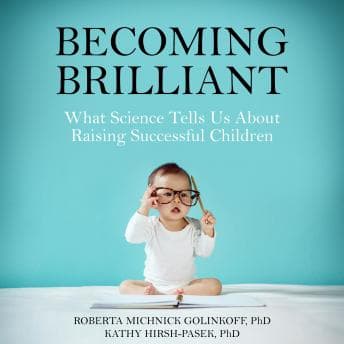
Bottom Line: Hirsh-Pasek and Golinkoff introduce the "6Cs" - collaboration, communication, content, critical thinking, creative innovation, and confidence. And unlike most parenting books that could've been a Medium post, this one actually earns its nearly 9-hour runtime with research-backed depth.
The core argument is basically this: we've been so obsessed with content (memorization, test scores, the stuff that's easy to measure) that we've neglected the skills that actually predict success in a world where half the jobs our kids will have don't exist yet. As someone who works in tech and watches entire job categories get automated every few years, this hit different.
What I appreciated is that they don't just hand-wave at "creativity" and "critical thinking" like every other thought leader with a TED talk. They break down each C into developmental levels - from basic to breakthrough - with specific examples of what that looks like at different ages. It's the kind of systematic thinking I can actually work with.
Allyson Ryan Does The Heavy Lifting
Here's where I have to be honest: this is dense material. Two academics with PhDs in developmental psychology writing about longitudinal studies and cognitive research? That could be brutal in audio form.
Ryan makes it work. She's got that warm-but-authoritative voice that keeps the academic content from feeling like a lecture. Her pacing is measured enough that you can process the research citations without rewinding, but not so slow that you're tempted to bump it to 2x. I listened at 1.5x and it felt right.
One genuine complaint about the audiobook format though - there's apparently one very long chapter that makes it hard to know where you are in the book's structure. I noticed this around hour 4 when I was trying to find where I'd left off and couldn't figure out the chapter breaks. Minor annoyance, but worth mentioning if you're the type who likes to listen in discrete chunks.
The ROI Calculation
Look, I don't have kids yet (Kevin and I are still in the "maybe someday" phase), but I picked this up because I've been mentoring junior engineers and noticing patterns. The ones who struggle aren't lacking technical knowledge - they're lacking the soft skills that nobody teaches explicitly. Character Building digs into similar territory about developing those foundational traits, though with less scientific rigor. They can't collaborate on ambiguous problems. They freeze when there's no clear right answer.
This book gave me a framework for thinking about why that happens and what early interventions might look like. Is it directly applicable to my life right now? Partially. But the research on how children develop these skills - and how schools systematically fail to nurture them - feels relevant to anyone thinking about education, hiring, or just understanding why certain people thrive and others don't.
The practical suggestions are genuinely actionable too. Not "spend more quality time with your kids" vague nonsense, but specific activities and approaches tied to developing each of the 6Cs. The authors clearly understand that parents need implementation details, not just philosophy.
Who Should Queue This Up (And Who Shouldn't)
Perfect for: Parents who want evidence-based approaches instead of mommy-blog anecdotes. Teachers frustrated with standardized testing culture. Anyone in a position to influence how young people learn.
Skip if: You want a quick-hit listicle of parenting hacks - this isn't it. The academic rigor is a feature, not a bug, but it does mean you need to be in the right headspace. This is not a "half-asleep at 6AM" book - I learned that the hard way and had to relisten to about an hour. Also skip if you're looking for entertainment. This is utility listening. I finished it in about 4 commutes (plus that one relisten), and I took actual notes. That's not my usual audiobook experience.
Final Debug Report
Is this a must-listen? For the right audience, absolutely. It's the kind of book that changes how you think about a fundamental system we all take for granted. The science holds up, the framework is useful, and Ryan's narration keeps it from becoming a slog.
But I'm giving it a "worth your credit" rather than a must-listen because the audiobook formatting issues are real, and because the density means it's not for everyone. If you're going to commit 9 hours to parenting/education content, though? This is where I'd start. Way better than most of the business-book-disguised-as-parenting-advice out there.
Now if you'll excuse me, I need to send this to my sister who has a toddler and keeps asking me for book recommendations. She's going to love the part about how screen time isn't actually the villain we've made it out to be - context matters more than minutes.