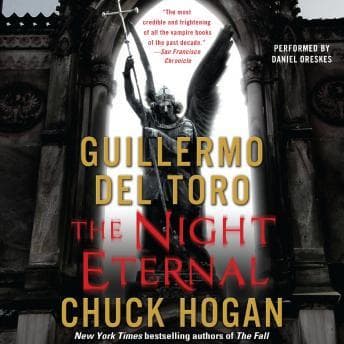

Look, I need to vent for a second. After racing through The Strain and The Fall—two books that genuinely made me check my neck for puncture wounds before bed—I expected The Night Eternal to absolutely demolish me. Instead, I spent a good chunk of this thirteen-hour audiobook wondering why we were suddenly so invested in relationship drama when there are literal vampire overlords running a nuclear winter apocalypse. Can we focus, people?
But here's the thing: even with my frustrations, I still couldn't stop listening. That says something about both del Toro and Hogan's grip on this nightmare world they've built, and Daniel Oreskes's ability to keep the tension cranked even when the plot occasionally wanders into territory that feels more daytime soap than end-times horror.
A World Where Humanity Already Lost
The setup is bleak in the best way. Humanity has lost. The Master and his vampire army have won, and what remains of civilization exists under perpetual darkness, farmed like cattle. Our ragtag band of survivors—Eph, Fet, Nora, and the ancient vampire hunter Setrakian's legacy—continue fighting from the shadows, but this isn't a triumphant resistance story. It's desperate, ugly, and morally complicated. Eph in particular has become a deeply flawed protagonist, broken by loss and addiction, making choices that had me muttering "what are you doing" out loud during my commute more than once.
Oreskes Behind the Mic
Oreskes stepped into some big shoes here, replacing Ron Perlman who narrated the first book. And honestly? He does a decent job. His reading is clear and dramatic, maintaining that tension-filled atmosphere the series demands. The pacing works well—he knows when to let moments breathe and when to push through action sequences with urgency. His character voices are distinct enough that I never lost track of who was speaking, which becomes crucial in a book juggling this many perspectives.
That said, I understand why some listeners found this narration less impactful than what came before. There's a workmanlike quality to Oreskes's performance that, while perfectly competent, doesn't quite achieve the gravitas that a story about humanity's last stand deserves. He's the reliable session musician who plays all the right notes but doesn't make you forget the lead guitarist who came before him.
When Character Drama Hijacks the Apocalypse
The real issue isn't the narration—it's the material itself. Del Toro and Hogan made some bold choices in this finale, spending significant time on interpersonal conflicts and character psychology when many readers came for the vampire apocalypse action. I get what they were going for: showing how surviving horror changes people, how relationships fracture under impossible pressure. But when you've established a mythology this rich—ancient vampires, nuclear devastation, the fate of the human species—spending chapters on romantic jealousy feels like a strange allocation of narrative real estate.
The mythology payoff, when it comes, is genuinely satisfying. The origins of the vampires, the cosmic stakes, the final confrontation—these elements deliver on the promise of the first two books. Del Toro's cinematic sensibilities shine through in set pieces that translate beautifully to audio, and Oreskes handles these moments with the dramatic weight they deserve. That same cinematic approach to sci-fi storytelling shows up in Black Star Passes, though it leans more golden-age space opera than horror.
Production quality is solid throughout. Clean audio, no technical issues, and the thirteen-plus hours flew by faster than I expected. I burned through most of it during a week of particularly brutal commutes, and it made sitting in traffic almost bearable—which is saying something when the content is this dark.
Who Should Queue This Up (And Who Should Skip)
For fans who've invested in the first two books, this is essential listening despite its flaws. The trilogy needs its conclusion, and there are genuine rewards here for patient listeners. Just adjust your expectations: this is less a horror thriller and more a character study set against a horror backdrop. If you're new to The Strain universe, absolutely do not start here—go back to book one and experience the full descent into darkness.
Roll Credits on the Apocalypse
The Night Eternal isn't the triumphant finale I wanted, but it's a thoughtful, sometimes frustrating, ultimately satisfying conclusion to one of the more ambitious vampire sagas of the past decade. Oreskes guides you through the darkness competently, even if he doesn't quite make you forget you're being guided. Sometimes that's enough.