
The Grandfather of Hard Sci-Fi (And All Its Quirks)
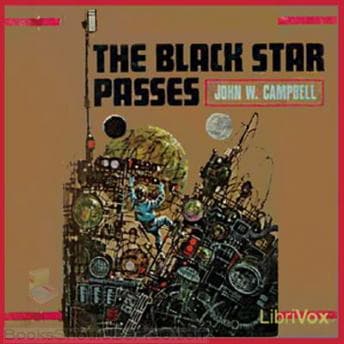
Okay, so here's the thing about Golden Age science fiction - it's basically the D&D original rulebook of the genre. Clunky in places, revolutionary in others, and absolutely essential if you want to understand where all the cool stuff came from. Black Star Passes is exactly that kind of foundational text, and honestly? I read this instead of writing my thesis and I have complicated feelings about it.
John W. Campbell literally shaped modern science fiction. Like, the dude was basically the DM who decided what counted as "real" sci-fi for decades. So listening to his actual fiction is kind of like going back and reading Gygax's original campaign notes. You can see the DNA of everything that came after, even when the execution feels a bit... dated.
The setup is classic: Arcot, Wade, and Morey are basically the original science bros, and they face three escalating threats across these connected novellas. Sky pirates with superior tech. First contact with aliens threatening two planets. A dark sun bringing doom to the solar system. The magic system is chef's kiss - and yes, I'm using that phrase for hard sci-fi because Campbell treats physics like Sanderson treats allomancy. That same systematic rigor shows up in Elantris, where Sanderson builds an entire magic system around consistent, explorable rules. Everything has rules. Everything has consequences. The progression is satisfying in that very specific way where you can feel the author working through the actual science.
But here's where I have to be honest with you. The characters? They're basically stat blocks with names attached. Arcot is Smart Guy #1, Wade is Smart Guy #2, Morey is Smart Guy #3. They solve problems by being very smart at each other until the problem is solved. If you're coming from modern character-driven stuff, this is going to feel like reading a really detailed Wikipedia article about fictional physics that occasionally has dialogue.
The Infodump Defense League (I'm the President)
Look, I will defend infodumps with my dying breath. Yes, stat blocks in fiction are good, actually. But even I have to admit that Campbell goes hard on the technical explanations. There are passages here that read like engineering textbooks with a thin narrative wrapper. My D&D group would love the worldbuilding details, but they'd also be checking their phones during the third consecutive page about molecular lux metal properties.
The pacing drags in spots - I'm not gonna lie. I found myself zoning out during some of the longer scientific expositions, and I'm the guy who voluntarily reads Sanderson appendices. If you don't like info-dumps, this isn't for you (but you're wrong). That said, when the action hits, it hits. The space battles have this wonderful retro-futuristic quality, all atomic rockets and ray guns and that earnest belief that Science Will Save Us.
Yes, it's 7+ hours. Is it worth it? Depends on what you're looking for. As a historical artifact, absolutely. As a ripping adventure yarn? Ehh, your mileage may vary.
KirksVoice Gets the Assignment
So here's where I have to be upfront - I couldn't find much about KirksVoice online, but based on this performance, they clearly understood the assignment. The narration is clean, clear, and appropriately straightforward. This isn't Steven Pacey-level character work (Steven Pacey walked so other narrators could run), but that's actually fine here? The source material doesn't really support dramatic vocal performances because the characters themselves are pretty interchangeable.
What KirksVoice does well is maintain clarity through all those technical passages. When Campbell is explaining the principles of molecular motion or the mechanics of his faster-than-light drive, you can actually follow along without rewinding. That's harder than it sounds. The pacing is steady, maybe a touch slow for modern tastes, but it matches the deliberate, methodical tone of the prose.
The production quality is solid - no weird audio artifacts or background noise. Just clean, straightforward narration of classic sci-fi. It's not going to blow your mind, but it won't distract you either.
Who's This Actually For?
This is Sanderson-level world-building in terms of systematic thinking, but wrapped in 1930s sensibilities. If you're a sci-fi completionist who wants to understand where the genre came from, this is essential listening. If you're writing a thesis on procedural generation and need something to listen to while you procrastinate... well, there are worse choices. (Hi, Dr. Patel. I'm making progress. Sort of.)
Best consumed during long drives or repetitive tasks where you can zone in and out without losing the thread. The episodic structure actually helps here - you can take breaks between the three main adventures without feeling lost.
Skip this if you need strong characters to stay engaged, or if lengthy technical explanations make you want to throw your earbuds into traffic. This is vintage sci-fi with all that entails - the visionary ideas AND the wooden dialogue.
Final verdict: It's a fascinating time capsule that's more interesting than entertaining. Worth experiencing once if you care about the genre's history. Just maybe bump up the playback speed.