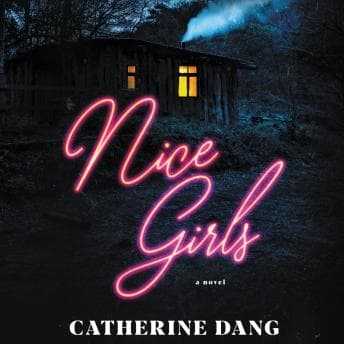

"The narrator is a horrible person who only gets more awful and ridiculous as the story goes on."
That's an actual listener review, and honestly? I think they meant it as criticism, but it's the reason I kept listening. I was halfway through a batch of dal makhani — the kind that requires you to stand there stirring for an unreasonable amount of time — when Mary started spiraling into one of her self-destructive investigation tangents, and I caught myself saying out loud, to no one, "Oh no, Mary, what are you doing." Which is basically the entire experience of this audiobook in a sentence.
The Psychology of the "Nice Girl" Who Isn't
Mary is a fascinating case study in cognitive dissonance. She's smart enough to get into Cornell, self-aware enough to recognize her own bitterness, and yet completely incapable of stopping herself from making choices that any reasonable person would clock as terrible. She judges Olivia Willand — former best friend, current Instagram darling — with surgical precision while being utterly blind to her own parallel patterns of manipulation and self-sabotage. The protagonist exhibits classic externalization: she projects her shame about getting kicked out of school onto everyone around her, turning Liberty Lake into a stage for her personal grievance narrative.
And Catherine Dang knows this. That's what elevates Nice Girls above your standard missing-girl thriller. Dang doesn't ask you to root for Mary. She asks you to understand her, which is harder and more uncomfortable. Mary's obsession with finding Olivia isn't really about Olivia — it's about proving she still matters. The parallel with DeMaria Jackson's case, a young Black woman whose disappearance barely registers in the same community that plasters Olivia's face everywhere, is where the book finds its sharpest teeth. The research actually shows that missing person media coverage skews dramatically along racial lines, and Dang weaves that disparity into the plot without ever turning it into a lecture. It just sits there, ugly and true.
Psychologically, Mary's weight loss arc is the detail that got me. She returns to Liberty Lake thinner, and the way people treat her differently — the way she notices and catalogs every shift in attention — is painfully precise. Dang understands that the "glow up" narrative is never about health. It's about power, and about the rage underneath wanting it.
Carlotta Brentan and the Pronunciation Problem
Okay, so. The narrator situation. Carlotta Brentan delivers Mary's internal monologue with this low-key simmering energy that works really well for the character — you can hear the resentment, the intellectual superiority complex, the loneliness underneath it all. When Mary is being judgmental (which is constantly), Brentan nails that particular tone of someone who thinks they're being observational but is actually being cruel. That's not easy to pull off.
But — and I need to be honest here — there's a pronunciation quirk with the word "silence" that sounds like she's saying something closer to "sigh-LENCE" with a weird emphasis, and once you notice it, you will hear it every single time. And this is a moody thriller set in Minnesota in winter. The word "silence" comes up a lot. Like, a lot a lot. I found myself tensing up every time a scene got quiet, not because of suspense but because I knew the word was coming. My therapist would have thoughts about developing a Pavlovian response to a mispronounced word.
It's not a dealbreaker. But if you're someone who fixates on audio details (guilty), bump the narration score down in your head and push through. The performance itself, the emotional register, is solid.
Where the Nice Girl Formula Cracks
Here's where I land: Nice Girls does something genuinely interesting with the unreliable narrator device. Most thrillers use it as a gotcha — surprise, she was lying! Dang uses it as characterization. Mary isn't unreliable because she's hiding something from the reader. She's unreliable because she's hiding things from herself. That distinction matters.
The mystery mechanics? Fine. Competent. I figured out a key piece of the puzzle around hour six, which is earlier than I'd like but not insultingly so. The pacing drags a bit in the middle third when Mary is doing a lot of driving around Liberty Lake having internal monologues that could've been trimmed. At 10 hours and 42 minutes, this book earns about 8.5 of those hours.
But I found myself asking: why does Mary really care about Olivia's disappearance? And the answer the book eventually gives — messy, uncomfortable, rooted in jealousy and guilt and a friendship that curdled — feels psychologically honest in a way that a lot of domestic thrillers don't bother with. Compared to something like The Girl on the Train, where the unreliable narrator gimmick is the whole point, Nice Girls is more interested in why women perform goodness and what happens when they stop. The class-and-status performance angle actually made me think of Rich People Problems, which does something similarly sharp with characters who are deeply aware of how they're perceived and still can't stop performing — though in a much glossier, less psychologically bruised register.
Who Needs This Book (and Who Doesn't)
If you want a missing-person thriller with a protagonist you'll genuinely dislike but can't stop analyzing — yes. If you're interested in how race, class, and social media warp small-town dynamics — yes. If you need a likeable narrator to enjoy a story, or if audio pronunciation quirks drive you to distraction — probably skip the audiobook and grab the print edition. If you're expecting Gone Girl-level plot twists, recalibrate. This is quieter, angrier, and more personal than that.
My Case Notes
Catherine Dang's debut understands something important: the most dangerous thing about "nice girls" isn't what they hide from others. It's what they hide from themselves. Mary is not a character you'll love, but she's one you'll recognize — in the news, in your old yearbook, maybe in the mirror on a bad day. And that recognition is the whole point. I finished the last hour while eating my dal alone at midnight, which felt appropriately on-brand for both me and Mary.