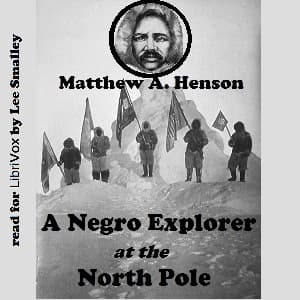

Ever feel like you're the engineer pulling the all-nighter to fix the distributed system while the Project Manager presents the slide deck to leadership and takes the credit? That's basically the vibe of Matthew Henson's life.
I picked this up because I needed something short to fill the gap between two massive sci-fi series (The Bobiverse, again, don't judge). At under four hours, this fits perfectly into a single day's round-trip commute from SF to Mountain View.
Here's the quick version: Matthew Henson was the first person to reach the North Pole. But because it was 1909 and he was Black, Robert Peary got the statues and the fame. This book is Henson's own "documentation" of the event. And honestly? The specs are impressive.
The Guy Who Actually Wrote the Code
Let's be real. Peary was the manager. Henson was the 10x engineer.
Henson learned the Inuit language. He built the sleds. He trained the dogs. He literally dragged the team to the geographic North Pole. The memoir itself is surprisingly understated—Henson isn't bragging; he's just reporting the data. He talks about the bone-chilling cold and the logistics of dog-sledding with the same practical tone I use when explaining why we need to refactor the legacy codebase.
It's fascinating, but also frustrating. You're listening to this guy describe saving the expedition multiple times, all while maintaining this "graceful modesty" that the critics love. (Personally? I wanted him to be a bit more angry about it. If I discovered the North Pole, I'd want my name on the building.)
The writing style is accessible—not too academic, not too flowery. It feels like reading a really well-written post-mortem after a major incident. Clear, concise, actionable.
The Audio: Clean, But Needs a Patch
Okay, here's the bug report on the narration.
Lee Smalley narrates this. He's... fine. He has that "classic public domain audiobook" voice. Very clear enunciation. You will understand every word. Smalley brings the same precise-but-detached energy to Diary of a Suicide, which worked better there given the subject matter.
But—and this is a big but—it's flat. Monotone. We're talking about freezing temperatures, starvation risks, and the triumph of human endurance, and Smalley sounds like he's reading a EULA. Also, huge missed opportunity not casting a Black voice actor here. It just feels... off. I had similar frustrations with representation in Noble Woman: The Life-Story of Edith Cavell—another historical figure whose story deserved more nuanced narration. Henson's voice is so specific and historically significant, and having a generic, somewhat robotic delivery flattens the emotional impact. It doesn't ruin the data—the story is still there—but it degrades the user experience.
Who's This For?
Grab this if you're into exploration history or want the side of the story that didn't make it into early 20th-century textbooks. Skip it if flat narration kills your focus—you might want to read the text version instead.
Closing the Terminal
The ROI on this is still high because the history is so critical. It's a short listen. I cranked it to 1.75x speed (Smalley speaks slowly, so you can really push the acceleration here) and finished it before I even got to my desk.
Just be prepared for a narration style that's more "archival footage" than "cinematic experience."
Now, back to debugging this Kubernetes cluster.









![Steve Jobs [unabridged audiobook] audiobook cover](/_next/image?url=https%3A%2F%2Fcovers.audiobooks.com%2Fimages%2Fcovers%2Ffull%2F9788499923406.jpg&w=1920&q=75)