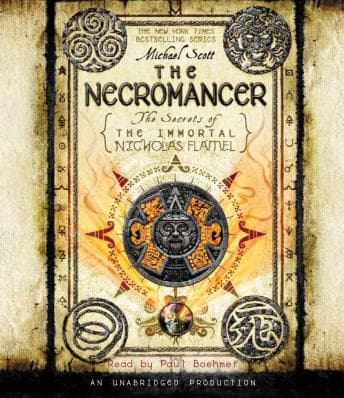

I was halfway through my morning jog when Sophie Newman started questioning whether Nicholas Flamel was actually the good guy, and I literally stopped running. Just stood there on the Charles River path like a weirdo, catching my breath, because—okay, here's the thing about book four in a series—you're not supposed to still be surprised by the central conflict. But Michael Scott pulled something clever here.
The Psychology of Trust (Or Why These Twins Are Fascinating)
Look, I spend my professional life analyzing why people make terrible decisions. And Sophie and Josh Newman? They're a case study I'd actually assign to my students. Four books in, and they're still not sure who to trust. Not their immortal mentor. Not each other, really. The research on adolescent decision-making under stress is pretty clear—teens rely heavily on authority figures until those figures fail them. Then they overcorrect toward independence. That's exactly what's happening here, and it's psychologically sound in a way that a lot of YA fantasy just... isn't.
What makes this installment compelling is the fracturing. Sophie's leaning one way, Josh another. The prophecy that's supposed to unite them is actually driving a wedge. Classic sibling dynamics under pressure—I've read the studies, and Scott nails it without ever feeling clinical about it.
Paul Boehmer Carries a Ridiculous Cast
So here's where I have to be honest. I couldn't find extensive background on Paul Boehmer before this, but based on eleven-plus hours of listening? The man earned those Earphones Awards. We're talking about a book with immortal alchemists, Dark Elders, Machiavelli (yes, that Machiavelli), monsters imprisoned on Alcatraz, and two confused teenagers from San Francisco. That's a lot of voices.
Boehmer differentiates them clearly—his female voices are distinct without being caricatures, his accents are consistent, and his pacing matches the chaos of the plot. When the action ramps up, he ramps up. When there's a quiet moment of doubt between the twins, he pulls back. Good instinct.
Now. I did notice the thing some listeners mention—there are moments where you can hear... mouth sounds. Lip smacking. It's not constant, but once you notice it, it's hard to un-notice. (My therapist would have thoughts about my inability to let small irritations go.) For me, it wasn't a dealbreaker. The character work more than compensated. But if you're someone who gets distracted by production imperfections, fair warning.
The Mythology Kitchen Sink (And Why It Works)
Michael Scott throws everything at this series. Egyptian gods. Celtic mythology. Historical figures who may or may not have discovered immortality. Alcatraz as a monster prison. It should be a mess. It's not. From Dead to Worse pulls off a similar balancing act with its supernatural factions, though with less mythology and more Southern Gothic chaos.
Here's why it holds together: Scott treats each mythological system with equal weight. He's not privileging one culture's stories over another. From a narrative psychology perspective, this matters—it signals to readers that all these traditions have power, have truth. The world feels bigger because of it.
The pacing is relentless. I finished this over three runs and one very long cooking session (dal makhani, if you're curious—the kind that needs hours of simmering). Not once did I zone out. Even the exposition dumps—and there are a few, we're in book four of six—move quickly enough that I didn't lose the thread.
Who This Is For (And Who Should Skip)
Best for: YA fantasy fans who want mythology without the pretension. Commuters who need something engaging enough to make traffic bearable. Anyone who enjoyed the first three books and wants to see the twins' arc get complicated.
Maybe skip if: You're sensitive to production imperfections. Or if you haven't read the earlier books—this is not a standalone situation. The plot assumes you know who Scatty is, why Dee is a problem, and what the prophecy actually says. Jumping in here would be like starting a case study at the discussion section. (Don't do that.)
The Case Study Continues
Honestly? Probably won't listen again. But that's not a criticism—it's the nature of plot-driven fantasy. The first time through is the experience. What I will do is continue to the next book, because Scott left enough threads dangling that I need to know how this resolves. The twins' divergence, the question of Flamel's true motives, whatever Machiavelli is planning with those Alcatraz monsters.
Both protagonists exhibit classic identity crisis patterns—caught between who they were told to be and who they're becoming. That's the hook. That's why, four books in, I'm still running along the Charles River, stopped in my tracks, genuinely uncertain who the good guys are.