"You don't get to decide if you're worth loving. That's not your call to make."
Somewhere around hour six, Saint says this to Nash, and I had to pull into a gas station parking lot because I couldn't see the road anymore. Carlos asked why I was crying in the car. I blamed allergies. He didn't believe me.
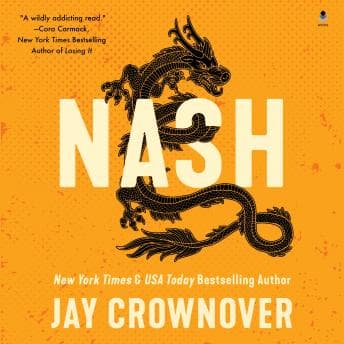
Look, I picked this up because I needed something that wasn't about death or trauma or codes that don't end well. Night shift in a Level 1 trauma center will do that to you—sometimes you just need a romance where the worst injury is emotional and everyone survives. Jay Crownover's fourth Marked Men book delivered exactly that, with a bonus I wasn't expecting: a nurse heroine who actually sounds like a nurse.
Saint Ford Made Me Text My Nursing School Group Chat
As someone who's actually worked a code, I have opinions about how healthcare workers get portrayed in romance novels. Usually it's all sexy scrubs and dramatic saves with zero mention of the charting, the difficult families, or the way your feet feel after hour ten. Saint Ford? She talks about her patients like they're people. She worries about documentation. She has that specific exhaustion I recognize in myself—the kind where you love your job but it's also slowly eating you alive.
When she describes why she became a nurse, I felt that in my bones. My mom still thinks I should've been a doctor, but Saint gets it. The wanting to be the one who actually connects with patients. The choosing this life deliberately, not as a backup plan.
Nash is the brooding tattoo artist with family trauma he's just uncovering, and honestly? His storyline is solid but predictable. It's Saint who surprised me. Her high school history with Nash—the way he hurt her without even knowing it—felt real in a way that made me uncomfortable. We've all been invisible to someone who mattered too much.
A Tale of Two Narrators (and Two Speeds)
Okay, here's the thing. Paula Costello is genuinely good. Her voice for Saint has this steady warmth that fits a nurse perfectly. But she reads. So. Slowly. I'm talking "getting close to my exit and she's still mid-sentence" slow. For a 10-hour audiobook, that pacing tested my patience on shorter drives.
Tad Branson, though? I loved his voice for Nash. There's this gravelly quality that works for a guy covered in tattoos who's having an identity crisis. The dual narration means you get both POVs clearly separated, which helps when the romance gets intense. No confusion about whose feelings you're experiencing.
My recommendation: bump it up to 1.25x speed. Paula's narration actually benefits from it—she sounds more natural, less like she's reading to a kindergarten class. Tad's sections you could leave at regular speed, but the acceleration doesn't hurt him either.
Perfect for That Post-Shift Decompression
This is not a complicated book. The conflict is mostly internal—Nash figuring out his family secrets, Saint deciding if she can trust the guy who broke her teenage heart. There's heat (content warning: definitely spicy), there's found family with the other Marked Men characters, and there's the satisfying arc of two wounded people learning to be vulnerable. That same found-family warmth shows up in Passionate Friends, though without the tattoos.
What makes it work for night shift recovery is that nothing bad happens that can't be fixed. After twelve hours of real emergencies, I needed that. The stakes are emotional, not life-or-death. Nobody codes. Nobody dies. And the medical details are accurate—finally. Saint talks about her job like an actual healthcare worker, not a TV fantasy.
Who Gets This Prescription (And Who Should Pass)
If you've read the other Marked Men books, this one's considered one of the stronger entries—and I'd agree. You could start here, but you'd miss some context with the friend group.
If you're a healthcare worker looking for a romance that doesn't make you yell "THAT'S NOT HOW HOSPITALS WORK" at your dashboard? Night shift approved.
If slow narration makes you want to throw your phone? Speed adjustment is mandatory. I'm not kidding about the 1.25x.
Skip this one if you need action or external conflict to stay engaged—it's a character study wrapped in a romance, not a thriller. The pacing will lose you by hour three.
Charting Complete
Nash isn't going to change your life. It's not trying to. What it does is tell a solid story about two people who deserve good things finally getting them. The dual narration mostly works, the heroine actually sounds like someone I'd want on my unit, and the emotional beats land where they should.
I finished it in the hospital parking lot, sitting in my car for an extra fifteen minutes because I wanted to hear the ending. Then I went inside and worked a twelve-hour shift and didn't think about death once.
Sometimes that's exactly what you need.