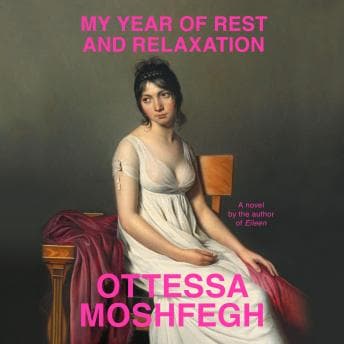

In June 2000, an unnamed twenty-four-year-old Columbia graduate—wealthy, orphaned, conventionally beautiful, and hollow to the core—fires herself from an insufferable Manhattan art gallery, stocks up on VHS tapes of Whoopi Goldberg and Harrison Ford movies, and enlists the most gloriously unethical psychiatrist in New York to prescribe enough sedatives to let her sleep for an entire year. Ottessa Moshfegh’s My Year of Rest and Relaxation is neither a redemption arc nor a comfort read; it is a pitch-black comic dissection of grief and turn-of-the-millennium alienation.
Julia Whelan’s Masterclass in Deadpan Interiority
Narrating a protagonist who is actively trying to erase her own consciousness—and who treats her insecure best friend Reva and her toxic ex-boyfriend Trevor with casual cruelty—requires extraordinary vocal control. Julia Whelan pulls it off without a single false note. Whelan demonstrated a gift for navigating complex, guarded interiority in Educated, and here she leans into the narrator’s sedated, razor-dry detachment.
Instead of begging the listener for sympathy, Whelan finds the dark absurdity buried in every Ambien-fueled bodega run and every unhinged consultation with Dr. Tuttle. Her range across genres remains remarkable—she can anchor this bleak literary satire and then pivot effortlessly to the warm romantic banter of Beach Read.
Grief Beneath the Pharmaceutical Fog
What gives the seven-and-a-half-hour novel its literary weight is what sits unspoken beneath the surface cruelty: a young woman who watched both parents die and decided that chemical oblivion was safer than feeling another loss. Because there is no traditional plot engine—only the cyclical rhythm of waking, taking pills, and blacking out as the calendar edges toward September 2001—listeners who demand action or likable heroines will bounce off early. Keep playback at 1.0x to let Whelan’s deadpan pauses land, and stay for a final chapter that reframes every hour that came before.