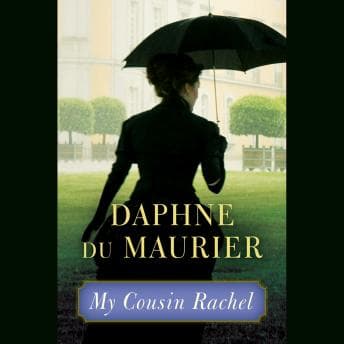

Everyone tells you this is "Rebecca's little sister" — the lesser du Maurier, the simpler gothic, the one you read after you've already devoured the big one. And I went in expecting exactly that. I was wrong. Not because My Cousin Rachel is better than Rebecca (it's not, and I'll die on that hill), but because it's doing something psychologically sneakier that I didn't fully appreciate until I was standing in my kitchen at 11 PM, burning dal and staring at nothing while Jonathan Pryce murmured poison into my ears.
Here's what du Maurier understood that most thriller writers still don't: the most terrifying unreliable narrator is the one who doesn't know he's unreliable.
Philip Ashley Is the Worst Case Study I've Ever Loved
Philip exhibits classic anxious-preoccupied attachment — raised by a surrogate father figure, no maternal presence, zero experience with women, and then suddenly confronted with Rachel, who is basically attachment theory's worst nightmare wrapped in Italian silk. The research actually shows that individuals with limited relational templates tend to oscillate between idealization and devaluation, and Philip does this so aggressively it gave me whiplash. He hates Rachel before meeting her. Then he's basically ready to hand her everything — the estate, the family jewels, his entire sense of self — within weeks. And du Maurier never once tells you whether Rachel deserves any of it.
I found myself asking: why does Philip really pursue the question of Ambrose's death? Because he wants justice? Or because uncertainty is the only emotional state he knows how to inhabit? The boy was raised in a house with no women, taught that love means inheritance and land. My therapist would have thoughts about this character. Several sessions' worth.
What makes this genuinely fascinating as a case study in obsessive attachment is that du Maurier gives you zero resolution. You never find out if Rachel is guilty. Not because the author is being coy — but because Philip can't find out. His psychological apparatus is so compromised by desire and grief and jealousy that he is constitutionally incapable of seeing her clearly. And neither are you, because you're trapped in his head.
Pryce Knows Exactly What He's Doing (Mostly)
Jonathan Pryce narrates this as Philip — first person, all the way through — and his voice carries this quality of wounded aristocratic bewilderment that fits perfectly. He's not performing Philip so much as becoming him: the slight tremor when Philip describes Rachel's hands, the clipped control when he's trying to rationalize away his own obsession. The scene where Philip throws a rope up to Rachel's bedroom window? Pryce delivers it with this breathless, almost adolescent urgency that made me genuinely uncomfortable. Which is the point.
His character differentiation is strong — the godfather Kendall sounds properly weary and paternal, Rachel has this warm, slightly amused quality that keeps you guessing about her sincerity. Pryce also narrated du Maurier's Rebecca, and you can tell he understands her rhythms, the way her sentences coil around themselves before striking.
But — and this is where I have to be honest — twelve hours is a lot of Philip Ashley's interiority. The pacing drags in the middle third, particularly around the legal machinations with the estate. And the repetitive "my cousin Rachel" phrasing that's baked into du Maurier's prose becomes almost hypnotic through Pryce's delivery, which could be intentional (obsessive repetition mirroring obsessive thought?) or could just be... annoying. I went back and forth on this. Still am.
Some listeners have called Pryce's performance "competent but not thrilling," and I understand that criticism even if I disagree. He's doing slow-burn work. If you want theatrical fireworks, this isn't it. If you want to feel like you're slowly losing your grip on reality alongside a 24-year-old Cornish heir? He's your man.
The Ending Du Maurier Wanted You to Hate
I've seen complaints that the ending is a let-down, and psychologically, this doesn't track as a criticism — it tracks as proof the book worked. Du Maurier doesn't give you the satisfaction of knowing. That's the entire thesis. Philip never achieves insight. He never integrates the contradictory evidence about Rachel into a coherent narrative. He just... acts. And you're left holding the ambiguity like a hot coal.
Is it satisfying? No. Is it honest about how obsession actually operates in the human mind? Absolutely. People don't get neat answers about the people who destroy them. They get fragments and projections and the stories they tell themselves at 3 AM.
Who Gets Something From This (And Who Should Walk Away)
If you love psychological ambiguity and you're comfortable sitting with discomfort — this is genuinely worth your time. If you read mysteries for the reveal, for the clean Agatha Christie-style drawing room solution (and believe me, I love those too — grew up on them), you will be frustrated. The thriller architecture in I Am Pilgrim is the opposite end of that spectrum — it's meticulous, plot-driven, and gives you the satisfaction of answers, which honestly made the contrast with du Maurier's deliberately unresolved ambiguity hit even harder when I thought about the two back to back. Du Maurier is not interested in solving the mystery. She's interested in showing you what mystery does to a mind that can't tolerate it.
Listen with focus. This is not a background-while-doing-dishes book. It requires your full attention, and it rewards it — but slowly, and without the payoff you think you want.
My Clinical Assessment
Du Maurier wrote a 1951 novel about male entitlement, obsessive love, and the impossibility of truly knowing another person, and it still cuts. Philip Ashley is infuriating and pitiable and completely, recognizably human in his capacity for self-deception. Pryce's narration serves the material with intelligence if not always electricity. And the ambiguity? The ambiguity is the point. If that makes you angry — good. Sit with it. That's what Rachel would want. Probably.