
I was grading a stack of sophomore essays on The Great Gatsby - you know, the ones where every student discovers that the green light is a symbol, as if they've cracked the Da Vinci Code - when I realized I needed something to save my sanity. So I put on Mr. Polly.
And honestly? It was exactly the right choice.
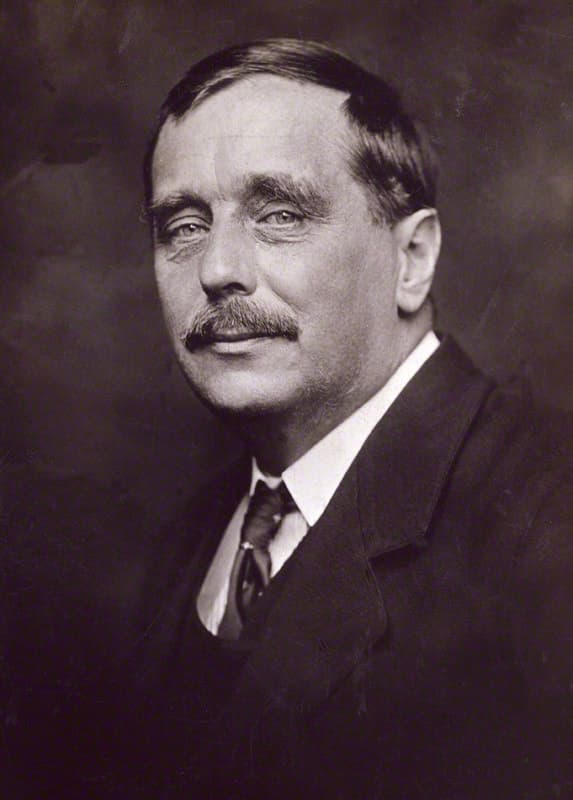
H.G. Wells is one of those authors my students know only as "the time machine guy," which is a tragedy. Because Wells could write comedy. Real, aching, human comedy. Mr. Polly is proof. It's the story of a man stuck in a life he never chose - running a draper's shop, married to a woman he doesn't love, slowly dying of indigestion and regret. (If that sounds bleak, stay with me. It's actually hilarious.)
Wells Understood the Quiet Desperation Thing Before Thoreau Made It Cool
What strikes me every time I return to this book - and I've taught excerpts from it, though never successfully gotten a teenager to care - is how modern it feels. Mr. Polly is basically having a midlife crisis in Edwardian England. He's bored. He's trapped. He daydreams constantly. He mangles words in ways that would make my students' autocorrect weep.
But here's the thing Wells understood that most writers don't: desperation can be funny. Mr. Polly's attempts to escape his circumstances are absurd and touching and very, very human. When he finally makes his "U-turn" (trying to avoid spoilers here, but let's just say it involves fire and a new identity), it's not triumphant in a Hollywood way. It's messy. It's uncertain. It's real.
This is why we still read the classics. Not because they're Important with a capital I, but because someone a hundred years ago understood exactly what it feels like to be stuck.
Adrian Praetzellis Gets the Comic Timing
I'll be honest - I couldn't find much about Adrian Praetzellis online beyond this recording. But based on what I heard over nine hours of lakefront walks and late-night grading sessions, the man understands Wells.
The narration is warm. Genuinely warm. Praetzellis doesn't play Mr. Polly as pathetic, which would be the easy choice. He plays him as endearing. A little foolish, sure, but sympathetic. The comic timing on Mr. Polly's malapropisms - those wonderful mangled words Wells invented - lands perfectly. There's a pause, just a beat, that lets you appreciate the absurdity without the narrator winking at you.
Some listeners have mentioned the accent can take adjustment if you're not used to British narration. I didn't find it distracting, but I've also spent twenty years teaching books where everyone speaks in dialects my Chicago students have never heard. Your mileage may vary.
The character differentiation isn't always crystal clear - I'll give the critics that. There were moments, especially in crowded scenes, where I had to rewind to catch who was speaking. But for a single narrator handling Wells's colorful cast, it's solid work. Not flashy. Just reliable.
Skip If You Need a Plot. Stay If You Need a Friend.
If you need plot-driven thrillers, this isn't your book. Mr. Polly meanders. It lingers on descriptions of countryside and food and the particular misery of retail work. The prose deserves to be savored - Wells was painting with words here, not racing to a twist ending. My students would hate this. I love it.
If you loved Diary of a Nobody or Three Men in a Boat, this is their spiritual successor. Same era, same gentle humor, same affection for ordinary people doing ordinary things badly. That same feeling of being trapped in the wrong life—though with a much more modern spin—is what makes Where'd You Go, Bernadette so compelling. If you've ever felt trapped in a life you stumbled into rather than chose, Mr. Polly will feel like an old friend.
Denise asked me why I was laughing during our walk last Tuesday. I tried to explain the scene where Mr. Polly attempts to be romantic and fails spectacularly. She nodded politely. (She was listening to a true crime podcast. We have different tastes.)
At nine hours, it's a comfortable listen. Not so long it becomes a commitment, not so short it feels rushed. I listened at 1.0x because - as I tell my students who roll their eyes at me - the author chose those words. The rhythm matters. The pauses are punctuation.
Class Dismissed (Go Listen to This)
Worth pausing the faculty meeting for. (Sorry again, Principal Martinez.)