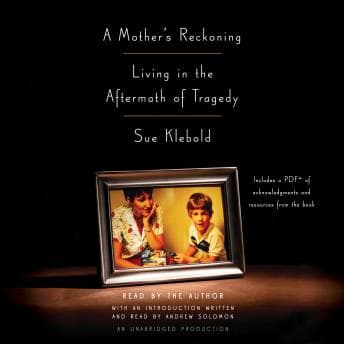

This book broke me on a Tuesday morning in my driveway. I sat there for eleven minutes after it ended, engine off, not moving. Carlos texted asking if I was okay. I told him I got stuck in traffic. There was no traffic.
What It Feels Like to Read Your Own Son's Autopsy
I've sat with families after the worst moments of their lives. Hundreds of times. I've held hands in waiting rooms while doctors delivered news that permanently splits a person's life into before and after. I thought that experience would give me some kind of professional distance with this book.
It did not.
Sue Klebold narrates this herself, and that matters enormously. This isn't an actor performing grief - it's a woman who has spent sixteen years trying to understand how the child she tucked in at night became someone who murdered thirteen people. You can hear it. Not in a theatrical way. In the way that someone sounds when they've rehearsed a painful sentence ten thousand times and it still catches in their throat. When she reads her own journal entries from before April 20, 1999 - entries where she's worried about Dylan being withdrawn, where she's proud of his college applications, where she's just... being his mom - the ordinariness of it is what guts you. She wasn't oblivious. She was a parent doing what parents do, reading the signals she had, making reasonable interpretations. And she was catastrophically wrong.
What she does that I didn't expect: she doesn't let herself off the hook, but she also doesn't perform self-flagellation for the audience. She's genuinely trying to figure out what happened. She interviews mental health experts. She goes back through Dylan's writings. She sits with the question most parents would rather die than ask themselves: did I miss something, and if I did, what was it? That's not a grief memoir. That's an investigation. And she's the detective and the suspect at the same time.
The Medical Part I Couldn't Stop Thinking About
Here's where my fifteen years of watching people in crisis kept interrupting my commute home: the picture she builds of Dylan's mental state in the months before Columbine reads like a textbook case of untreated suicidal depression with what she later comes to understand as a brain health crisis. Not a monster. A very sick kid who slipped through every net.
I've had patients like this. I've had families like this - people who loved someone, who saw the edges of something wrong, who didn't know what they were looking at. The medical and psychiatric community's failure to give parents a language for what they're seeing is something I think about constantly. Klebold basically becomes an advocate for that language after the fact, and watching her build that framework in real time - going from "how could I not have known" to "here is specifically what I now understand about brain health and crisis" - that arc is the most useful thing in the book.
She's not writing a true crime breakdown of the shooting. If you want that, this isn't it. I kept thinking about Graduation Day while listening to this — a completely different register, obviously, but it circles that same question of what adults miss when they're standing right next to a kid who's falling apart. She's writing a case study in what a loving, attentive parent can still miss, and why, and what to look for instead. As someone who works with families in crisis, I found this more practically valuable than I expected from a memoir.
Night Shift Verdict: Don't Listen in Your Car Unless You're Parked
Seriously. I'm warning you. The drive-home decompression strategy I use for thrillers does not apply here. This is a full-attention, both-hands-on-the-wheel-of-your-emotional-life kind of listen. It's 11 hours and change and it earns every minute.
Carlos asked why I was crying in the car. I blamed allergies. He knows I never have allergies.
If you are a parent, this will wreck you and then hand you something useful in the wreckage. If you work in mental health or healthcare, same. If you're looking for answers about how Columbine happened, she's honest that she doesn't have all of them - but she has more than anyone else has offered, and she offers them without flinching.
Not for post-shift decompression. For a day off when you have space to sit with something heavy. Then call your kids.