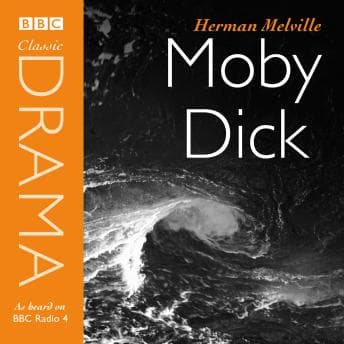

Here's my problem with abridged classics: I've spent twenty years telling teenagers that every word matters, that Melville chose those sentences deliberately, that you can't just skip to the whale fight. And then I go and listen to a two-hour-forty-six-minute version of Moby Dick while pretending to pay attention to a curriculum meeting.
I'm a hypocrite. But I'm a hypocrite who genuinely enjoyed this.
The Audacity of Condensation
Let's be honest about what we're dealing with here. The original novel is 135 chapters of sailors' slang, cetology lectures, biblical prophecy, and Shakespearian soliloquy. This BBC dramatization compresses all of that into something shorter than most Marvel movies. That should be a crime against literature. It should feel like reading the SparkNotes.
But here's what Melville himself might appreciate: this version understands that Moby Dick was always meant to be performed. The man wrote stage directions into his prose. He wanted thunder. He wanted madness. And this full-cast production—with its swelling music and overlapping voices—delivers the theatrical experience Melville probably imagined while scribbling away in 1851.
F. Murray Abraham anchors the whole thing as Ishmael, and his voice carries exactly the right weight. Not showy, not overly dramatic, but present. He sounds like a man who survived something terrible and is still figuring out how to tell you about it. Which is, of course, precisely what Ishmael is.
What Gets Lost (And What Doesn't)
You're not getting the whaling encyclopedia. The chapters on rope-making and whale anatomy—the ones my students complain about every single year—are gone. The philosophical tangents about whiteness that take Melville fifteen pages to explore get compressed into moments. If you're a purist (and I am, theoretically), this should bother you.
But the spiritual and scriptural overtones? Those survive intact. The production leans into the biblical weight of Ahab's obsession, the prophetic doom that hangs over the Pequod from the moment it leaves harbor. One listener called the personification "outstanding," and I'd agree—when Ahab speaks of the whale, you hear genuine madness. Not theatrical madness. The real kind. The kind that makes you uncomfortable.
The cast approach means you're not relying on one narrator to differentiate between Queequeg and Starbuck and Flask. Each voice belongs to a body. The ship feels populated. When sailors argue, you hear chaos, not one person doing different accents.
The Classroom Confession
Here's what I can't stop thinking about: I've assigned the full novel to juniors for fifteen years. I've lectured about patience, about earning the ending, about how the cetology chapters are actually essential to understanding Ahab's monomaniacal expertise. I've failed students who skipped to "the good parts."
And this version? It's essentially "the good parts." Professionally assembled, beautifully produced, spiritually faithful good parts.
My students would love this. That bothers me.
But also—and I'm saying this quietly, as someone who listens to Middlemarch at faculty meetings—maybe there's value in an entry point. Maybe a seventeen-year-old who hears F. Murray Abraham deliver Ahab's quarterdeck speech will actually want to read the full text. Maybe this is a gateway, not a shortcut.
(Denise would say I'm rationalizing. She's probably right.)
Who Should Board the Pequod (And Who Should Stay Ashore)
This works beautifully if you want the emotional arc without the commitment. If you've read the novel before and want to revisit the drama without the forty-hour investment. If you're teaching it and need to remember why the story matters beyond the symbolism lectures.
Skip it if you've never experienced Moby Dick and want the full Melville. This is an appetizer, not the meal. A brilliant appetizer, but still—you're missing the strange, obsessive, exhausting genius of the original. The parts that make you want to throw the book across the room are also the parts that make it great. I had a similar love-hate relationship with Camp of the Dog, where the atmospheric buildup tested my patience before the payoff landed.
One reviewer noted this version "doesn't really accomplish" offering something unique compared to other adaptations. I'd push back slightly—the production values are solid, Abraham's presence is commanding, and the BBC knows how to dramatize classics. But it's true that this isn't revelatory. It's competent. Respectful. Safe.
Worth Pausing the Budget Presentation For
I listened to this across three faculty meetings and one very long walk along the lakefront. It held my attention through both. The pacing moves—at under three hours, it has to—and the music cues land without being manipulative.
Is it the definitive audio experience of Moby Dick? No. Does it capture the madness, the doom, the terrible beauty of Ahab's quest? Enough. Enough to remind me why we still teach this book. Enough to make me want to assign it again next year, even knowing half my students will hate it.
Melville would probably be annoyed at the cuts. But he'd appreciate the thunder.