
"My whole life has led to this moment."
Maxim Trevelyan says something like that around hour three, and I remember pausing my work — mid-kerning on a logo for a boutique hotel client, Frida asleep on my keyboard — and thinking, buddy, your whole life has been champagne and sleeping with models. Let's maybe pump the brakes.
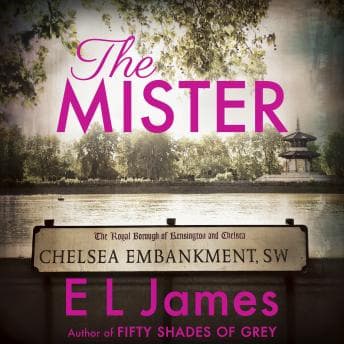
And that's kind of the tension of this whole sixteen-and-a-half-hour listen. There's a version of Mister that wrecked me, and a version that had me rolling my eyes so hard I almost missed a design deadline. Both versions exist in the same audiobook. Simultaneously.
The Piano Scenes Hit Different at 2 AM
Okay so here's the thing E L James actually does well here: Alessia's music. When the soft piano starts playing behind Jessica O'Hara-Baker's narration — actual piano, not just described piano — something unlocks. There's a scene where Alessia plays in Maxim's apartment for the first time and the audio production layers her playing underneath O'Hara-Baker's voice as she describes Alessia losing herself in the music, and I genuinely stopped working. Just sat there. Diego jumped into my lap and I didn't even shoo him off my trackpad.
Alessia's backstory — the trafficking, the fear, the way she flinches at loud sounds — that's where my crying spreadsheet got a new entry. Not because James handles it with incredible depth (she doesn't, really), but because O'Hara-Baker's voice goes so quiet and careful in those moments. She switches between this tentative Albanian-accented English and these internal third-person passages where Alessia is essentially narrating her own survival, and when it works, it works. My abuela survived things she never fully told me about. Women carrying impossible weight while everyone around them sees only beauty? That hits me right in the chest.
But — and this is a big but — the switching between Maxim's first-person chapters and Alessia's third-person chapters is genuinely disorienting. It's not a narrator problem; it's a structural choice that makes you feel like you're listening to two different audiobooks stitched together. Maxim's chapters are all "I want her, I need her, bloody hell she's gorgeous" and Alessia's are "She feared the dark corridor" and the tonal whiplash gave me emotional motion sickness more than once.
Dominic Thorburn's Aristocratic Charm (and Its Limits)
Dominic Thorburn. This man's voice is posh in a way that initially feels like wrapping yourself in a cashmere blanket you can't afford. His Maxim is all clipped vowels and gentlemanly restraint, and during the first few hours I was completely sold. The way he softens when Maxim first notices Alessia cleaning his flat — there's this gentle wonder in his delivery that made me think, okay, maybe this rich boy actually has a heart rattling around in there somewhere.
But here's where it gets rough: Maxim swears. A lot. And Thorburn delivering "fuck" and "bloody hell" in that upper-crust accent over and over starts to feel like watching a golden retriever try to be menacing. By hour twelve, every internal expletive landed flat. The man has one setting for desire and one setting for frustration and they're... basically the same setting? The emotional range narrows right when the stakes should be climbing.
Meanwhile, O'Hara-Baker is doing actual heavy lifting — she's juggling Albanian, Polish, and British accents and mostly pulling it off. "Touch and go" is honestly fair for a few moments, but she earned my respect. She's carrying the emotional core of this book on her back.
Sixteen Hours Is a LOT of Hours for This Story
I need to be honest. At 1.0x, the back third of this audiobook tested my patience in a way that felt almost personal. The Cornwall sections drag. The Balkans section has genuine tension — the danger feels real, the stakes feel physical — but getting there requires wading through so many scenes of Maxim cataloging Alessia's beauty that I started counting. (I lost count around "her dark, dark eyes" number forty-seven.)
The romance itself? The chemistry is... warm? It's there. But it's built more on proximity and protectiveness than on two people actually knowing each other, and that kept me from fully surrendering to it. I wanted the connection to feel earned the way it does in, say, a Talia Hibbert book where the banter reveals character. Let Me Love You does that excavation work properly — two people actually dismantling each other's defenses through conversation, not circumstance. Here the reveals come through plot mechanics — secrets, danger, class divide — rather than through genuine emotional excavation between two people.
Abuela would have eaten up the telenovela bones of this story, though. Rich aristocrat, mysterious beautiful woman with a dark past, family secrets, a literal castle in Cornwall? She would've been clutching her rosary and telling me to keep listening. And honestly, that kept me going through the slow stretches more than the book itself did.
Who Gets to Stay, Who Should Walk Away
If you loved Fifty Shades and want that same DNA — wealthy controlling man, vulnerable woman, power imbalance dressed up as protection — with better production values and actual piano music woven into the audio? You'll probably enjoy this. If you need your romance heroines to have agency from page one, or if slow pacing at sixteen-plus hours makes you twitchy, this might not be your listen.
The audio production is genuinely solid — the piano transitions, the volume balancing between narrators, the accent work. It's a well-made audiobook wrapped around a story that needed a firmer editorial hand. Death Danced at Midnight is another one where the production does a lot of the emotional heavy lifting — though in that case the story underneath actually meets it halfway.
I cried once. Just once. And it was for Alessia, not for the love story. That tells you something.
My Heart Wanted More Than My Head Got
Three stars, and I'm being generous because that piano scene at 2 AM with Diego purring in my lap genuinely moved me. But Mister asks for sixteen hours of your life and gives you maybe nine hours of story. E L James can write desire — that was never the question. The question is whether desire alone is enough to carry you through. For me, it wasn't quite. Close, though. Closer than I expected.