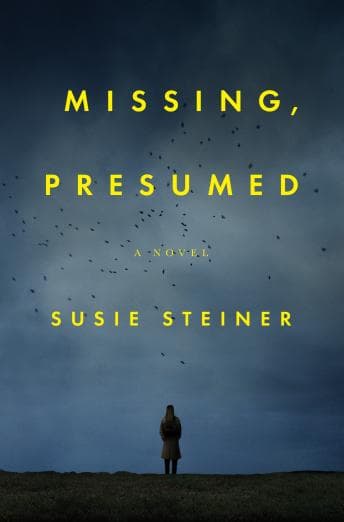

What happens when you build a missing-persons mystery around a detective who's more psychologically interesting than the person who's actually missing?
I was making dal makhani at eleven on a Tuesday night - the kind of slow-simmer recipe that demands you stand there stirring and thinking about your life choices - when I realized I'd been listening to Missing, Presumed for three hours straight and hadn't once checked the timer on my stove. The dal burned. I regret nothing.
Manon Bradshaw Is the Case Study I Didn't Know I Needed
Here's the thing. Susie Steiner does something quietly radical with this book: she gives us a detective protagonist who exhibits classic anxious attachment patterns and doesn't try to make it cute. Manon Bradshaw is thirty-nine, single, falling asleep to her police radio after bad internet dates, and desperately wanting connection while being constitutionally terrible at pursuing it. The research actually shows that people with high professional competence often compartmentalize their personal dysfunction - and Manon is a textbook example. She's brilliant at reading crime scenes and absolutely hopeless at reading romantic signals.
What makes this character compelling is that Steiner never lets her off the hook. Manon's loneliness isn't presented as charming quirk or empowerment narrative. It's specific, uncomfortable, sometimes genuinely pathetic in the clinical sense. She wants a husband and children with the same raw urgency that most thriller protagonists want to catch the killer. And that wanting drives her investigation in ways she can't fully see. I found myself asking: why does Manon really attach herself so completely to Edith Hind's case? Is it the puzzle, or is it that Edith - beautiful, Cambridge-educated, loved by multiple people - represents everything Manon believes she can't have?
My therapist would have thoughts about this character. Many thoughts.
The Procedural That's Actually a Family Drama Wearing a Police Badge
So here's where this book will either win you or lose you. If you're coming in expecting a taut, clock-ticking thriller about finding Edith Hind alive - you're going to get frustrated around hour five. The pacing is deliberate. Slow, even. But I'd argue it's slow the way an actual investigation is slow: you interview the boyfriend, the best friend, the patrician parents, and every conversation reveals less about the missing woman and more about the weird architecture of her relationships. The front door ajar but no forced entry. The smattering of blood in the kitchen. Keys and phone left behind. Steiner gives you a crime scene that's almost too neat, and then spends hours pulling apart the messy human lives surrounding it.
This is a fascinating case study in how families perform normalcy under pressure. Edith's parents - surgeon to the Royal Family, the whole establishment pedigree - project composed concern while harboring secrets that could crack the case wide open. The research actually shows that high-status families are significantly more likely to control information flow to investigators, and Steiner gets this dynamic exactly right. The class politics are sharp without being preachy. You feel the gravitational pull of privilege on the investigation, how certain suspects get handled with kid gloves while others don't.
Psychologically, everything tracks. I can't overstate how rare that is.
Juanita McMahon's Voice Does the Heavy Lifting (Mostly)
McMahon's British accent is solid, and she differentiates characters cleanly enough that I never lost track of who was speaking during dialogue-heavy stretches. Her Manon has this specific quality - a dry, slightly defensive edge that captures the biting wit the Wall Street Journal praised. When Manon's internal monologue turns sardonic about her dating life versus her casework, McMahon nails that particular flavor of self-deprecation that masks genuine pain.
But - and this is a real but - the narration doesn't build suspense. At certain critical junctures where the plot tightens, McMahon maintains the same measured, character-study pacing she uses everywhere else. For a book that's already more character-driven than plot-driven, this flattens the tension when you need it most. I didn't need a dramatic voice; I needed micro-shifts in urgency that signal the stakes are escalating. She's excellent at emotional depth, less so at ratcheting dread.
Who Gets the Most Out of This
If you love Tana French's Dublin Murder Squad books - that same willingness to let the detective's psychology be the real mystery - this is absolutely your thing. I kept thinking about Torn while reading this - another book where the investigator's inner fractures are doing as much narrative work as the actual crime. If you're a Kate Atkinson fan who appreciates procedurals where the "procedure" is really just people revealing themselves through conversation, you'll be happy here. But if you need your missing-persons cases to move with urgency and your body count to climb? This will test your patience.
This demands focused listening. Don't put it on during a run; the character work requires your full attention and the pacing won't carry you through distraction.
The Diagnosis
Steiner understands human nature in a way that most mystery writers simply don't bother attempting. The twist - when it comes - lands not because it's clever but because it's psychologically inevitable. Every character motivation, every evasion, every small lie told to protect someone or protect yourself, builds toward an ending that made me stand in my kitchen at 2 AM, staring at my burned dal, thinking about how the people closest to us are always the ones we see least clearly.