🎧
AudiobookSoul
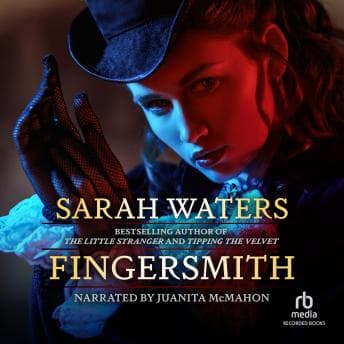
Fingersmith audiobook cover

FingersmithVictorian Heist Becomes Psychological Trap

by Sarah Waters🎤Narrated by Juanita McMahon
🟢 Must Listen
✍️ 4.5 Editorial
🎤 4.5 Narration
23h 45m
📝

Lesson Plan

Victorian Heist Becomes Psychological Trap

  • Voice Grade: McMahon differentiates Sue's Borough street accent from Maud's clipped speech so precisely you forget it's one performer.
  • Reading Rhythm: Slow-burn literary fiction that demands focus - the midpoint narrative shift recontextualizes everything you thought you knew.
  • Class Theme: Grimy Victorian London meets gothic manor house, with Waters' unflinching honesty about women's lives in both spaces.
  • Final Grade: Must Listen

Is this for you?

Pick this if: you want Victorian fiction with teeth and can give a slow-burn plot full attention · you love unreliable narrators and want twists that completely reframe earlier scenes · you value virtuoso narration and don't mind occasional audio production glitches
Skip if: you need something for background listening or mostly listen while distracted · you prefer plot twists telegraphed early and get frustrated by deliberate slow builds · you're squeamish about explicit content, including violence, abuse, and frank sexuality
📚Best for fans of: Oliver Twist, The Woman in White, Tipping the Velvet, Affinity
Read Time4 min read
Duration23h 45m
Your rating?
Marcus Williams, audiobook curator
Reviewed byMarcus Williams

English teacher, 20 years. Podcast with 47 listeners (one is his mom).

🎧 Listens mostly lakefront walks, drawn to icebergs with seven-eighths submerged, impatient with stories students would love.

Last updated:

Share:

"I am not what I seem." Somewhere around hour twelve, walking the lakefront with Denise while pretending to admire the skyline, that line hit me like a Dickens twist I should've seen coming but didn't. This is what Hemingway said about prose—the dignity of movement of an iceberg is due to only one-eighth of it being above water. Sarah Waters has written a novel where roughly seven-eighths lurks beneath the surface, and Juanita McMahon's narration ensures you feel every cold, dangerous inch of it. ## The Con Within the Con Within the Con Let me be clear about what kind of book this is. My students would hate this. I love it. *Fingersmith* operates like a Victorian music box that, halfway through, reveals itself to be a bomb. Sue Trinder, raised among pickpockets in the Borough—Waters never lets you forget the grime under their fingernails, the sour smell of gin on Mrs. Sucksby's breath—gets recruited into what seems like a straightforward inheritance scheme. Gentleman (and yes, that's what they call him, which tells you everything about Waters' sense of irony) wants to marry the sheltered Maud Lilly, have her committed to a madhouse, and split her fortune. Simple. Except nothing in this novel is simple. The narrative shifts between Sue and Maud at the midpoint, and suddenly everything you thought you understood inverts. This reminds me of what happens when students finally grasp that the narrator of *The Great Gatsby* isn't reliable—that dawning horror that they've been had. Except Waters does it twice. Maybe three times. I lost count somewhere around hour eighteen, grading papers at 11 PM while my red pen went dry and I didn't notice. ## McMahon Understands That Pause Is Punctuation Juanita McMahon's performance is why this audiobook exists as its own art form. She differentiates between Sue's Borough accent—all dropped consonants and street-smart edges—and Maud's careful, clipped speech with such precision that you forget it's one woman. When Sue describes the asylum, McMahon's voice goes flat in a way that's more disturbing than screaming would be. When Maud reads from her uncle's collection of obscene books (and yes, that's a plot point, and yes, Waters goes there), there's this barely perceptible tremor that tells you everything about what that girl has survived. Now. I have to be honest about something. The audio production has issues. Portions clip—half a word gone here, a strange speed-up there. And apparently some versions are missing the final chapter entirely, which is like buying a painting and discovering someone cut off the bottom third. Worth checking your version before you commit. The performance itself? Virtuoso. The technical execution? Someone at the studio needed another cup of coffee. ## Why We Still Read the Victorians (And Why Waters Knows It) Waters writes pastiches the way Stoppard writes plays—she understands the form so thoroughly that she can subvert it from inside. The prose deserves to be savored. I listened at 1.0x because Waters chose those words, those rhythms, that careful accumulation of detail. The gloves. The thimble. The way Maud's hands are described, again and again, until you realize what Waters is actually doing. If you loved Dickens—the real Dickens, not the sanitized version we teach in high school—this is his spiritual successor. *Oliver Twist* meets Wilkie Collins meets something darker and more honest about women's lives than either of those men could write. There's violence here. Abuse. Sexuality that isn't coy or metaphorical. Worth pausing the faculty meeting for. (Sorry, Principal Martinez. I regret nothing.) ## The Commitment Question Twenty-three hours and forty-five minutes. That's not a casual listen. This demands focus—the plot twists only land if you've been paying attention, and McMahon's vocal cues only register if you're actually present. I wouldn't recommend this for background listening any more than I'd recommend reading *Middlemarch* while scrolling Twitter. But here's the thing. By hour twenty, I was finding excuses to keep listening. Extra laps around the lake. Slower grading. One more chapter before bed became three. The reconciliation scene near the end—I won't spoil it, but you'll know it when you hear it—made me stop walking entirely. Denise asked if I was okay. I wasn't sure. ## Who Gets Pickpocketed (And Who Should Walk Away) **Listen if:** You want Victorian fiction with teeth. You understand that a good narrator doesn't just read, she interprets. You've ever suspected that the person telling you a story might be lying. You can commit to twenty-three hours of careful attention. **Skip if:** You need something for background listening, you're squeamish about explicit content, or you want your plot twists telegraphed in advance. ## Worth the Ink on Your Library Card This belongs on the shelf next to *Tipping the Velvet* and *Affinity*, but it's sharper than both. The same kind of sharp, unflinching character work shows up in [Anna Karenina](/reviews/anna-karenina-dole-translation), though Tolstoy takes about twice as long to get there. The audio issues are real but not ruinous. McMahon's performance elevates Waters' already exceptional prose into something that feels less like reading and more like being pickpocketed—you don't realize what's been taken until it's too late. My students would call this "a lot." They'd be right. It's also brilliant.

Grading The Audio 📊

Audio production quality notes that may affect your listening experience

🎙️

Read by a single narrator throughout the entire audiobook.

🔇

Some audio quality issues noted by reviewers.

Note: These technical issues are minor and won't significantly impact most listeners. Consider them when choosing listening environments or if you're particularly sensitive to audio quality.

Quick Info

Release Date:May 13, 2011
Duration:23h 45m
Language:English
Audio Code:58694736

About the Narrator

Juanita McMahon

Juanita McMahon is a best-selling and multi award-winning audiobook narrator based in the UK. She is also known as Tanya Myers, a theatre and film maker, writer, and actress. With over 35 years of experience, she has narrated more than 250 audiobooks worldwide.

4 books
4.3 rating

Enjoyed this review? Rate it!

📬

Get Weekly Audiobook Picks

Join listeners getting honest reviews from our curators every Monday. No spam. Unsubscribe anytime.

Subscribe on Substack