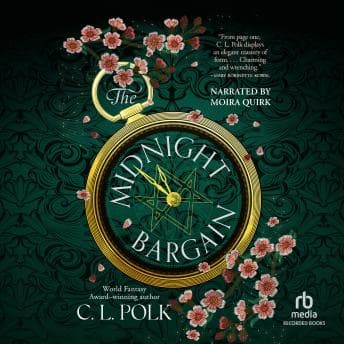

This is not my usual territory. Let me just say that upfront.
I spend my nights dissecting haunted houses and cosmic dread, not Regency-inspired ballrooms and marriage markets. But when someone describes a book as "Bridgerton with magic and feminist rage," I'm at least curious. And honestly? Stepping outside my horror comfort zone reminded me why I love genre fiction in the first place—because the best stuff always finds new ways to make you uncomfortable.
The Collar That Haunts
Okay, so here's why this book got under my skin despite being firmly in the fantasy romance camp: the horror is structural. Women in this world lose their magic when they marry. Not metaphorically. Literally. They're locked into collars that sever their power, supposedly to protect future children from spirit possession. And everyone just... accepts this. The casual way characters discuss it, the resignation in women who were once powerful sorceresses—that quiet devastation hit me harder than most jump scares.
Beatrice is practicing magic in secret, knowing her family needs her to marry rich to save them from debt. She finds a grimoire that could make her a full Magus—the first woman to achieve it—and then watches it get snatched away. The spirit she summons to help get it back demands her first kiss with the wealthy, eligible Ianthe Lavan. Which sounds like a cute romance setup until you realize the stakes are her entire identity versus her family's survival.
C.L. Polk doesn't let you forget the weight of that choice. Not for a second.
Moira Quirk's Juggling Act
I came into this knowing nothing about Moira Quirk, but she's the reason I stayed engaged through twelve hours of drawing room politics. She commits to every character without going theatrical. Beatrice sounds determined and a little reckless—young in a way that feels authentic rather than annoying. Ianthe has this genuine warmth that makes the romance work. And Nadi, the spirit? There's something playful and dangerous in how Quirk voices her that elevates those scenes.
In a book with this many nobles and magical negotiations and family drama, keeping speakers clear is no small feat. Quirk pulls off the same juggling act in Mansfield Park, where the sheer number of characters could easily turn into audio soup. I never got lost. The pacing is steady—which works for the slow-burn approach, though I'll admit I bumped it to 1.25x during some of the middle Bargaining Season scenes. Not because the narration dragged, but because the story itself takes its time. That's intentional. You're meant to feel Beatrice's options narrowing.
Where I Struggled (And Where I Didn't)
Look, I'm going to be honest: the ending felt abrupt. After all that buildup—the impossible choice, the mounting tension, the systemic injustice—the resolution comes and it's... hopeful? Which is fine. But I wanted more confrontation. More catharsis. The patriarchy doesn't crumble in one book, and that's realistic, but part of me needed to watch it burn a little.
The romance, though? That landed. Ianthe is genuinely good, which sounds boring but isn't. He's wealthy and powerful and could have anything he wants, and he actually listens. He sees Beatrice as a full person with ambitions beyond being someone's wife. In a book about women being reduced to their reproductive capacity, having a love interest who values the heroine's mind and magic feels almost radical.
Polk doesn't make it easy. Beatrice isn't choosing between a good man and a bad one. She's choosing between love and herself. Before They Are Hanged forces similar impossible choices on its characters—different genre, same willingness to make protagonists suffer for their convictions. That's the gut-punch.
A Horror Guy's Verdict on Fantasy Romance
I'm not going to pretend this is horror. It's not. It's fantasy romance with teeth, and those are different things. But there's something here that speaks to why I love dark fiction—the willingness to look at power structures and ask who benefits. Who suffers. What we accept as normal that maybe shouldn't be.
My podcast listeners probably won't rush out for this one, but the ones who appreciate slow-burn dread and systemic critique? They might find something here. The production is clean, Quirk's performance is worth the listen alone, and the world-building is rich without drowning you in exposition.
If you want fast-paced action, skip it. If you're looking for something that'll make you quietly furious about fictional patriarchy—and let's be real, not-so-fictional patriarchy—give it a shot. Just don't expect me to start reviewing Regency romances full-time. Shirley (the cat) would never forgive me.