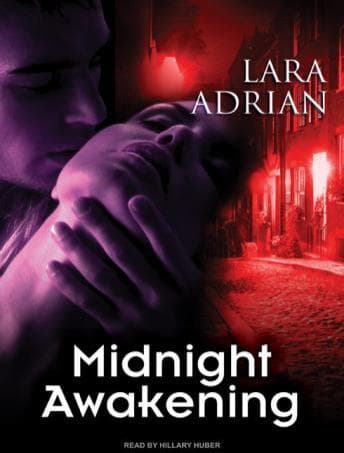
Look, I need to address something before we get into this: people keep telling me paranormal romance isn't "real" horror. And normally I'd fight them on it. But Midnight Awakening sits in this weird middle ground where I'm not sure I can defend it as horror—and I'm not sure I want to.
I started this at 1 AM because I'd just finished editing a podcast episode on grief in horror fiction and couldn't sleep. Elise Chase, our protagonist, is drowning in it—her son is dead, killed by Rogues, and she's weaponized her psychic abilities into a one-woman revenge crusade. This should be my wheelhouse. Grief-fueled vengeance? Shirley Jackson walked so this trope could run. But here's where Lara Adrian and I part ways: Elise's pain gets sidelined for romance beats faster than you can say "blood bond."
When Dread Gets Dressed Up As Desire
Tegan is supposed to be the "deadliest of the Breed warriors"—ice in his veins, perfect self-control, the whole brooding package. And Adrian commits to his trauma. He's got centuries of loss calcified into emotional unavailability, and there's genuine darkness in his backstory that the book doesn't shy away from. The problem? The tension between him and Elise keeps undercutting what could be genuinely unsettling moments. Every time we're approaching real dread—Elise's psychic gift literally destroying her from the inside, the Rogues closing in, the conspiracy brewing—the narrative pivots to desire.
I'm not saying romance can't coexist with horror. It absolutely can. Tower Lord manages that balance better—letting its darker moments breathe without constantly pivoting to romance. But horror requires you to sit in discomfort, and this book keeps offering escape hatches.
Hillary Huber's Curious Restraint
Here's where things get complicated. Huber is an Earphones Award winner, AudioFile's Best Voices material—her credentials are impeccable. And her narration is... controlled. Almost clinical. She reads Elise's internal anguish with this matter-of-fact delivery that some listeners find robotic, but I actually think it works for Elise's character. This is a woman who's numbed herself to survive. The flatness makes sense.
But—and this is a significant but—when the emotional dialogue kicks in, when characters are confessing love or screaming in battle, that same restraint becomes a liability. There's a disconnect between what the words are saying and how they're being delivered. It's like watching someone describe a fire while standing perfectly still. You believe there's a fire somewhere. You just don't feel its heat.
For a different book, Huber's approach might be perfect. For paranormal romance that needs to sell both the danger AND the passion? She's fighting the material.
The Book Three Problem
This is book three of the Midnight Breed series, and it shows. Adrian's clearly building a larger mythology—the Breed warriors, the Order, the conspiracy threads that weave through multiple books. If you're already invested, this delivers. Tegan's been lurking in the background, and getting his story feels earned.
But as a standalone horror experience? There's too much assumed knowledge. Too many callbacks I didn't have context for. The world-building is dense in a way that rewards series loyalty but punishes curious newcomers. Return of the King has that same series-dependent density, but at least Tolkien's mythology feels worth the homework. I found myself pausing to Google character relationships more than once, which—at 2 AM, already fighting sleep—broke whatever atmosphere the book was building.
Who Should Brave This (And Who Should Run)
If you're deep into vampire romance and want your warriors tortured and your heroines fierce, this is your territory. Adrian writes the slow-burn alliance-to-lovers arc well, and the spice is present without overwhelming the plot. At ten hours, it's a solid commitment but not an intimidating one.
If you're coming for horror—actual, sit-in-the-dark, Shirley-would-approve horror—temper your expectations. The violence is there. The vampires are genuinely monstrous when they need to be. But the genre DNA is romance first, urban fantasy second, horror a distant third.
And if narrator performance makes or breaks your audiobook experience? This is a wait-for-sale situation. Huber's technically proficient but emotionally reserved, and for a book that lives or dies on passion, that's a problem.
My Podcast Listeners Will Be Divided
I can already hear the emails. Half my audience will accuse me of being too harsh on paranormal romance (guilty as charged, probably). The other half will thank me for steering them toward books that actually commit to the creepy.
Midnight Awakening isn't bad. It's just... not what I needed at 1 AM, grieving alongside a character whose grief kept getting interrupted by abs descriptions. Shirley (my cat, not Jackson) fell asleep on my chest halfway through. I envied her.